Tesla and eight other carmakers are recalling 4.3 million vehicles in China over emergency door releases that may be difficult to find or operate
Tesla is leading a recall of approximately 4.3 million vehicles in China, involving eight other carmakers, due to risks associated with emergency door releases.
The recall addresses concerns that mechanical door releases may be difficult to find or operate after a severe collision disables a vehicle's electrical system, potentially trapping occupants.
Tesla's share is the largest, covering nearly 3 million vehicles, and its remedy includes adding labels and an over-the-air software update to automatically lower windows after a crash.
This action is part of a broader safety crackdown by Chinese regulators on concealed door handles, which are set to be banned on new vehicles from 2027.
Tesla and eight other carmakers are recalling about 4.3 million vehicles in China over concerns that emergency mechanical door releases may be difficult to locate or operate after a serious collision.
The campaign, described as the largest automotive recall in China’s history, will involve measures including warning labels, clearer markings and software updates.
Regulators are concerned that occupants could be trapped or rescuers prevented from gaining access if a severe crash disables a vehicle’s electrical system.
The recall comes amid tighter oversight of China’s electric-vehicle industry and intensified scrutiny of concealed door handles, which the country plans to prohibit from 2027.
Tesla accounts for almost 3 million vehicles
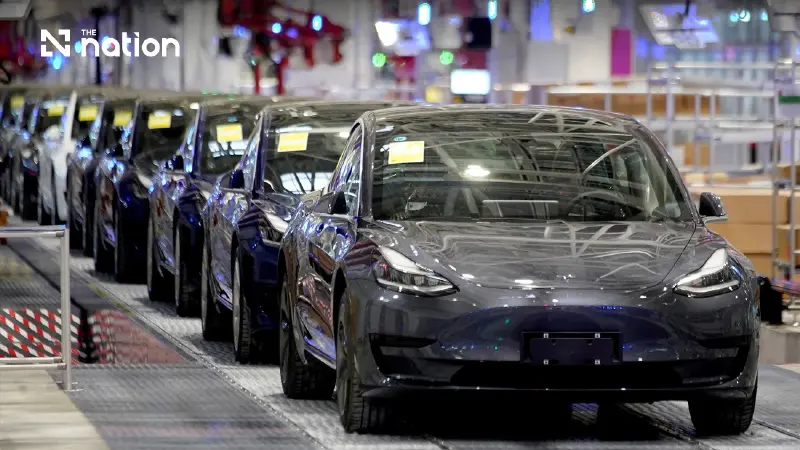
Tesla has the largest share of the recall, covering approximately 2.98 million imported and China-made vehicles.
The affected cars include Model 3, Model Y, Model S and Model X vehicles. The recall is scheduled to begin on September 25.
According to China’s State Administration for Market Regulation, the mechanical emergency releases in some vehicles may be difficult to see or locate following a severe collision and electrical failure.
Tesla will install labels identifying the emergency-release locations and provide an over-the-air software update designed to lower the windows automatically after a collision.
The use of remote updates means that some remedies can be completed without owners taking their vehicles to a service centre.
Xiaomi is recalling approximately 390,000 vehicles, while Leapmotor’s campaign covers about 371,000 and Xpeng’s about 264,000. Geely Holding and several other manufacturers are recalling smaller numbers.
Leapmotor said its remedies would include warning labels and upgrades to electric-window control software, describing the action as part of its responsibility to customers.
Chinese regulators have focused increasingly on door-access systems following accidents in which occupants were reportedly trapped inside burning vehicles.
Chinese state media reported last October that bystanders were unable to open the doors of a Xiaomi SU7 after it crashed and caught fire. The driver died in the incident.
Concealed or electronically operated handles can be controlled through a key fob, smartphone or touch-sensitive panel. However, concerns arise when a collision interrupts the vehicle’s power supply and the mechanical override is not immediately visible.
China is set to become the first country to phase out concealed door handles under nationwide safety requirements. New vehicles will need accessible mechanical release systems from 2027.
The issue is also under review in the United States. The National Highway Traffic Safety Administration has decided that the risk of occupants becoming trapped during an electrical failure should be examined through a rulemaking process rather than a vehicle-defect investigation.