
Chao Phraya dams retain capacity amid heavy rain forecast
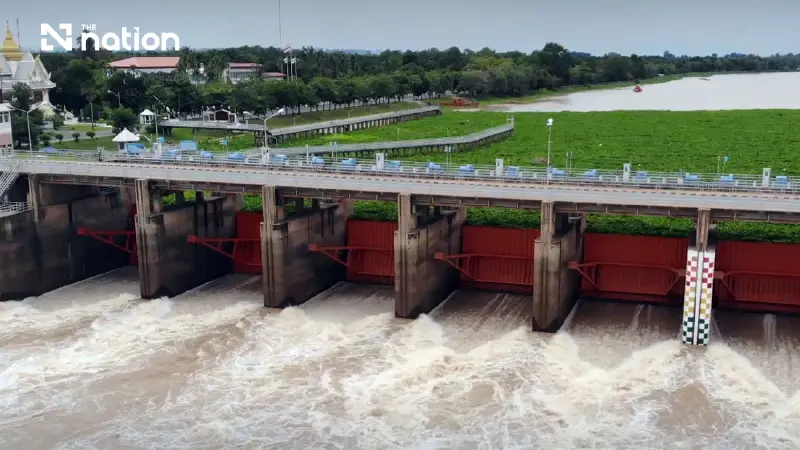


Thailand faces heavy rain from August 29 to September 2, while the RID says four major Chao Phraya dams remain at 61% capacity
Thailand is preparing for heavier rainfall from Saturday (August 29) to Wednesday (September 2), although the four main dams serving the Chao Phraya River Basin still have substantial capacity to receive further inflows.
The dams are holding a combined 15.095 billion cubic metres of water, equivalent to 61% of their total capacity, and can accommodate another 9.688 billion cubic metres, according to the Royal Irrigation Department (RID).
Wittaya Kaewmee, director-general of the RID, said on Thursday that the Smart Water Operation Centre (SWOC) was closely monitoring weather and water conditions following the second warning, numbered 169/2569, issued by the Thai Meteorological Department.

The forecast indicates that rainfall will increase across Thailand during the period, with heavy to very heavy rain possible in some areas. The upper North, upper Northeast, eastern areas and locations exposed to the southwest monsoon are expected to face heightened risks.
Irrigation offices nationwide have been instructed to prepare fully for changing water conditions.
Reservoirs retain room for further inflows
Large and medium-sized reservoirs nationwide currently hold a combined 49.524 billion cubic metres of water, or 65% of their total capacity. They can receive a further 27.142 billion cubic metres.

The four main dams in the Chao Phraya Basin — Bhumibol, Sirikit, Khwae Noi Bamrung Daen and Pa Sak Jolasid — contain 15.095 billion cubic metres, leaving them with 39% of their combined capacity available.
The RID has instructed officials to balance the need to accommodate the approaching rainfall with the need to retain sufficient water for the dry season.
Chao Phraya flows closely monitored
Water was passing through the C.2 monitoring station in Nakhon Sawan at a rate of 1,042 cubic metres per second, while the Chao Phraya Dam was releasing 620 cubic metres per second.
Officials are diverting upstream water into irrigation networks on both the eastern and western sides of the river. Releases are also being adjusted gradually to correspond with conditions and minimise the effect on downstream communities.
The department said residents would receive advance warnings if higher discharge rates became necessary.
Response teams placed on round-the-clock standby
Machinery, equipment and personnel have been prepared for deployment around the clock. Irrigation structures are also being inspected, while obstructions are being removed from waterways to improve drainage.
Members of the public can monitor official water updates through the Royal Irrigation Department website.
