
Bangkok halts three planned data centres pending tighter safety rules


Bangkok suspends three planned data centres and backup-fuel tank permits while drafting stricter rules on safety, water, power and land use
- Bangkok authorities have suspended three planned standalone data centre projects, ordering them to undergo a fresh review under new standards.
- The halt is pending the creation of tighter regulations covering safety, fuel storage, land use, and the consumption of electricity and water.
- A key reason for the new rules is the recent introduction of a formal legal definition for data centres, closing a loophole where they were classified as warehouses to bypass stricter requirements.
- In a related move, the Energy Ministry has also suspended the issuance of new permits for backup-fuel tanks at data centres due to safety and environmental concerns.
Bangkok has suspended three planned standalone data centre projects and ordered them to undergo a fresh review as authorities prepare tighter regulations covering fuel storage, land use, safety and pressure on electricity and water supplies.
The Energy Ministry has separately halted the issuance of new permits for backup-fuel tanks at data centres pending clearer safety and environmental standards.
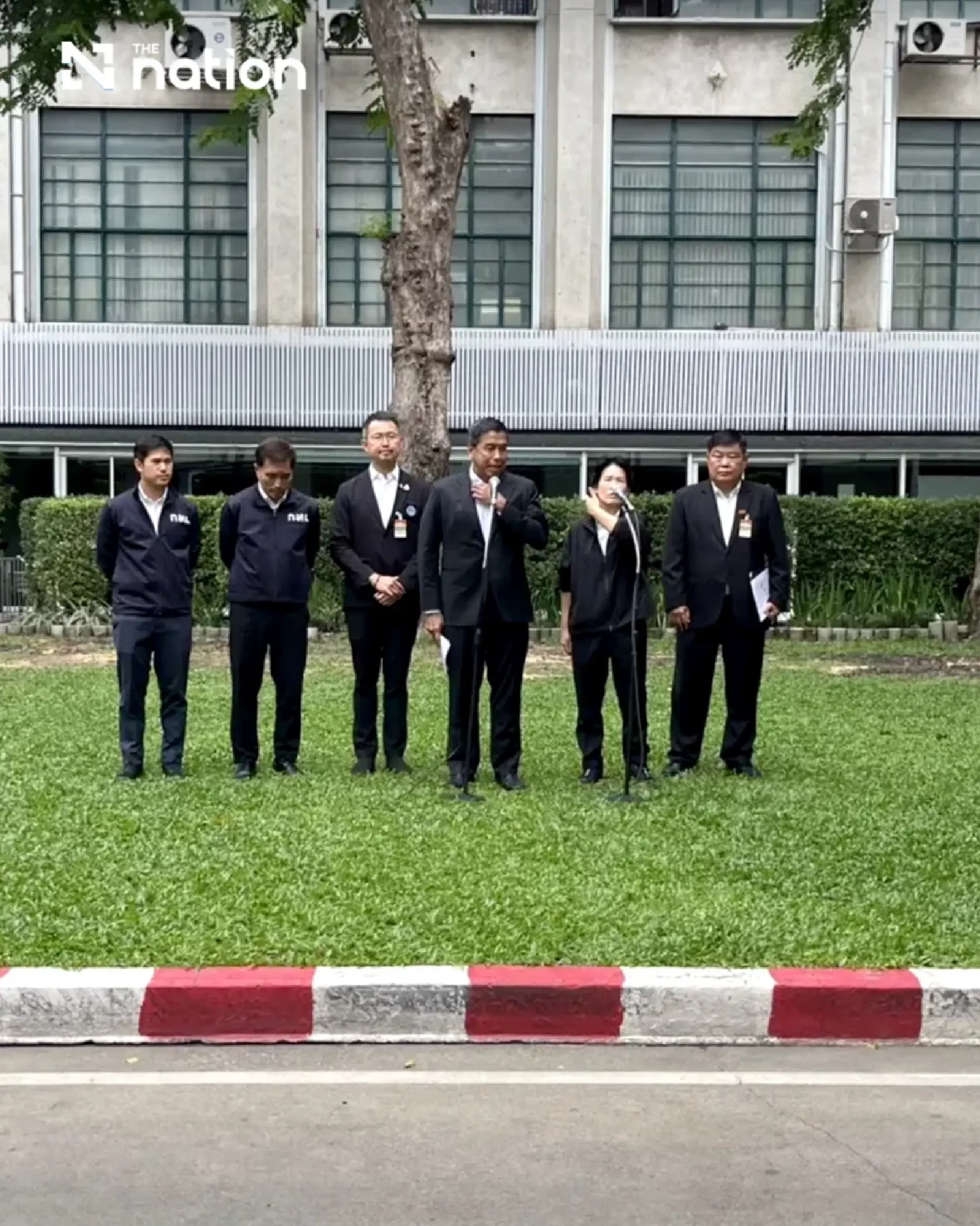
The measures were announced during a joint briefing on Wednesday (September 2, 2026) by the Bangkok Metropolitan Administration (BMA), Metropolitan Electricity Authority (MEA), Metropolitan Waterworks Authority (MWA) and Energy Ministry.
They follow public concerns over resource consumption, environmental effects and reports that a data centre on Ramkhamhaeng Soi 28 may have planned diesel-storage capacity of up to nearly 500,000 litres.

Three projects sent back for review
Bangkok Governor Chadchart Sittipunt said six applications for large standalone data centres had been submitted in the capital since 2021-2022.
Three were approved during 2022-2023, while the remaining three have been suspended and sent back for reassessment under new standards.
Chadchart distinguished the proposed standalone facilities, which would provide cloud and data-processing services to outside customers, from the approximately 30-40 older data centres operating internally within individual companies.

He said many of those corporate facilities had been operating for more than a decade and were different in scale and function from the new generation of standalone projects.
Existing data centres have not negatively affected electricity or water services, Chadchart said. However, future large projects require closer scrutiny of safety, environmental effects and their connections to public utility networks.
Thailand is already tightening national screening of data centre projects based on electricity and water readiness, environmental protection and economic benefits.
New definition closes warehouse classification gap
Thailand previously had no clear legal definition of a data centre, allowing developers to submit applications under the category of a warehouse.
Chadchart said this classification created problems because warehouse regulations covering matters such as toilets and parking spaces did not reflect how standalone data centres operate.
The classification also meant that projects did not automatically face the environmental and industrial requirements that would apply under other building categories.
The Prime Minister’s Office formally introduced a definition of data centres on August 13, 2026. Bangkok plans to incorporate the definition and updated land-use requirements into its revised comprehensive city plan and building-control regulations.
City authorities will use the new framework to close regulatory gaps and assess where large data centres may operate safely.
Chadchart acknowledged that some facilities need to be located within the capital because Bangkok has dense fibre-optic networks, reliable electricity infrastructure, specialist engineers and connections to international internet gateways.
Urban locations also reduce data-transmission delays and support edge computing, which requires processing facilities to be close to users.
New fuel-tank permits suspended
Thitipat Chotidechachainan, secretary to the energy minister, said the Department of Energy Business had suspended the issuance of new permits for emergency fuel tanks at data centres.
The suspension will remain in effect while authorities develop standards covering safety, environmental effects and water and electricity consumption.
Thitipat said data centres generally require sufficient fuel to keep emergency generators operating for at least 48 hours during a power disruption.
Public reports have claimed that the facility on Ramkhamhaeng Soi 28 could store between 400,000 and nearly 500,000 litres of diesel.
However, licensing records show that the facility has permission to store only 200,000 litres, Thitiphat said. The 400,000-litre figure may represent capacity planned for a future full phase of the project rather than the volume currently authorised.
Officials will inspect the site to determine the actual amount stored. The operator will face legal action if storage exceeds the licensed limit.
A separate data centre project in the Rama IX area has not received any permit to store fuel, she said. Unauthorised storage could carry a maximum penalty of two years in prison and a fine of up to THB200,000.
Bangkok currently has 56 premises licensed to store fuel for their own operations. These include different types of businesses and are not limited to data centres.
The BMA has proposed reviewing the existing ceiling of 500,000 litres for private operational use, arguing that the limit should be reconsidered for densely populated urban areas.
Current utility demand remains manageable
Kasem Sratonghug, MEA assistant governor for planning and innovation, said Bangkok’s data centres were smaller than projects in the Eastern Economic Corridor and other provinces that may require hundreds of megawatts.
Facilities in the capital request an average electricity capacity of about 20 megawatts but consume an average of approximately eight megawatts.
The MEA supplies them through dedicated systems in areas where the network has sufficient capacity. Kasem said this prevents disruption to nearby consumers.
Their demand remains below that of some major shopping centres and large urban developments, which may require more than 100 megawatts.
MWA deputy governor Supichete Tavorntaveevong said Bangkok’s largest data centre consumed an average of about 7,800 cubic metres of water per month for its cooling system.
A large hospital may use about 20,000 cubic metres monthly, while a major shopping centre may consume between 30,000 and 40,000 cubic metres.
Supichete said current data centre consumption had not significantly affected water supplies for Bangkok residents.
Officials said cooling water is largely lost through evaporation or reused within the premises, including for landscaping. The BMA nevertheless plans to measure the temperature of discharged water before it enters public waterways.
Complaints prompt closer monitoring
The BMA has received complaints involving two locations. Residents have raised concerns about one project near a hospital in the Rama IX area, although the facility has not begun operating.
A separate complaint concerned noise from emergency-generator testing at night. Testing was subsequently moved to daytime, after which no further complaints were reported.
Although the city has not received a formal complaint about accumulated urban heat, Chadchart said officials would examine the potential effect.
Existing responsibilities are currently divided among several agencies. The Department of Energy Business oversees fuel, the MEA manages electricity, the MWA supervises water services and the BMA enforces building, setback and public-nuisance regulations.
A national Data Centre Board is expected to coordinate these responsibilities and establish a unified regulatory framework for future projects.
