
Thailand tightens data centre rules as AI demand grows
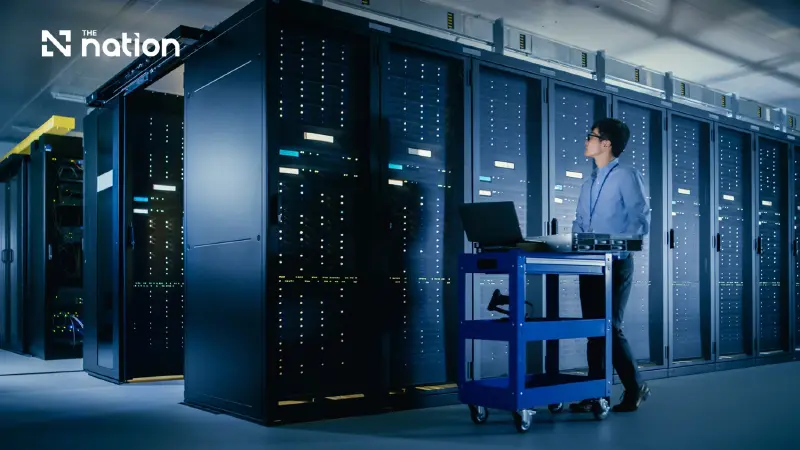


Thailand will screen data centre projects for energy, water, environmental impact and national benefits as AI-driven investment accelerates
- Driven by rising AI demand and the strain on electricity and water, Thailand is shifting its focus from the quantity of data centre investments to their quality.
- New projects must now meet four key criteria: energy and water readiness, environmental protection, and providing tangible benefits to Thailand's economy, such as developing local AI talent.
- Stricter financial and regulatory measures are being introduced, including a bank guarantee for electricity allocation, a potential new electricity tariff for data centres, and an upgraded licensing system for enhanced security checks.
- The government is also creating a "Power and Water Map" to encourage development outside the concentrated Eastern Economic Corridor and ensure projects contribute to building a domestic AI supply chain.
Thailand is tightening its screening of data centre investments, shifting its focus from the number and value of projects to their quality as the expansion of artificial intelligence drives demand for electricity, water and large-scale computing infrastructure.
The Board of Investment (BOI) approved 26 data centre projects worth 498.716 billion baht in 2025 and a further eight projects valued at 162.044 billion baht in 2026.
Authorities have slowed consideration of new projects while drawing up additional investment criteria based on project readiness, resource availability and the overall benefits to the country.
Deputy Prime Minister and Finance Minister Ekniti Nitithanprapas said 16 projects had already received confirmation that electricity could be supplied. The government is now preparing a new strategy for promoting the industry.
The BOI has expanded an existing energy-management panel into the Subcommittee on Energy Management for Data Centre Investment and Project Screening. The panel, chaired by Energy Minister Akanat Promphan, brings together the BOI, the Energy Policy and Planning Office and other relevant agencies.
The global investment surge has prompted resistance in several markets because data centres require large quantities of electricity and water. Policy responses include higher power charges in parts of the United States, requirements for investors in Ireland to support additional energy supplies and strict project selection and energy-efficiency tests in Singapore.


Four tests for new projects
Thailand’s revised policy will assess data centre projects across four dimensions:
- Electricity supply and energy readiness, including the transition towards greater use of clean energy.
- Water-resource management to ensure that projects can operate without competing with surrounding communities for water.
- Environmental protection and pollution controls, including measures to limit noise.
- Tangible benefits for Thailand and efficient use of national resources while supporting digital and advanced-technology investment.
Narit Therdsteerasukdi, secretary-general of the BOI, told Krungthep Turakij that the government had instructed the agency to move away from pursuing investment volume and towards promoting higher-quality projects.
Every new data centre seeking BOI incentives would have to meet all four requirements, he said.
“Investors must create concrete benefits for Thailand, whether by developing digital and AI personnel, helping Thai SMEs enter technology supply chains, establishing centres of excellence or sharing computing capacity to strengthen the country’s AI capabilities,” Narit said.
The BOI believes the criteria will help Thailand develop into a well-prepared and sustainable regional centre for the digital economy.

Power guarantees and dedicated tariffs
Large data centre investors will be required to provide a bank guarantee of 4.5 million baht for every megawatt of electricity capacity they reserve.
The measure is intended to prevent companies from hoarding power allocations and reselling them, while providing greater certainty for the Metropolitan Electricity Authority and Provincial Electricity Authority before they invest in additional transmission infrastructure.
Half of the guarantee will be returned when a project’s actual electricity use reaches 50% of its proposed capacity, with the remainder refunded once utilisation reaches 70%.
The National Energy Policy Council approved the requirement on July 15, 2026, as part of measures requiring large data centres to demonstrate their readiness before the state expands the power system to serve them.
The council also approved the principle of establishing a separate electricity tariff for data centres to reflect the cost of additional power supplies and grid investment without shifting the burden to ordinary users. Large projects must also submit water-management plans.
An initial tariff of five to six baht per kilowatt-hour is under consideration, compared with the general electricity rate of 3.95 baht per unit for the September-December 2026 period. The final data centre tariff has not yet been determined.
Narit said the government was also considering allowing the Electricity Generating Authority of Thailand to sell power directly to large hyperscale data centres.
Direct supplies from the national generator could reduce bottlenecks in lower-voltage distribution networks in areas where projects are heavily concentrated.
Investment beyond the EEC
The government is preparing a “Power and Water Map” identifying areas with sufficient electricity and water to support data centre development.
The map would be used to encourage investors to establish projects outside the Eastern Economic Corridor, where about 70% of current data centre investment is concentrated.
The clustering of projects in the EEC has begun to raise concerns over the adequacy of electricity and water supplies.
The BOI has promoted 40 data centre projects over the past three years. Sixteen companies, comprising both Thai and foreign investors, have received confirmation of electricity availability.
Under the new framework, the government will no longer regard a large investment value or a high number of projects as sufficient grounds for approval. It will instead consider whether each proposal is compatible with available infrastructure and contributes to the domestic economy.
Building Thailand’s AI supply chain
Narit described the current investment trend as Thailand’s third major investment wave, centred on technology-intensive and innovation-driven industries.
The government is particularly interested in developing an AI supply chain, with data centres serving as the core infrastructure for cloud computing, digital services and advanced processing.
“Data centres are the foundation of the AI economy and are important to national data security,” Narit said.
“The volume of data and processing conducted through cloud services and AI is increasing enormously. Without infrastructure of its own, Thailand would have to rely on other ASEAN countries, creating risks over the control of and access to important information.”
Thailand already has manufacturers in several parts of the data centre supply chain, including cooling systems and optical data-transmission equipment.
The country is also a major production base for hard-disk drives. Western Digital and Seagate have experienced strong orders linked to the global expansion of AI, according to the BOI secretary-general.
Foreign hyperscale operators investing in Thailand include Amazon Web Services. The market contains both companies building their own facilities and colocation providers constructing centres for major tenants such as TikTok, Microsoft Cloud and Alibaba Cloud.
Narit said the government wanted these investments to generate skills, research, business opportunities and technology transfers rather than merely consume domestic resources.
Tighter oversight and security checks
Trairat Viriyasirikul, acting secretary-general of the National Broadcasting and Telecommunications Commission (NBTC), said tighter restrictions in other countries, including delayed projects in the United States and more stringent approvals in Singapore, had contributed to continued investment flows into Thailand.
Thailand’s data centre market is projected to expand by an average of 27.71% annually from 2025 to 2031, increasing in value from about 470 billion baht to 2.02 trillion baht.
Trairat said growth on this scale required new rules to manage long-term risks.
Financial and security authorities have raised concerns that data centre infrastructure could potentially be misused by grey-capital networks, including by being leased to call-centre gangs, used as a communications connection point or incorporated into digital money-laundering operations.
The NBTC therefore plans to upgrade the licence required by data centre operators from a Type 1 licence to a Type 3 licence, the category used for telecommunications network providers.
The change would allow the regulator to impose stricter infrastructure standards, conduct more detailed checks on operators and obtain information about their customers to assess their credibility and possible links to unlawful activity.
The proposed rules would also cover the zoning of data centre investment to control electricity and water use in areas facing resource constraints.
Trairat stressed that the new framework was not intended to block investment, but to balance economic expansion with Thailand’s long-term security and resource needs.
The NBTC will hold a public consultation before issuing the new regulations.
Source: Bangkokbiznews
