
Crested bulbuls now protected in 40 non-hunting areas
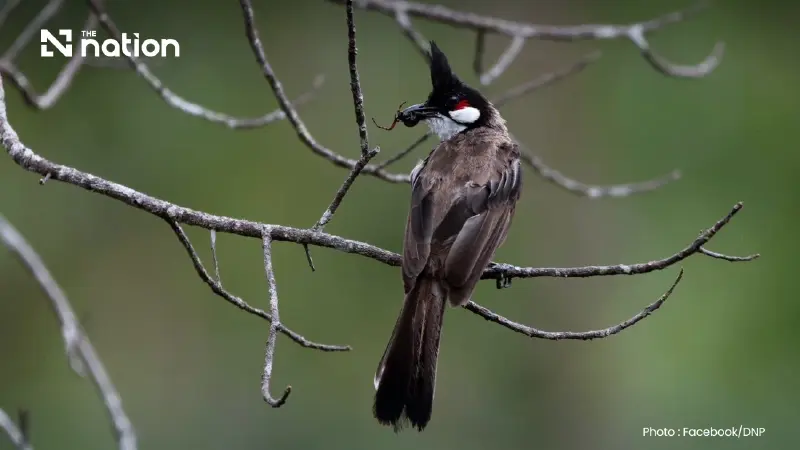


Thailand designates 40 more non-hunting areas to protect red-whiskered bulbuls after updating wildlife conservation rules.
Thailand has strengthened conservation measures for the red-whiskered bulbul, also known as the crested bulbul (Pycnonotus jocosus), by adding the species to the list of wildlife prohibited from hunting in 40 existing non-hunting areas.
The Department of National Parks, Wildlife and Plant Conservation announced on September 3, 2026, that the Ministry of Natural Resources and Environment had published a new regulation in the Royal Gazette adding the bird to the list of wildlife species protected from hunting in designated non-hunting areas.
The announcement follows the ministry’s regulation issued on August 31, 2026, which removed the red-whiskered bulbul from the list of protected wildlife species under the Wildlife Conservation and Protection Act B.E. 2562 (2019).
New protection follows regulatory change

Department director-general Atthaphon Charoenchansa said the additional protection was introduced after concerns that the removal of the bird from the protected wildlife list could create a legal gap.
Although the species had been removed from the protected wildlife list on September 1, 40 existing non-hunting areas had not yet included the red-whiskered bulbul in their wildlife protection lists.
Authorities said this could have affected protection measures and increased the risk of hunting in natural areas.
To address the issue, Natural Resources and Environment Minister Suchart Chomklin signed the announcement with approval from the Wildlife Conservation and Protection Committee, extending protection for the species across relevant forest areas.
40 non-hunting areas for red-whiskered bulbul

The newly designated areas include:
- Thale Noi Non-Hunting Area
- Khuan Kreng Non-Hunting Area
- Phu Ruea Non-Hunting Area
- Ao Kam Non-Hunting Area
- Doi Suthep-Pui Non-Hunting Area
- Mae Tuen Non-Hunting Area
- Huai Kha Khaeng Non-Hunting Area
- Mae Ta Non-Hunting Area
- Khlong Lan Non-Hunting Area
- Khao Prabat Chang Non-Hunting Area
- Nong Nam Khao Non-Hunting Area
- Phu Kha Non-Hunting Area
- Khao Prathap Chang Non-Hunting Area
- Khao Chamao Non-Hunting Area
- Nong Thanu Non-Hunting Area
- Khao Phetchabun Non-Hunting Area
- Khao Kra Nok Non-Hunting Area
- Khuan Mae Yom Non-Hunting Area
- Khao Chakan Non-Hunting Area
- Nong Khai Non-Hunting Area
- Phu Khieo Non-Hunting Area
- Khao Prathong Non-Hunting Area
- Khao Phaeng Ma Non-Hunting Area
- Khao Chang Non-Hunting Area
- Khao Chao Ram Non-Hunting Area
- Nong Han Kumphawapi Non-Hunting Area
- Phu Pha Lek Non-Hunting Area
- Khao Prathap Chang - Khao Nam Phu Non-Hunting Area
- Pha Cha Non-Hunting Area
- Phu Khao Fai Non-Hunting Area
- Khao Phanom Dong Rak Non-Hunting Area
- Mae Ngad Non-Hunting Area
- Khao Phu Laanka Non-Hunting Area
- Pa Phu Wiang Non-Hunting Area
- Pa Bo Phloi - Bueng Chai Non-Hunting Area
- Pa Bang Yang Non-Hunting Area
- Pa Phutthabat Non-Hunting Area
- Pa Mae May Non-Hunting Area
- Pa Huai Khan Sae - Huai Rabam Non-Hunting Area
- Pa Sri Sawat Non-Hunting Area
Cultural role and local livelihoods

Rachada Dhanadirek, spokesperson for the Prime Minister’s Office, said the adjustment to wildlife regulations reflected local lifestyles and cultural practices, particularly in Pattani, Yala and Narathiwat provinces.
She said keeping crested bulbuls has long been part of community life in the southern border provinces, where the birds are connected with local identity, cultural activities and competitions involving public participation.
Rachada said the change could also create opportunities to develop breeding, bird keeping and related activities into sources of local income, including for breeders, suppliers of feed and equipment, and organisers of competitions and related travel activities.
She added that the Southern Border Provinces Administrative Centre (SBPAC) had prepared plans to support related occupations and income-generating activities in the southern border provinces.
Authorities urged the public and related parties to comply strictly with wildlife protection laws to safeguard wild populations of red-whiskered bulbuls.
