
Thailand prepares for first UNCLOS conciliation with Cambodia


Thailand is ready for its first UNCLOS conciliation meeting with Cambodia in Singapore from September 14 to 16, focusing on maritime boundary negotiations.
- Thailand is preparing for its first conciliation meeting with Cambodia under the UN Convention on the Law of the Sea (UNCLOS), which is scheduled to take place in Singapore from 14-16 September 2026.
- Having consulted with foreign legal advisers, Thailand's position is that a previous memorandum of understanding (MOU 44) was cancelled due to a lack of progress over 20 years, in order to open a new path for bilateral talks.
- Thailand maintains that the conciliation should focus exclusively on maritime boundary delimitation first, and that discussions on sharing resources, as proposed by Cambodia, should not be included in the proceedings.
Thailand has completed extensive preparations for its first conciliation meeting with Cambodia under the United Nations Convention on the Law of the Sea (UNCLOS), scheduled to take place in Singapore from Monday to Wednesday (September 14-16, 2026).
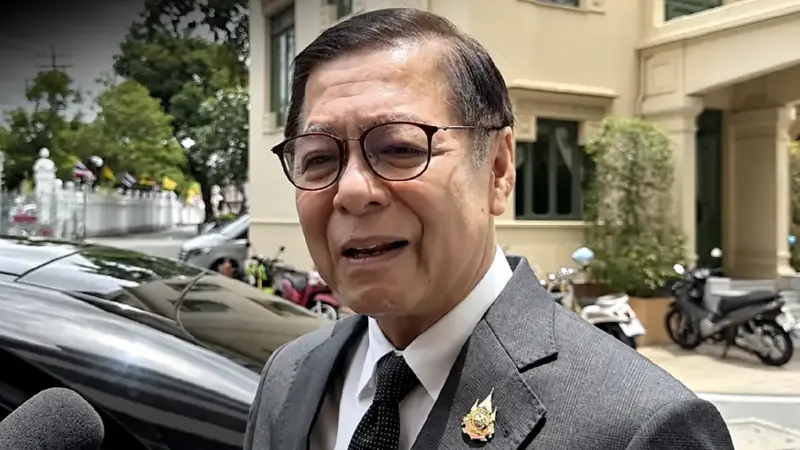
Deputy Prime Minister and Minister of Foreign Affairs Sihasak Phuangketkeow outlined Thailand’s preparations on Saturday (September 12), explaining that relevant agencies had held several rounds of discussions to determine how the country’s position should be presented during the proceedings.
Thailand has also engaged foreign legal advisers with expertise in international maritime law. Sihasak expressed confidence that the country had a relatively strong legal position based on the principles of international law.
He added that Thailand would need to demonstrate that MOU 44 was cancelled because the process had made no progress for more than 20 years, with the aim of opening a new path for bilateral negotiations between Thailand and Cambodia. He noted that voluntary conciliation also remained an option before the compulsory conciliation process.
“Everything has to be discussed. It is not only a matter of international law, but also a matter of mutual trust in reaching an agreement,” Sihasak stated.
Cambodia has proposed discussions on maritime boundary delimitation and indicated that, if the two countries cannot reach an agreement, they should also consider how benefits from various resources could be shared.
Sihasak maintained that resource-sharing arrangements should not fall within the scope of compulsory conciliation. Thailand’s position, therefore, is that efforts to negotiate maritime boundary delimitation should first be pursued to the fullest extent.
