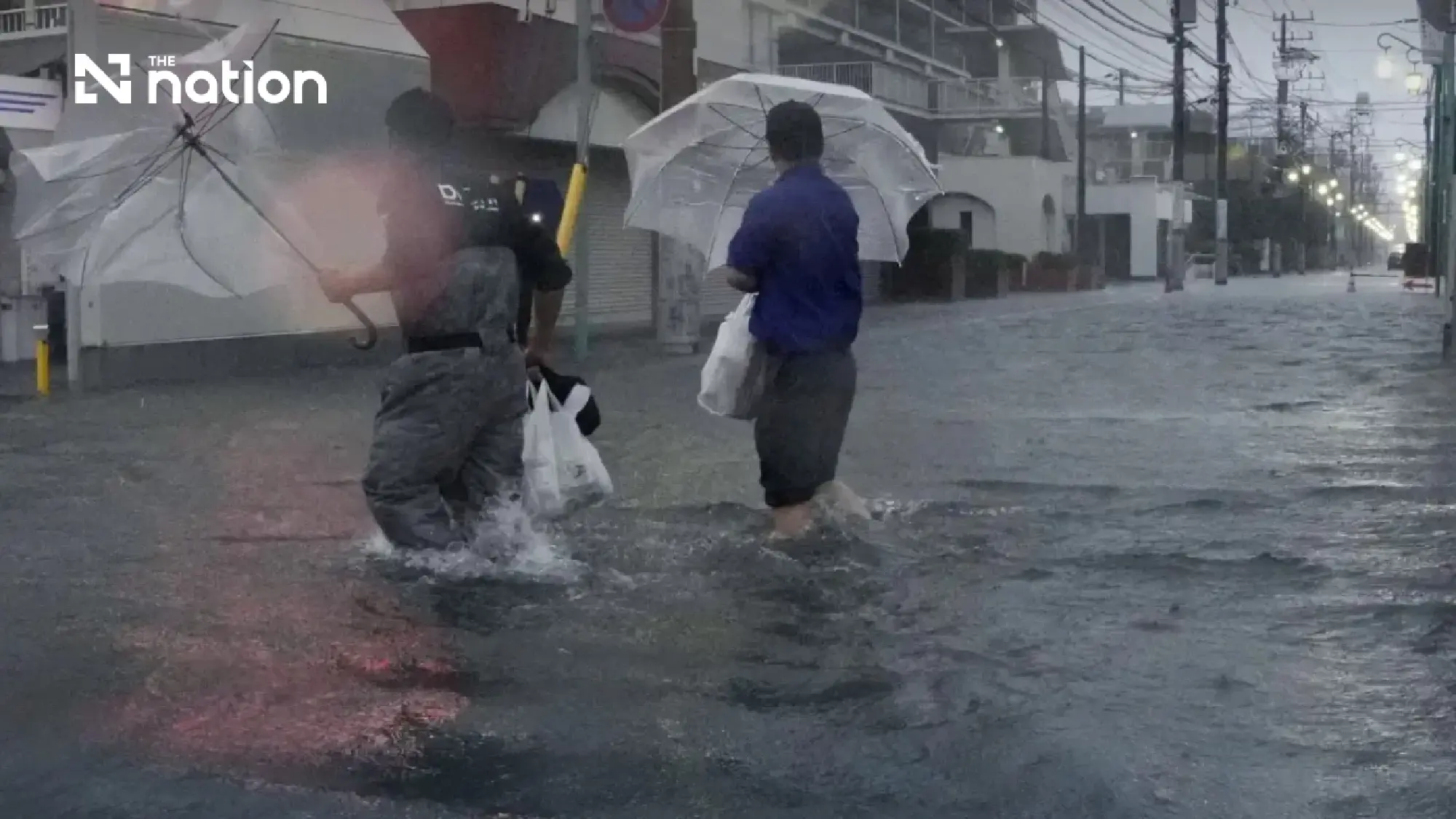
Typhoon Dujuan prompted evacuation alerts for more than 1.6 million people in Japan and forced 275 flight cancellations on September 21
As of September 22, Typhoon Dujuan was responsible for five deaths, six missing people, and 23 injuries across Japan.
The fatalities were caused by heavy rain, flooding, and landslides resulting from the typhoon, which had winds of 144 km/h.
The storm prompted authorities to issue evacuation alerts for over 1.6 million people and caused significant flooding in areas like Kamakura and Chiba Prefecture.
Widespread travel disruption occurred, including the cancellation of 275 flights and the temporary suspension of some Shinkansen bullet train services.
Japan reported five deaths linked to Typhoon Dujuan as of 12.30pm Japan time on September 22, 2026, following heavy rain, flooding and landslides. The Fire and Disaster Management Agency’s eighth situation report also listed six people missing and 23 injured nationwide.
Kyodo had earlier reported at least two confirmed deaths, citing local officials. Authorities issued alerts urging more than 1.6 million people to prepare to evacuate as the storm battered areas near Tokyo and caused widespread travel disruption.
Dujuan moves offshore after bringing winds of 144km/h
Typhoon Dujuan brought maximum winds of about 144 kilometres per hour as it moved south of Katsuura, near Tokyo, leaving thousands of households without electricity.
The Japan Meteorological Agency (JMA) said early on September 22 that Dujuan was moving away from the coast and heading northeast out to sea towards the Aleutian Islands, with its winds gradually weakening. The agency warned that rain could continue in some areas as the storm moved north.
The JMA had also warned that accumulated rainfall could exceed the average total for September in some areas, potentially producing the heaviest rainfall in years.
Dujuan is designated Typhoon No. 25 in Japan’s 2026 numbering system. Japan regularly experiences strong typhoons from late summer to early autumn.
Airlines cancel 275 flights as rail services are disrupted
Japan Airlines cancelled 135 flights and All Nippon Airways cancelled 140 on September 21. The combined 275 flight cancellations left passengers stranded at airports.
Several railway lines temporarily suspended services because of Dujuan, including some Shinkansen bullet train services connecting Tokyo and Osaka.
Tokyo Game Show, one of the world’s largest gaming exhibitions, cancelled its entire final day, scheduled for September 21. In their official cancellation notice, organisers cited expected heavy rain, strong winds and possible transport disruption, saying the decision prioritised the safety of visitors, exhibitors and staff.
Outdoor music events and baseball games in Chiba Prefecture were also cancelled for safety.
Flooding hits Kamakura and communities in Chiba
Social media posts showed floodwater outside Kamakura Station, a gateway to one of Japan’s popular tourist destinations. Flooding also affected Ichikawa, east of Tokyo, and Oamishirasato, both in Chiba Prefecture.
Kamakura Mayor Takashi Matsuo warned on X that flooding had occurred in several parts of the city and urged residents to avoid driving because of the danger.