
Thailand monitors Prachin Buri floodwater for toxic contamination
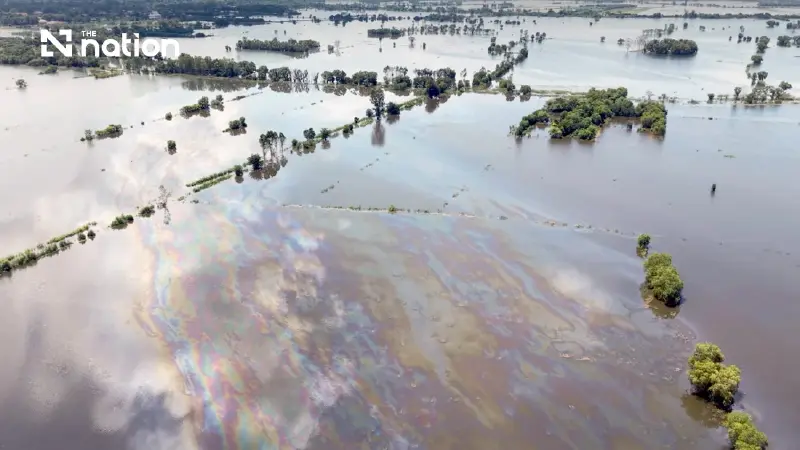


The Department of Health is monitoring suspected chemical contamination in floodwater in Hua Wa, Prachin Buri, after foul odours and a rainbow-coloured sheen were detected.
- Thai health authorities are monitoring floodwater in Prachin Buri for toxic contamination, prompted by foul odours and a rainbow-coloured sheen near waste and landfill facilities.
- Four groups of hazardous substances are of particular concern, including used oils, heavy metals from electronic waste, corrosive chemicals, and volatile organic compounds.
- Residents have been warned to avoid contact with the water, and mobile medical teams have been proposed to screen for health issues such as skin and respiratory irritation.
The Department of Health is monitoring possible chemical contamination in floodwater in Prachin Buri after foul odours and a rainbow-coloured sheen were observed in an area with waste-sorting and landfill facilities.
Dr Thiti Sawaengtham, director-general of the Department of Health, outlined concerns about standing floodwater in Hua Wa subdistrict, Si Maha Phot district, where facilities sort and bury waste or discarded materials.
The department suspects the floodwater may have flowed through recycling, waste-sorting or industrial waste landfill sites. This raises concerns that hazardous chemicals could contaminate water sources used for drinking and household purposes, as well as soil and air, potentially causing both acute and long-term health effects.

Four groups of hazardous substances to monitor
The department identified four groups of potentially hazardous substances requiring particular attention:
- Used lubricating oils and solvents: These could explain the rainbow sheen and pungent smell. They may contain volatile organic compounds such as benzene and toluene, which can affect the central nervous system. Certain substances in this group also pose a cancer risk.
- Heavy metals: Cadmium, lead, mercury and chromium may originate from electronic waste. If released into the environment, they can accumulate in soil and water sources and enter the food chain.
- Acids, alkalis and corrosive chemicals: These substances can damage the skin, harm aquatic ecosystems and affect agricultural crops.
- Volatile organic compounds and toxic residues: Exposure may affect the respiratory system, liver and kidneys, particularly at high levels or over prolonged periods.
Mobile medical teams proposed
Dr Thiti explained that the department has coordinated with the Prachin Buri Provincial Public Health Office and local health agencies. It has also proposed setting up mobile medical teams to provide outreach screening and treatment for people with acute symptoms, particularly chemical-related dermatitis and respiratory irritation.
Young children, older people, pregnant women and people with chronic illnesses are among the groups requiring particular attention.

Avoid floodwater and untested water sources
The department urged residents to avoid direct contact with standing floodwater. Anyone who needs to wade through it should wear thick rubber boots and wash thoroughly with soap immediately afterwards.
Water from natural sources, groundwater and floodwater should not be used for bathing, washing, cleaning or farming until laboratory tests confirm it is safe.
Anyone detecting a strong chemical smell should leave the area and move to a well-ventilated location. Residents should watch for symptoms including red, itchy rashes, blistering skin, stinging eyes, dizziness, nausea or difficulty breathing, and obtain immediate medical attention if any develop.

Agencies urged to coordinate water safety measures
The department stressed that addressing the problem requires cooperation among several agencies. This includes the Department of Industrial Works for factory oversight and law enforcement, the Pollution Control Department for checking contamination levels in water sources, and public health agencies for monitoring toxic substances in water used for drinking and household purposes.
Local administrative organisations and other agencies in the area should arrange supplies of clean drinking water and water for household use until local water sources are confirmed safe.
