
Energy Ministry proposes ending gasohol 91 sales by the end of 2027
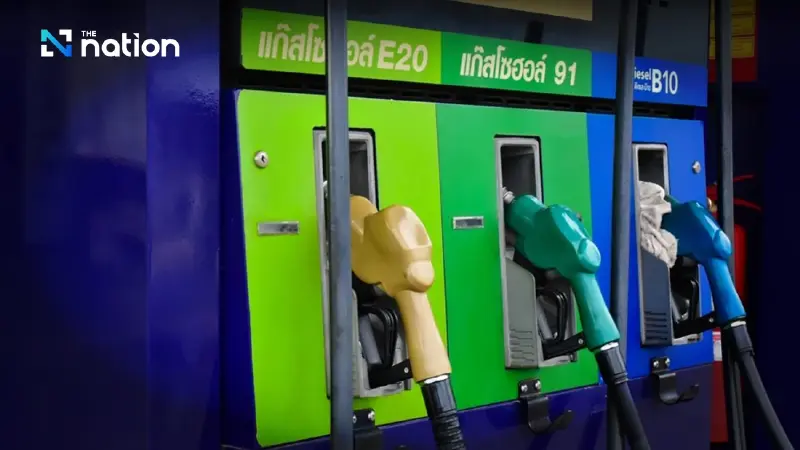


Thailand’s draft Oil Plan 2026 would make E20 the standard petrol, promote B20 diesel and introduce an energy crops law. Public feedback closes on 27 November.
- Thailand's Energy Ministry has proposed to stop selling gasohol 91 by the end of 2027, a revision from an earlier 2025 target.
- The plan aims to establish 95-octane E20, a petrol blend containing 20% ethanol, as the new standard fuel.
- Other fuel options, including 95-octane E10 and E85, will remain available for motorists after the change.
- This proposal is part of the draft Oil Plan 2026, which is currently open for public comment and still requires Cabinet approval.
Thailand’s Energy Ministry has proposed ending sales of gasohol 91 by the end of 2027 and making 95-octane E20 the country’s standard petrol. Motorists would still be able to buy 95-octane E10 and E85 under the draft Oil Plan 2026, which is open for public comment until Friday, 27 November.
Wuttitat Tantivess, deputy director-general of the Department of Energy Business, presented the 2026–2050 plan at Chulalongkorn University on 19 November. An earlier draft had targeted 2025 for withdrawing gasohol 91. The revised proposal still requires Cabinet approval.

What would change at the pump
The ministry wants E20, a petrol blend containing 20% ethanol, to account for half of petrol sales by 2032. It would retain B7 as the standard diesel while encouraging greater use of B20, a blend containing 20% biodiesel. The aim is to find a domestic market for surplus Thai palm oil that would otherwise be exported.
- E20 petrol accounted for 20.54% of petrol sales in August–October 2026. The draft target is 50% by 2032.
- B20 diesel accounted for 9.77% of diesel sales over the same period. The draft target is 20% by 2032.
- Gasohol 91 accounted for 17.66% of petrol sales over those three months, or 5.4 million litres a day. Even if all those sales shifted to E20, its share would reach about 38%. The largest share of the petrol market still belongs to 95-octane E10, at nearly 61%.
- E20 was available at 6,275 filling stations and B20 at 2,066, according to figures presented at the hearing. The department plans to expand availability and update its online list of compatible vehicles. It will also examine tax incentives to help owners replace filters and fuel lines on some diesel vehicles.
A separate proposal to withdraw unblended 95-octane petrol by 2032 requires further study, Wuttitat said.
Energy crops and fuel subsidies
The ministry proposes an energy crops law covering cultivation, processing and blending, supported by a national biofuels committee. It will also review fuel excise duties to encourage motorists to choose higher biofuel blends.
The draft raises the possibility of targeting fuel subsidies more narrowly. The Oil Fuel Fund could offer different levels of support to different groups or limit the volume of fuel eligible for a subsidy, Wuttitat said.
Oil demand could peak as early as 2029
The ministry revised its forecasts after Thailand brought its net-zero target forward from 2065 to 2050. This year’s oil supply disruptions and the growing use of electric and hybrid vehicles also prompted the review.
Chulalongkorn University’s Energy Research Institute modelled two paths from demand of 119.3 million litres a day in 2026. On current trends, demand would peak at 130.2 million litres a day in 2034. Under the net-zero scenario, it would peak five years earlier, at 125.1 million litres a day in 2029, and fall to 70.2 million by 2050.
Aviation faces a different outlook. The draft projects that jet fuel demand will overtake domestic production capacity around 2038–39. Wuttitat said refineries could adjust their output or blend in more sustainable aviation fuel. The department will also study whether underground caverns in the north-east could hold strategic oil reserves.
After the consultation closes, the department will revise the draft for inclusion in the National Energy Plan and submit it to the energy policy committees and Cabinet.
