
Thailand's attorney-general puts facts and the law before politics
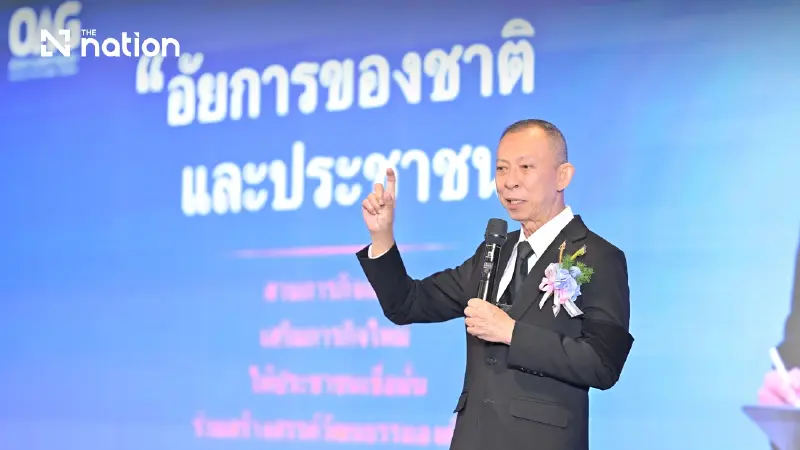


Thailand's Attorney-General Kowit Sripairoj pledges evidence-based decisions free from political direction as he outlines four reform priorities for 2027–28.
- Thailand's new Attorney-General, Kowit Sripairoj, has pledged to prevent political interference in the prosecution service.
- He insists that all decisions will be based strictly on the facts and the law contained within official case files, not political influence.
- While acknowledging the link between state agencies and government, Kowit gave an assurance that politicians would not be permitted to direct prosecutors.
- Priorities for his term include improving transparency, efficiency, and access to justice to strengthen the rule of law and build public confidence.
Thailand’s 21st Attorney-General, Kowit Sripairoj, has pledged to prevent political interference in prosecutorial decisions, stressing that every decision must be supported by the facts and the law recorded in official case files.
He made the pledge after outlining his management policies for fiscal 2027 and 2028 at the Office of the Attorney General (OAG) in Bangkok on Friday (October 9).
Kowit warned that rapid social change, emerging forms of crime, transnational criminal activity, corruption and rising public expectations of the justice system posed significant challenges for prosecutors.
He stressed the need for the organisation to adapt while upholding the rule of law, protecting national and public interests, and strengthening public confidence in the justice system.

Asked whether the prosecution service could remain free from politics during his two-year term, Kowit outlined the distinct roles of the legislative, executive and judicial branches in protecting the public, including against abuses of state power.
Although public administration could not be entirely separated from politics, he maintained that prosecutors must remain politically impartial.
“Politics cannot simply be avoided,” Kowit told reporters, acknowledging the relationship between state agencies and elected governments.
“But will we allow politicians to direct us? I can assure you we will not. I will act on the facts and the law. Everything must be in the case file, and I can open it for you to see.”

Four priorities for the prosecution service
Under the theme “Prosecutors for the Nation and the People”, Kowit outlined four management priorities aimed at improving efficiency, strengthening the rule of law and building public trust.
- Maintaining existing responsibilities: Accelerating decisions in criminal and civil cases while ensuring fairness, expanding proactive mediation and dispute resolution, improving staff training and reducing administrative procedures through a nationwide transition to paperless operations.
- Strengthening new responsibilities: Protecting state interests through more effective enforcement of civil and administrative judgments, improving prosecutors’ ability to handle technology-related crime, reviewing laws and subordinate regulations, and raising standards to ensure accurate, timely and fair case decisions.
- Building public confidence: Promoting greater transparency, reducing inequality and improving access to justice without charge. Key measures include upgrading the central database, preparing for a digital prosecution service under the “Smart OAG” initiative, developing the “OAG Tracking” application for online case-status checks and strengthening cooperation with domestic and international agencies.
- Developing organisational culture: Promoting staff wellbeing, integrity and social responsibility, guided by the shared values of “PUBLIC”: People First, Uprightness, Betterment, Lawfulness, Integrity and Collaboration.

Kowit emphasised that the four priorities would guide the OAG towards delivering more effective justice, improving access to legal services and responding to changing circumstances. The reforms also aim to serve the public interest, strengthen confidence in the justice system and foster an organisational culture aligned with the vision of “Prosecutors for the Nation and the People”.
