
Thai scientists plan space tests on bacteria for coral conservation
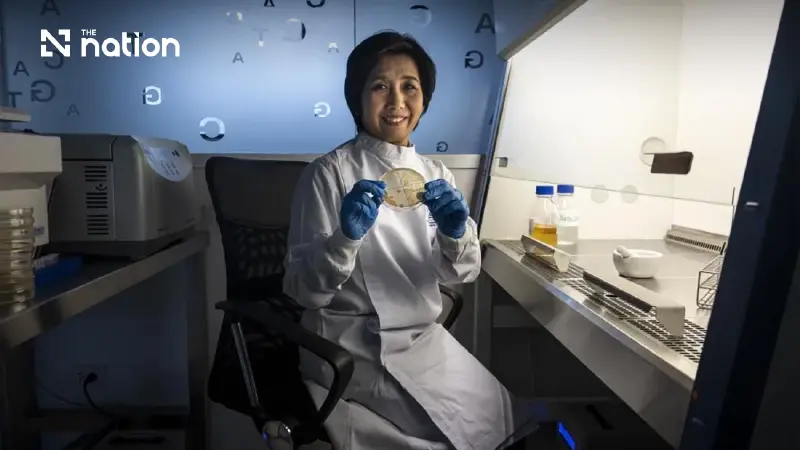


Chulalongkorn University researchers will study how microbes respond to low gravity and space radiation to explore ways to strengthen coral resilience.
- Thai scientists will send bacteria isolated from local coral reefs to the International Space Station (ISS) for experiments scheduled for 2027.
- The research aims to study how these microbes respond and adapt to extreme space conditions, including low gravity and radiation.
- The ultimate goal is to use the findings to develop new methods for strengthening coral resilience against the effects of climate change on Earth.
Biological samples from Thailand collected by Thai scientists are to undergo experiments aboard the International Space Station (ISS) for the first time, marking a milestone for Thai science.
The samples are scheduled to be sent into space in summer 2027 under L³: Little Living Lab, an international research project supported by the National Geographic Society.
The samples have their origins in the coral reef ecosystem around the Samae San islands in Chon Buri province, rather than a conventional laboratory.
Chulalongkorn University researchers have long conducted coral conservation and restoration studies there as part of the Plant Genetic Conservation Project under the Royal Initiative of Her Royal Highness Princess Maha Chakri Sirindhorn (RSPG) and under the Royal Thai Navy’s Naval Special Warfare Command.
The specimens bound for space are bacteria of the genus Pseudoalteromonas isolated from Thai corals.
Researchers will investigate how these microbes respond and adapt to the extreme conditions aboard the ISS, including low gravity and space radiation.
The research is led by Prof Dr Suchana Chavanich, deputy director of the Aquatic Resources Research Institute, a lecturer in the Department of Marine Science, Faculty of Science, Chulalongkorn University, and a National Geographic Explorer with extensive experience in Thai coral conservation and restoration.


Corals do not live alone, Suchana explained, but coexist with large numbers of microbes.
These organisms are linked to the health and functioning of coral ecosystems.
Understanding how they respond to environmental changes could be key to finding new ways to help reefs better cope with the effects of climate change.
“Although coral reefs are large ecosystems, the future of corals may depend on very small organisms such as the microbes living with them. Studying how these microbes respond to extreme conditions could offer new perspectives on developing ways to strengthen coral resilience in the future,” Suchana said.
The ISS provides a distinctive setting for studying how living organisms respond to conditions different from those on Earth, particularly low gravity and other factors in the space environment.
The experiment will examine bacterial responses including growth, biofilm formation, pigment production and biological changes associated with coping with environmental stress.
Researchers will compare the experimental data with control samples on Earth to understand how the microbes respond to different conditions.


If the bacteria become more resilient, the researchers will also assess whether they could be used in coral restoration to help corals better tolerate environmental conditions.
L³: Little Living Lab is a collaboration supported by the National Geographic Society together with the Brinson Exploration Hub at the California Institute of Technology (Caltech).
Three National Geographic Explorers, from Thailand, the United States and Zambia, are taking part.
The researchers from the three countries will send microbes from different ecosystems to the ISS for experiments planned to last about 50 days.
Thailand’s participation demonstrates the capacity of Thai scientists to bring local biological resources and ecosystem knowledge into international research linking marine science, microbiology and space technology.
Although the mission will take microbes far from Thai seas to the ISS, its central aim remains to build knowledge to protect ecosystems on Earth.
Suchana said the research’s ultimate purpose lay on Earth.
She explained that if knowledge gained from experiments in orbit helped protect coral ecosystems more effectively, it would show how exploration beyond Earth could also help care for our home planet.
The project is therefore both a milestone for Thai science on the international stage and an opportunity to connect space exploration with environmental challenges, particularly the conservation of coral reefs facing the effects of global warming and changes in the oceans.
