
Bangkok could face 100-year coastal floods every few years by 2050
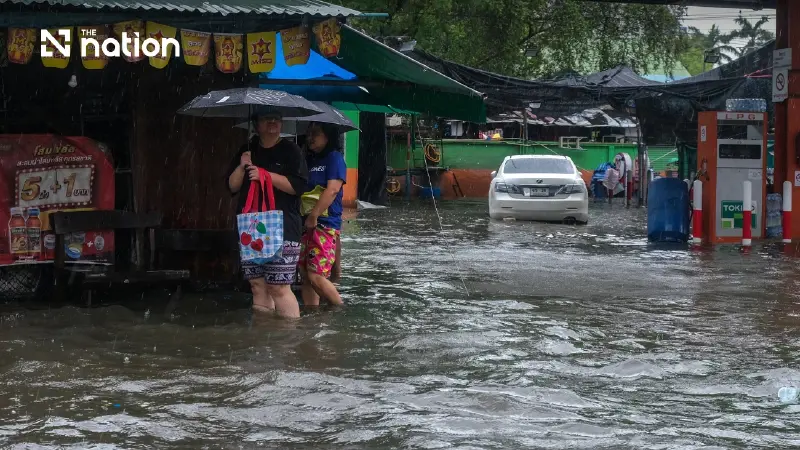


The Asian Development Bank estimates Asia-Pacific needs US$9–19 billion a year in coastal protection as flood risks rise in Bangkok.
- The Asian Development Bank (ADB) warns that by 2050, Bangkok could experience severe coastal floods every few years, a level of severity that historically occurred only once a century.
- This increased flood risk is attributed to climate change, which is causing rising sea levels and worsening coastal flooding.
- Bangkok is one of several major Asian cities identified by the ADB as facing similar escalating risks, including Jakarta, Kolkata, and Mumbai.
- Under a high-emissions scenario, the report projects that such extreme flooding could become an annual event in these at-risk cities by the year 2100.
Bangkok could face coastal floods every few years by 2050 at a severity historically experienced only once a century, the Asian Development Bank (ADB) warned in a report released on October 21, 2026.
ADB’s projection for Bangkok concerns how frequently severe coastal flooding could occur. It does not mean the entire Thai capital will be submerged every year.
ADB’s Asia-Pacific Climate Report 2026: Coastal Risks on the Rise—Actions for a Resilient Future identifies Bangkok, Jakarta, Kolkata and Mumbai among cities facing increasingly frequent severe coastal flooding. Under a high-emissions scenario, extreme coastal water levels that are now rare could become annual events in these cities by 2100.
Climate change is raising sea levels and worsening coastal flooding, ADB reports. Major coastal cities, where population and economic activity are concentrated, face increasing threats from rising seas, severe storms and floods.
Asia-Pacific coastal flood losses could reach US$739 billion a year by 2100
Without sufficient adaptation, annual coastal flood losses across the 30 coastal economies assessed in Asia and the Pacific could reach US$520–739 billion by 2100, compared with about US$27 billion today, ADB estimates. The bank puts losses in 2050 at US$172–199 billion a year, more than six times the current level. Even the lower end of the 2100 range would be almost 20 times current losses.
Larger economies could face the highest monetary losses, according to ADB, while atoll nations face a heavier burden relative to their economic size. Under a high-emissions scenario, annual coastal flood damage in atoll nations could equal 30–60% of gross domestic product by 2100.
More than 400 million people live within 10 kilometres of the sea in ADB’s coastal developing member economies, representing over one-tenth of their combined population. Coastal areas across Asia and the Pacific generate about US$7 trillion in annual economic output and support trade, transport, industry and tourism, according to the bank.
ADB also estimates that disaster-related disruption to ports could put US$40–45 billion in regional trade at risk each year. The effects of coastal flooding could therefore extend beyond affected communities to supply chains and international trade.
Coastal protection could deliver benefits worth 20 times the cost
Investment of US$9–19 billion a year in coastal protection across Asia and the Pacific could keep annual flood losses close to current levels and prevent US$178–360 billion in damage each year, ADB estimates. The economic benefits of strengthening coastal resilience could be worth up to 20 times the investment cost.

Yevgeniy Zhukov, director general of ADB’s Climate Change and Sustainable Development Department, described coastal areas as important but overlooked drivers of the region’s economy, increasingly threatened by rising seas and worsening hazards.
“We are at a turning point and must act now,” Zhukov said, calling for long-term, flexible approaches informed by risk to make coastal areas more resilient, protect people and keep economies functioning.
ADB calls for long-term coastal resilience planning
Governments should move from reactive disaster responses to long-term planning that incorporates coastal risks into economic development, land use and infrastructure investment, ADB recommends.
ADB identifies four priorities:
- Integrating coastal-risk planning into development decisions.
- Strengthening institutions and governance.
- Mobilising finance.
- Establishing mechanisms to sustain implementation over the long term.
International public finance for climate adaptation in Asia-Pacific coastal economies rose from about US$5 billion in 2015 to an annual average of US$11.4 billion in 2022–2023, according to ADB. Despite roughly doubling, funding remains well below investment needs.
Public funding remains the main source of coastal resilience investment, ADB notes. Governments need to strengthen their fiscal capacity while drawing on private capital, concessional financing and public-private partnerships to support the long-term measures needed to protect coastal populations and economies.
