
Aluminium source unconfirmed as Thai river investigation continues
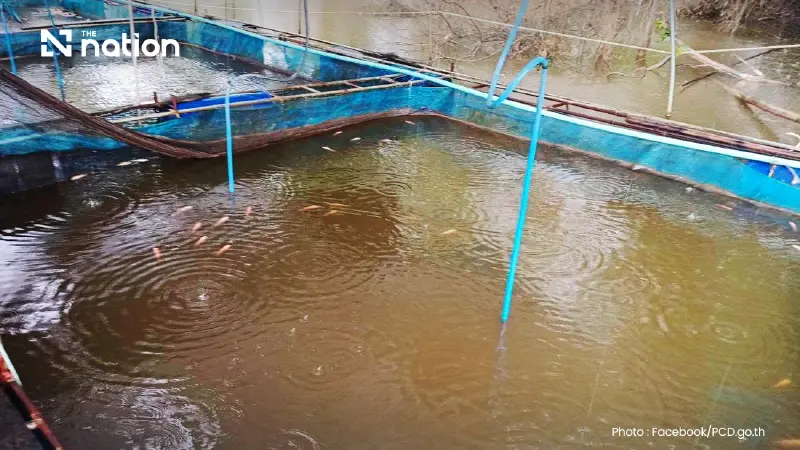


Aluminium readings alone cannot establish the cause of fish deaths in the Prachin Buri River, with sediment sampling planned after flood conditions return to normal.
- The source of aluminium detected in Thailand's Prachin Buri River, where mass fish deaths have occurred, remains unconfirmed, with authorities investigating both natural and industrial possibilities.
- Officials state that the detected aluminium levels alone cannot be definitively linked to the fish deaths, as its impact on aquatic life depends on other water conditions like pH and hardness.
- A comprehensive investigation is continuing, with plans to collect sediment samples once flood conditions recede to help determine the pollutant's origin and the exact cause of the deaths.
- An earlier report had mistakenly interchanged the figures for ammonia and aluminium, an error which the Pollution Control Department has since corrected and apologized for.
The Thai government is prioritising efforts to establish the facts and assess the impact on the public following fish deaths in the Prachin Buri River in Prachin Buri province, deputy government spokesperson Lalida Periswiwatana said on Sunday (October 25, 2026).
The Pollution Control Department (PCD), under the Ministry of Natural Resources and Environment, has continued monitoring water quality in the area.
The department explained that aluminium is an element that occurs naturally in soil and rocks and can enter waterways through runoff or natural weathering.
However, industrial activities and wastewater can also be sources.
The test results alone therefore cannot establish where the aluminium came from or whether it was linked to the fish deaths.
Further examination of scientific data and local environmental conditions is needed.
Lalida explained that the PCD had clarified the river water analysis results on Saturday (October 24, 2026), after the ammonia and aluminium figures had been mistakenly interchanged in earlier reporting.
The correct readings were 0.22–0.48 milligrams per litre for ammonia and 0.559–3.547 milligrams per litre for aluminium.

The department corrected the information and apologised to the public and the media.
The correction addressed an error in the published data and did not mean that aluminium levels in the river had only recently risen.
The deputy spokesperson said concerns about the detected aluminium concentrations required a comprehensive assessment.
Effects on aquatic animals depend not only on aluminium concentration but also on water pH, hardness, dissolved organic carbon levels, the form of aluminium present and how long the animals are exposed to it.
Without complete supporting information, it would be premature to conclude that the detected levels were safe or had caused the deaths of aquatic animals.
Technical guidance from the United States Environmental Protection Agency (EPA) indicates that assessing aluminium levels that could affect freshwater aquatic animals requires consideration of local water conditions.
A single numerical threshold cannot be applied to every waterway.
These are technical guidelines, and the natural occurrence of aluminium does not rule out effects on ecosystems at high concentrations.
Lalida added that the PCD planned to collect sediment samples from the Prachin Buri River and tributaries once flood conditions returned to normal.

The aim was to examine the accumulation of pollutants, assess their sources and use the analysis results to help determine the cause of the fish deaths.
A comprehensive investigation would be needed before concluding whether the pollution detected resulted from natural processes or human activities.
At the concentrations detected, aluminium would have no direct effect on health provided the water was not used or consumed continuously.
The body normally absorbs very little aluminium, but water intended for drinking or domestic use should be treated before use.
Of the five sampling sites, only two require further investigation.
Site 1, the Pak Nam Ban Nong Hoi bridge, recorded aluminium at 3.547 milligrams per litre, while site 2, the bridge over the Prachin Buri River in Kabin Buri subdistrict, recorded 0.874 milligrams per litre.
To strengthen confidence in future disclosures, the PCD will tighten checks before releasing information.
Figures, substance types, units of measurement, sampling locations and analysis results will be checked against the original laboratory reports.
The technical team and responsible personnel will also be required to review the information before publication.
Meanwhile, the Prachin Buri Provincial Fisheries Office released test results on Wednesday (October 21, 2026), covering nine samples of aquatic animals from the Prachin Buri River in four districts.
Mercury, cadmium and lead did not exceed the standards used for assessment in any sample.
The results provide information for monitoring the situation, but cover only the substances and samples tested.
They do not constitute an assessment of aluminium in the water and cannot yet be used to confirm the safety of all aquatic animals or establish the cause of the fish deaths.
“The government understands the concerns of local people and confirms that the investigation will be conducted carefully, with science as the guiding principle. Finding aluminium in the water does not necessarily mean it came from industrial plants. At the same time, we cannot confirm that it came from natural sources or has no effect on aquatic animals until sufficient investigation results are available. The government is therefore prioritising a thorough examination of the facts so that the cause can be identified and an appropriate approach to resolving the problem can be formulated,” Lalida said.
The deputy spokesperson added that the government would continue monitoring the work of the PCD, the Department of Fisheries and other relevant agencies.
It would prioritise the release of accurate, transparent and verifiable information to build public confidence and ensure that efforts to address water quality in the Prachin Buri River were based on facts, with public safety and ecosystem protection as key considerations.

