
Thailand hits back at Cambodia over 2 temples on Oct 25
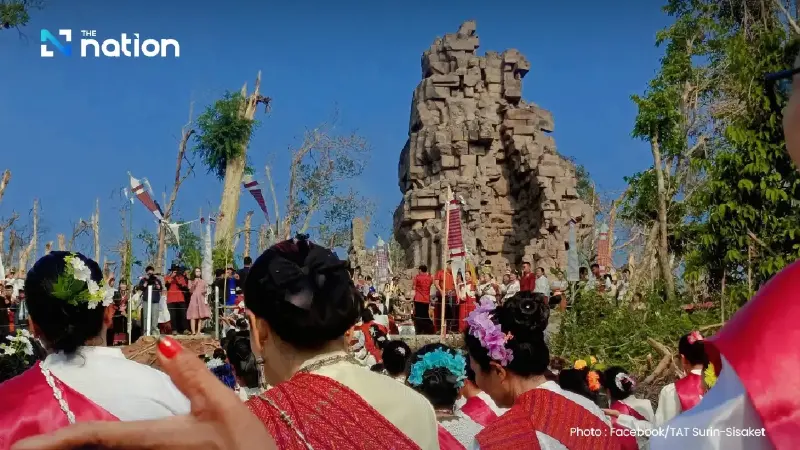


Thai Culture Minister Sabida Thaiseth rejects Cambodia’s demand for Prasat Khana artefacts and plans a formal reply over two disputed temples.
- Thailand's Culture Minister rejected Cambodia's demand for the return of artefacts, asserting Thai ownership of two border temples: Prasat Ta Kwai and Prasat Khana.
- Thailand justifies its claim by stating both temples have been registered as ancient monuments under Thai law and that its agencies have been working to protect the sites.
- The dispute follows a letter from Cambodia's Ministry of Culture demanding the return of objects from Prasat Khana and accusing Thai forces of damaging cultural heritage.
- Thailand is preparing a formal response to Cambodia, denying allegations that it used heritage sites for military purposes and outlining plans to restore the monuments.
Thailand’s Culture Minister Sabida Thaised rejected Cambodia’s demand for the return of artefacts on October 25, 2026, asserting that Prasat Ta Kwai and Prasat Khana, two temples on the Thai-Cambodian border, belong to Thailand.
Sabida announced that Thailand’s Culture Ministry would prepare a formal response to Cambodia’s Ministry of Culture and Fine Arts, following a letter dated October 22 containing claims and demands concerning border heritage sites and antiquities.
Sabida cites Thai registration of both temples
Sabida maintained that Prasat Ta Kwai and Prasat Khana had already been registered as ancient monuments under Thai law. Thai agencies were therefore working to protect the sites and their artefacts within that legal framework, taking account of their historical, archaeological and cultural significance, she explained.
Sabida also cited a Fine Arts Department survey of Prasat Khana conducted with Border Patrol Police around 2001. She said the team encountered no Cambodian military personnel or civilians in the area surveyed and faced no Cambodian objection or obstruction, presenting that survey history as part of the record relevant to assessing the facts.
Following fighting and a subsequent ceasefire, the Fine Arts Department surveyed and catalogued artefacts found at Prasat Khana and moved them to a secure location, according to Sabida. The minister described the transfer as a protective measure against loss, destruction or future damage.
Sabida maintained that the artefacts belonged to Thailand and that Cambodia’s return demand could not be accepted solely on the basis of assertions without clear supporting evidence and a legal basis.

Cambodia demands artefacts’ return and disputes Thai actions
Cambodia’s Ministry of Culture and Fine Arts called for the return of objects from Prasat Khana. The ministry denied that Cambodia had used ancient temples for military purposes and accused Thai armed forces of damaging its cultural heritage.
The Cambodian ministry protested against Thai troops and activities it described as unauthorised at Tamone Thom, Ta Krabey and Khana temples and other border sites. Cambodia listed mine clearance, infrastructure and electricity-network development, restoration and construction among activities it said threatened its sovereignty and a peaceful border settlement.
Cambodia cited damage to Preah Vihear and other sites during fighting in July and December 2025, and called for restraint and accountability. The ministry demanded an end to unilateral activities and accusations, advocating bilateral mechanisms including the Joint Boundary Commission.
Cambodia described the temples as cultural and religious sites serving conservation, research, education and tourism, and reaffirmed its commitments under the 1954 Hague Convention and 1972 World Heritage Convention.

Thai ministry prepares formal reply and restoration plans
Sabida outlined plans for Thailand’s formal reply to cover the temples’ registration status, survey history, the protection of artefacts and proposed conservation and restoration work.
Sabida also rejected allegations that Thai agencies had used heritage sites for military purposes or deliberately damaged them, insisting that their work was intended to protect cultural heritage.
Thailand’s Fine Arts Department was preparing to conserve and restore monuments damaged during fighting, according to Sabida. The work would require surveys, damage assessments and appropriate conservation methods to preserve the sites’ historical and archaeological value for future generations.
Sabida stressed that Thailand’s actions would be based on facts, historical and archaeological evidence, and relevant laws.
“We will do our utmost to protect and preserve Thailand’s cultural heritage and explain the facts to Cambodia through official channels,” Sabida said.
Thai army questions Cambodian film ahead of November 6 release
In a separate statement on October 24, Maj Gen Winthai Suvaree, spokesman for the Royal Thai Army, questioned the historical accuracy of a Cambodian film scheduled for release on November 6, 2026. The film concerns events along the Thai-Cambodian border, and its promotional posters refer to Thai soldiers.
Maj Gen Winthai described the film as a cinematic work based on an individual’s memories rather than a historical record. He argued that its depictions of military operations had been embellished for dramatic effect.
Maj Gen Winthai said the army would examine the film’s details and the filmmakers’ intentions to determine whether it was solely entertainment or had another purpose that could affect Thailand’s image.
Maj Gen Winthai noted that the government and the Joint Information Centre had expressed concern about portrayals of Thai-Cambodian history that could cause misunderstanding or encourage hatred. He warned that creative works should not distort history or stir hostility, and that a negative reception to the film could harm efforts to rebuild relations between the two countries.
