
CAAT finds power banks top banned items in checked bags since Oct 16
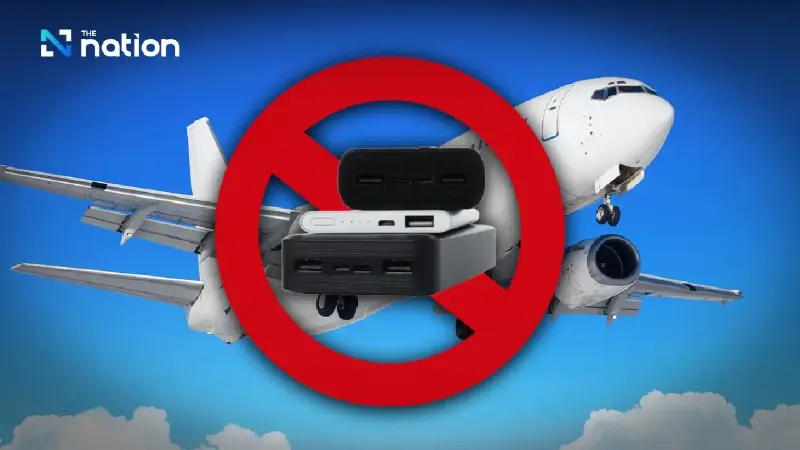


Thai airport staff may open checked bags without owners present only after suspicious X-ray findings, with searches recorded and notices left inside.
- The Civil Aviation Authority of Thailand (CAAT) has identified power banks as the most common prohibited item found in checked baggage since new rules were implemented on October 16.
- These items are banned from checked luggage because battery-powered equipment poses a significant fire and short-circuit risk in an aircraft's baggage hold.
- Under the new rules, airport staff are permitted to open checked bags without the passenger present if an X-ray scan provides reasonable grounds to suspect a prohibited item is inside.
Power banks have been the most common prohibited items found in checked baggage under Thai inspection rules introduced on October 16, 2026, the Civil Aviation Authority of Thailand (CAAT) said.
CAAT reported that electronic devices containing batteries were also among the items detected during checks. The authority warned that storing or transporting battery-powered equipment contrary to requirements could create short-circuit and fire risks in an aircraft’s baggage hold.
X-ray findings determine whether checked bags are opened
CAAT said airport staff may open checked baggage without the passenger being present only when X-ray screening provides reasonable grounds to suspect prohibited items or objects that could threaten aviation safety.
CAAT stressed that the procedure follows international standards and does not authorise the routine opening of every checked bag. Its purpose is to prevent prohibited or potentially dangerous items from being carried aboard aircraft.
Airport staff must take baggage flagged for further examination to a designated inspection area, where only personnel authorised under the law may open it, CAAT explained.
CAAT requires a visual record of the inspection so the search can be reviewed afterwards. Officers must also place a Notice of Baggage Inspection inside the bag to inform its owner that it has been opened.
CAAT advises passengers to photograph bags and contents
CAAT recommends photographing the contents of a bag before closing it and taking photographs of the bag’s exterior at check-in.
CAAT also advises passengers to avoid packing valuables in checked baggage. Keeping photographs as evidence can help passengers and airlines check what happened and coordinate enquiries if bags or their contents are damaged, lost or delayed during transport.
