
What’s in your 72-hour emergency bag? DDPM lists 6 essentials
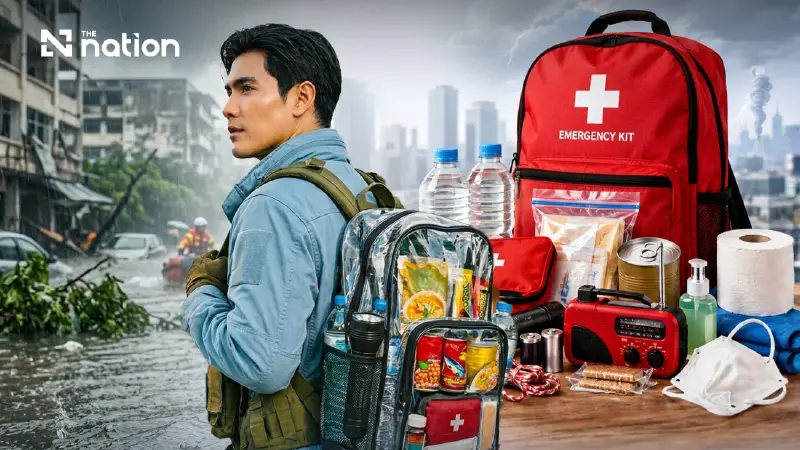


Thailand’s DDPM advises households to prepare six groups of supplies, including three litres of drinking water per person per day.
- On November 2, the Department of Disaster Prevention and Mitigation (DDPM) advised households to prepare an emergency bag with 72 hours' worth of essential supplies.
- The 72-hour recommendation is an international benchmark, covering the critical period before government assistance can be fully organized after a disaster.
- The advice is a general precaution for a wide range of emergencies, including natural disasters, fires, and riots, not just a specific international conflict.
- Recommended contents for the bag include six categories: medicines, food/water, communication tools, important documents/cash, hygiene supplies, and clothing.
Department of Disaster Prevention and Mitigation (DDPM) advised households on November 2, 2026, to prepare emergency bags containing enough essential supplies to support themselves for 72 hours during a disaster or other emergency.
DDPM director-general Nirat Pongsitthaworn said the advice formed part of the department’s longstanding campaign to reduce disaster risks and encourage preparedness without causing panic.
Nirat said several countries had advised residents to keep three days’ supplies of food, medicines and other necessities because of the conflict in the Middle East. Although Thailand was not among the countries being advised to prepare specifically for that situation, he said, emergency bags remained a basic precaution for a wide range of emergencies.
DDPM recommends supplies for the first three days
DDPM described 72 hours as an international benchmark for emergency preparedness. The department said the first three days after a disaster were a critical period when households might need to support themselves while government agencies organised and distributed assistance.
DDPM said sufficient water, food and equipment could help families meet their basic needs while waiting for help. Emergency bags could be useful during flash floods, sudden runoff from higher ground, landslides, earthquakes and disease outbreaks, as well as fires, riots, sabotage and other emergencies.
DDPM checklist covers six groups of essentials
DDPM recommended preparing the following six categories of supplies:
1. Medicines and health supplies: A first-aid kit, basic household medicines, personal medication and medical records.
2. Food and drinking water: Three litres of drinking water per person per day, ready-to-eat food and energy snacks. Households with young children, older people or people who are ill should include food suitable for their needs.
3. Communication equipment and tools: A mobile phone, power bank, torch, spare batteries and a radio for receiving news if internet services are disrupted. Other items include a whistle for signalling for help, candles, a lighter, notebook, pen, pocketknife, scissors, rope and tape.
4. Documents and cash: Important documents and copies stored in a waterproof pouch, including identification cards, house registration documents, health insurance cards, driving licences, bank passbooks and land title deeds. Spare keys and cash should also be prepared in case online financial services become unavailable.
5. Personal hygiene supplies: Tissues, toothbrushes, toothpaste, toiletries and rubbish bags.
6. Clothing and bedding: Spare clothes, raincoats, hats, blankets or sleeping bags sufficient for the initial emergency period.
Emergency bags should be ready to take when evacuating
“Every household should have an emergency bag so that, if an emergency occurs, whether a natural disaster, cyberwarfare or an international conflict, they can take it with them immediately when evacuating an area at risk,” Nirat said.
Nirat recommended choosing a lightweight, waterproof bag and keeping it somewhere readily accessible. Households should regularly check that equipment works and that supplies remain within their expiry dates.
DDPM said its wider preparations included disaster-response machinery, crisis-response personnel and advance warnings through the Cell Broadcast system and other channels. The department was also preparing emergency response and relief arrangements suited to different situations.
DDPM said it stood ready to coordinate contingency plans with other government agencies to support public safety and provide assistance during emergencies.
