
Thai hauliers plan Nov 4 rally with 9 fuel reform demands
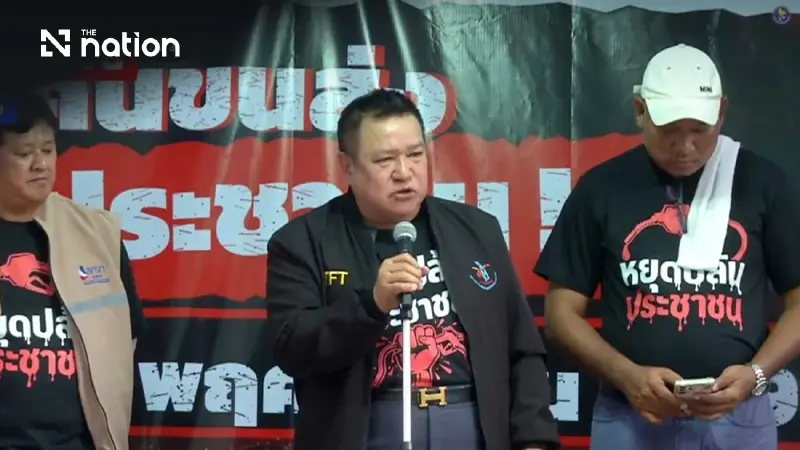


Thai hauliers are pressing nine fuel pricing demands, rejecting E20 and B20 tax cuts and threatening a prolonged truck protest in Bangkok.
- The Land Transport Federation of Thailand will hold a rally on November 4 to present nine demands for fuel pricing reform to the Energy Ministry.
- The hauliers are demanding long-term structural changes to fuel pricing, such as increased transparency and a review of refining margins, rather than temporary tax cuts.
- They argue that the government's recent excise tax cuts on E20 and B20 fuels do not adequately support the freight transport sector, which primarily uses other types of diesel.
- The federation has threatened to escalate the action into a prolonged truck protest if the government does not provide a clear response to their demands.
The Land Transport Federation of Thailand has called a rally outside the Energy Ministry in Bangkok on November 4, 2026, to present nine demands for fuel pricing reform, threatening a prolonged truck protest if the government fails to respond.
Federation president Thongyu Kongkhan outlined plans for a gathering from 9am involving a network of 13 associations, bus operators, labour unions and civic groups. The coalition wants the government and the ministry to address fuel costs and their impact on freight transport through structural changes rather than temporary price relief.
Thongyu criticised the Cabinet’s decision to cut excise taxes on E20 gasohol and B20 diesel for three months, arguing that the measures did not adequately support the fuels most widely used by lorry operators and logistics businesses.

Hauliers challenge the focus of fuel tax relief
Thongyu argued that neither E20 nor B20 was widely used as the principal fuel across the freight sector. Although the tax reductions could benefit some users, including those in agriculture, he maintained that they would do too little to ease costs for the transport businesses that support economic activity.
The federation’s demands extend beyond an immediate reduction in pump prices. Its central proposal is to make energy pricing more transparent and open to scrutiny by removing unnecessary cost components, reviewing embedded charges and examining refining margins and taxes that feed into retail prices.
The federation questioned why consumers and businesses continued to bear high energy costs while the pricing formula included what it described as “phantom costs” and other charges whose justification should be examined.
Federation presses for scrutiny of refining margins
Thongyu traced the pricing approach to 1981, describing it as a framework intended to encourage investment in refining. He argued that the system had not kept pace with changes in the market, which he said now had six refineries.
The federation president also questioned refining margins of about US$7 per barrel, which he associated with the Energy Policy and Planning Office’s pricing framework. He compared that figure with an earlier level of about US$2.80 per barrel and called for a thorough review.
For Thongyu, the issue was whether pricing arrangements designed for an earlier investment environment remained appropriate for the market and competitive conditions of today.
Thongyu argued that high energy costs affected more than transport operators: they also fed into goods prices, business expenses and Thailand’s competitiveness. Without meaningful changes to the pricing structure, he maintained, businesses and households would continue to shoulder the burden.

Truck convoy and prolonged protest remain possible
The federation could escalate its campaign during November if the government and the Energy Ministry failed to give a clear response to its demands.
The proposed escalation could involve bringing a large truck convoy into Bangkok and replacing a one-day gathering with a sustained protest outside either the Energy Ministry or the Transport Ministry. Thongyu indicated that the protest could continue for a month or longer, with support potentially sought from other civic networks.
“We will definitely mobilise on November 4. If the minister or the government does not respond, this could become a prolonged protest. If our demands are not met, we will certainly escalate this time,” Thongyu said when outlining the mobilisation.
The federation’s position is that temporary fuel discounts alone will not resolve the transport sector’s cost pressures. Its campaign calls for a broader reassessment of how energy prices are calculated and how those costs are passed on to businesses and consumers.


