
Northern Taurids offer skywatchers a clear view without moonlight interference
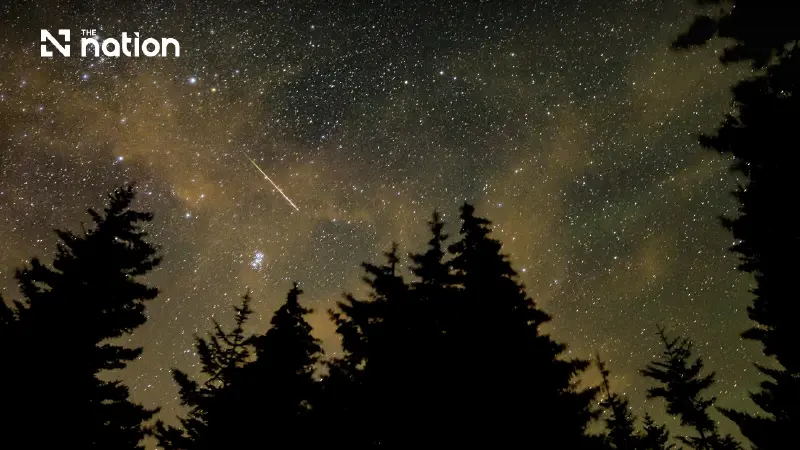


NARIT says the Northern Taurids will be visible across the sky from about 6.30pm on 12 November until dawn, with no moonlight interference.
The National Astronomical Research Institute of Thailand (NARIT) has invited the public to observe the Northern Taurids meteor shower on the night of 12 November 2026 through to the early hours of 13 November, with little interference from moonlight.
According to NARIT's November astronomy calendar, the shower is expected to produce approximately 10 meteors per hour.
Its radiant, the point from which the meteors appear to originate, lies in the constellation Taurus and will rise above the eastern horizon at around 6.30pm.
Although the radiant is located in the eastern sky, meteors may be seen across the sky throughout the night until dawn.
NARIT's earlier annual astronomy calendar estimated a lower peak rate of five meteors per hour for the Northern Taurids.
How meteor showers differ from individual meteors
NARIT explained that a meteor shower differs from an isolated meteor because the paths of multiple meteors appear to originate from a common point in the sky, known as the radiant.
Meteor showers are generally named after the constellation in which their radiant is located, or the constellation closest to it.
These events occur around the same time each year as Earth travels through streams of dust and debris left behind by comets or asteroids during their journeys around the Sun.
As Earth passes through these streams, some particles enter its atmosphere, heat up and produce brief streaks of light visible from the ground.
The result is a series of meteors that appear to radiate from the same area of the sky.
Two more meteor showers expected in 2026
The Northern Taurids are the fifth meteor shower included in NARIT's list of notable events for 2026.
The year's earlier displays began with the Lyrids on 22–23 April, which reached a maximum rate of approximately 18 meteors per hour.
The Perseids followed on 12–13 August, with a maximum of 100 meteors per hour, while the Orionids occurred on 21–22 October at a peak rate of 20 meteors per hour.
The Southern Taurids were the most recent display, occurring on 5–6 November with a maximum rate of 10 meteors per hour.
Two further meteor showers remain on NARIT's calendar this year.
The Leonids are expected on 17–18 November, with a peak rate of approximately 15 meteors per hour.
The final event will be the Geminids on 14–15 December, when the maximum rate could reach 150 meteors per hour, making them the most active shower on NARIT's 2026 list.
