
Thai reservoirs at 82% in Nov 14 update with 18 below 30% amid heavy southern rain and high-tide risks
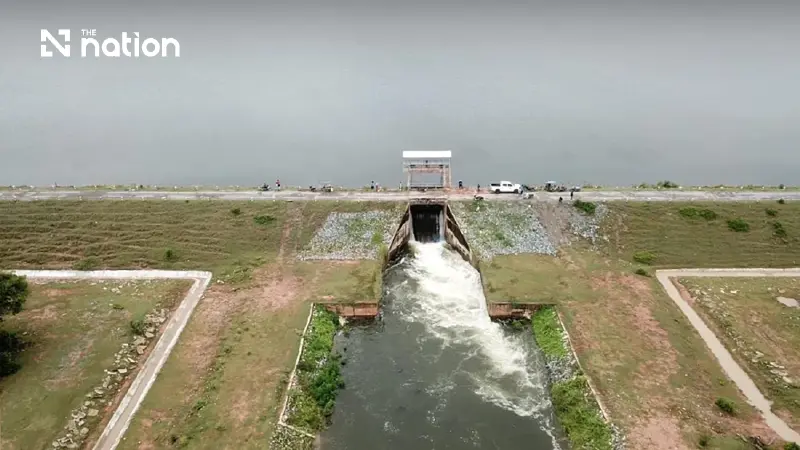


Thailand expects enough water through the 2026–27 dry season while heavy rain in the South and high tides along four rivers remain concerns.
- As of a November 14 update, Thailand's national reservoirs are at 82% capacity, a level deemed sufficient for the upcoming dry season.
- Despite the high national average, 18 medium-sized reservoirs across the country are holding less than 30% of their water capacity.
- Authorities are monitoring ongoing risks from heavy, isolated rainfall in southern Thailand, caused by a northeast monsoon.
- A high-tide alert is in effect for several river mouths and major roads due to strengthening easterly winds raising sea levels.
Thailand’s reservoirs held 66,296 million cubic metres of water, equivalent to 82% of capacity, according to November 13 figures released in an update by the Office of the National Water Resources (ONWR) on November 14, 2026. The agency assessed national supplies as sufficient to meet demand through the end of the 2026–27 dry season.
ONWR nevertheless identified 18 medium-sized reservoirs holding less than 30% of capacity. The update also highlighted continuing concerns over heavy rain in parts of southern Thailand and high tides affecting river-mouth areas.
Usable water stood at 42,168 million cubic metres, equivalent to 74% of usable storage capacity.

Western reservoirs lead regional storage at 96%
Western Thailand recorded the highest reservoir storage level, both by volume and percentage of capacity, in the November 13 regional figures.
- West: 27,316 million cubic metres, or 96% of capacity.
- East: 2,892 million cubic metres, or 91% of capacity.
- Central: 1,445 million cubic metres, or 77% of capacity.
- North: 21,007 million cubic metres, or 76% of capacity.
- South: 5,440 million cubic metres, or 69% of capacity.
- Northeast: 8,196 million cubic metres, or 68% of capacity.
Separate figures for two major southern dams, dated November 14, showed Rajjaprabha Dam holding 4,223 million cubic metres, or 75% of capacity. Bang Lang Dam contained 773 million cubic metres, equivalent to 53%.
Eighteen medium-sized reservoirs remain below 30%
The assessment identified 18 medium-sized reservoirs across five regions with storage below 30% of capacity. The Northeast accounted for half of the reservoirs listed:
- Northeast, nine: Nong Krong Kaew, Huai Takhro, Lam Cho Raka, Laloeng Wai, Huai Laeng, Huai Chiang Kham, Nam Phrom, Huai Aeng and Nong Ya Ma.
- Central region, one: Huai Pong.
- East, three: Huai Khun Chit, Khlong Bon and Khlong Bot.
- West, two: Huai Ang Hin and Huai Ta Paet.
- South, three: Klai Ban, Khlong Pa Bon and Khlong La.
ONWR’s overall assessment of sufficient national supplies therefore comes alongside a need to maintain reserves in areas served by reservoirs with low storage. Water management must also account for areas where reservoir levels are high.
Southern rain expected to ease but isolated heavy falls remain possible
The November 14 weather outlook indicated isolated heavy rain in southern Thailand under the influence of a moderate northeast monsoon over the Gulf of Thailand and the South.
Upper Thailand was expected to become warmer, with rain in some areas. The North and Northeast were still expected to experience cool conditions and light morning mist.
For November 15–16, the outlook indicated higher temperatures, morning fog and isolated thundershowers across upper Thailand.
Southern rainfall was expected to decrease over November 15–17 as the northeast monsoon weakened, although isolated heavy rain remained possible.
High-tide alert covers four rivers and three major roads
ONWR’s high-tide monitoring notice covers November 9–14. Strengthening easterly winds over Thailand and the Gulf of Thailand were expected to raise sea levels and increase water levels at river mouths connected to the sea.
The areas requiring monitoring include communities along the Bang Pakong, Chao Phraya, Tha Chin and Mae Klong rivers. Particular attention applies to communities outside flood embankments and areas without permanent flood protection.
Sections of Sukhumvit Road, Suksawat Road and Rama II Road could also be affected by overflowing water or waterlogging.
ONWR identified southern rainfall, tidal conditions around river mouths and the management of reservoirs with high storage as continuing monitoring priorities, alongside maintaining water reserves for areas with low reservoir levels.
