
Thailand Reaffirms Plan to Earmark 200 Billion Baht for Clean Energy
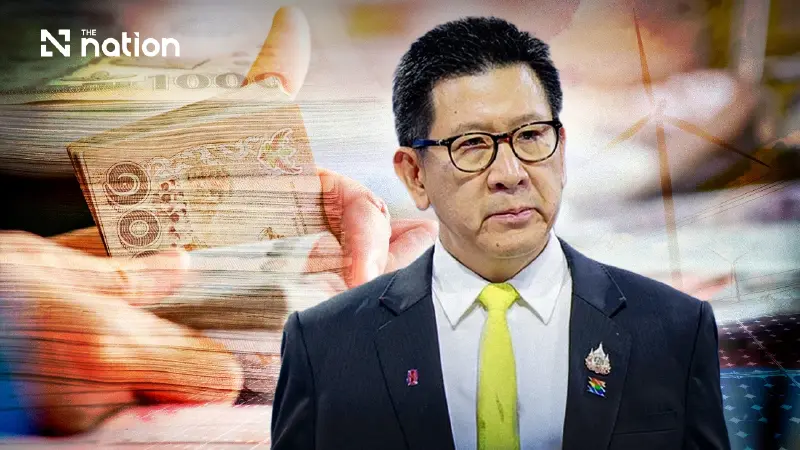


Deputy PM Ekniti Nitithanprapas insists remaining borrowing under 400bn baht decree will focus on solar rooftops, smart grids, and EV public transport
- The Thai government has reaffirmed that 200 billion baht from an emergency loan decree will be strictly prioritized for the nation's clean energy transition.
- Between 50 and 60 billion baht is allocated to support public adoption of solar rooftop systems through low-interest loans and to fund smart grid modernization.
- A portion of the funds will also be used to convert public transport fleets across seven key categories to electric vehicles (EVs).
- This clean energy spending is being given priority over competing funding requests, such as proposals for tourism stimulus packages.
Deputy PM Ekniti Nitithanprapas insists remaining borrowing under the 400 billion baht decree will focus on solar rooftops, smart grids, and EV public transport.
Deputy Prime Minister and Finance Minister Ekniti Nitithanprapas has reaffirmed that the remaining 200 billion baht ($6.05 billion) from the government's 400 billion baht ($12.1 billion) emergency loan decree will be strictly prioritised for Thailand’s clean energy transition.
Addressing queries regarding competing funding applications—including a tourism boost under the "Thais Travel Thailand Plus" scheme—Ekniti stated that while statutory rules permit flexibility, operational priority remains firmly on long-term energy reform.
Focus on Solar Rooftops and Smart Grids
According to a report by Krungthep Turakij, between 50 billion and 60 billion baht ($1.51 billion to $1.82 billion) of the remaining allocation will be deployed to support public adoption of solar rooftop systems.
State-owned financial institutions, including the Government Savings Bank (GSB) and the Government Housing Bank (GH Bank), will provide low-interest credit facilities to assist households.
Ekniti explained that reducing Thailand's reliance on imported oil and natural gas requires comprehensive system-wide upgrades.
Beyond generation, the initiative will cover net-metering facilities, smart meter replacements, and grid expansion.
He warned that partial implementation without overall grid modernisation risks severe power outages, similar to problems experienced in other jurisdictions adopting renewable energy.
Electrifying Public Transport
The energy strategy also targets the transport sector, with plans to convert public transit vehicles across seven key categories to electric vehicles (EVs) to replace ageing fleets. Detailed budget breakdowns for the fleet transition are currently being finalised.
Regarding the initial 200 billion baht tranche of the decree, approximately 40 billion baht ($1.21 billion) remains unallocated. Ekniti noted that the Prime Minister's instructions require a cautious, highly targeted approach given limited fiscal space.

Targeted Relief and AI Expansion
Responding to proposals from the Ministry of Tourism and Sports seeking 1.75 billion to 2 billion baht ($53 million to $60.5 million) for the "Thai Travel Thai Plus" scheme, Ekniti remarked that the figure is relatively modest but stressed that expenditure must strictly align with relief objectives.
He highlighted the success of the parallel "Thai Help Thai Plus" scheme, which integrated artificial intelligence tools—similar to the "Nok Krasip" (Whispering Bird) application—developed in partnership with Grab Holdings. The AI implementation boosted participating merchant sales by more than 68%.
Decisions regarding a second phase for stimulus initiatives after the current term expires at the end of September will be made following a full situational evaluation.
