
Senate passes THB400bn borrowing decree in 135-11 vote
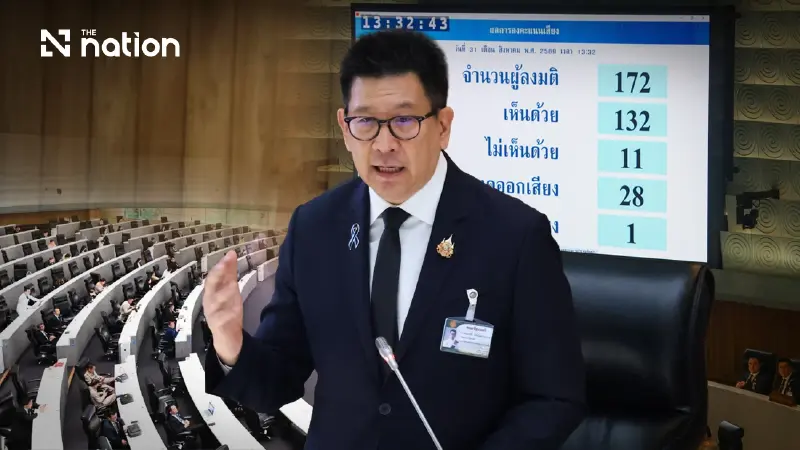


Senators backed the emergency borrowing by 135 votes to 11 after officials acknowledged that no projects had yet been submitted for screening.
Thailand’s Senate approved the government’s THB400 billion emergency borrowing decree on Monday (August 31, 2026), despite concerns that no individual projects had yet been submitted for scrutiny.
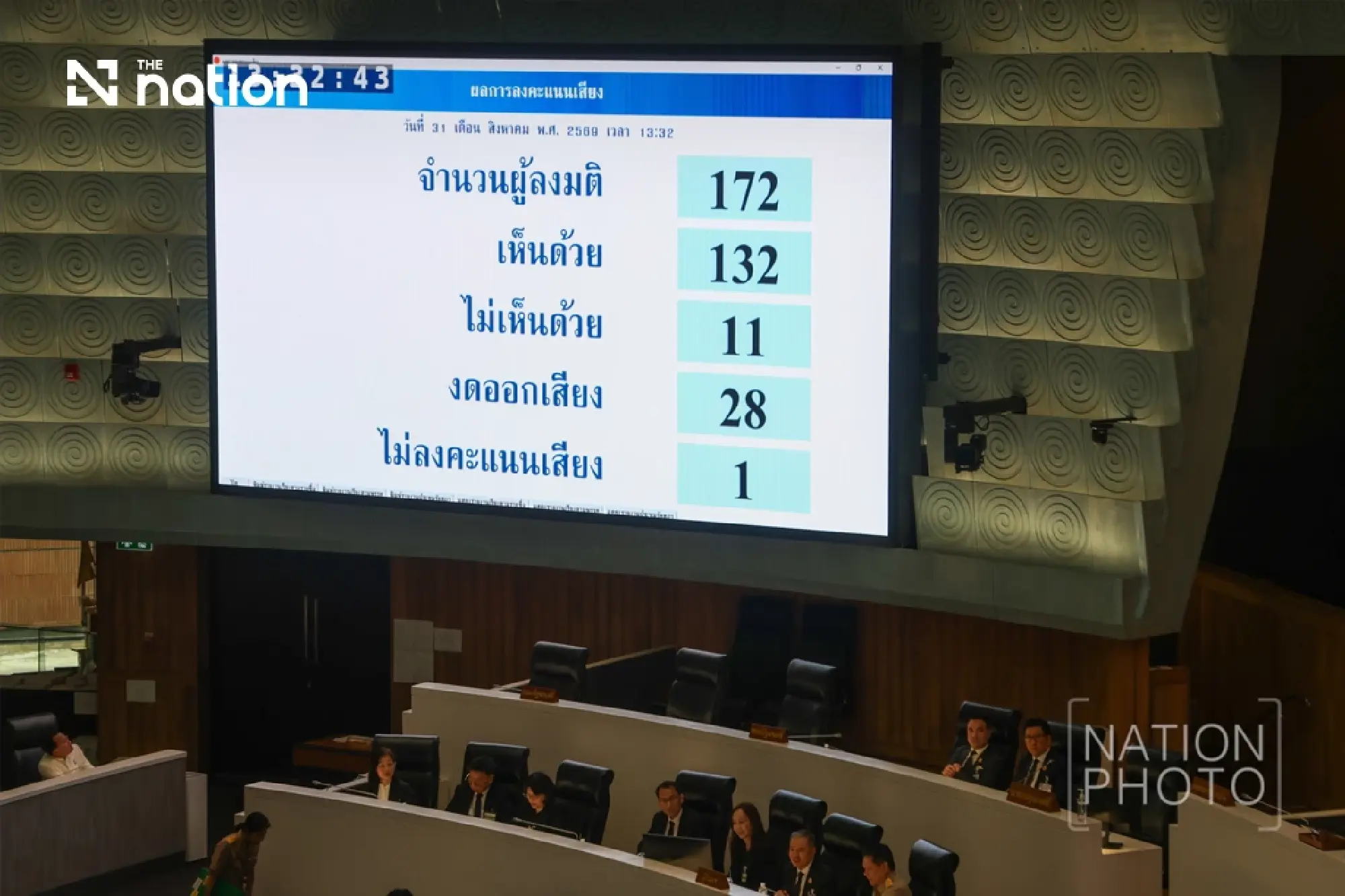
The measure received 135 votes in favour, 11 against and 28 abstentions after senators completed their debate and heard the government’s responses.
Gen Kriangkrai Srirak, First Vice-President of the Senate, chaired the special sitting at Parliament. The decree authorises the Finance Ministry to borrow up to THB400 billion to address the effects of the energy crisis and support Thailand’s energy transition. The measure was listed as urgent business on the Senate’s official agenda.

Ministry acknowledges absence of project details
Before the vote, finance permanent secretary Lavaron Sangsnit, who chairs the committee responsible for screening loan-funded projects, responded to senators’ concerns that the decree amounted to a blank cheque and might fail to address the country’s needs.
Lavaron acknowledged that there were no project-level details because no proposals had yet been submitted to the committee. His position as permanent secretary is listed by the Finance Ministry.
Once the decree received Senate approval, government agencies were expected to submit proposals specifying what each project would do, its purpose and cost, who would benefit and whether it met the decree’s objectives, he said.
“Let me confirm again that there really are no details at this stage,” Lavaron said.
He also stressed that not every proposed project would be accepted.
Applications would have to meet several conditions. They must:
- address an urgent and necessary need for which no regular budget has been allocated;
- be ready to begin immediately after approval;
- be completed by September 30, 2027; and
- offer value for money and generate economic benefits.
Lavaron said energy-transition proposals would undergo an additional level of scrutiny by a subcommittee that included energy experts before being forwarded to the main screening committee established under the decree.
Spending on approved projects would subsequently be assessed by an evaluation committee comprising independent external specialists.
Lavaron assured senators that the screening committee would work transparently and professionally. Each project would have to demonstrate clear value and provide convincing answers to questions raised by the public.
He said the energy-transition programme should leave Thailand better prepared for another energy crisis. After a year of transition measures, the country should be able to respond more effectively and reduce the effects on the public, he added.
Ekniti warns of three waves of economic damage

Deputy Prime Minister and Finance Minister Ekniti Nitithanprapas thanked senators for their differing views and observations but maintained that the emergency decree was urgently needed. His ministerial positions were confirmed in the royal command appointing the Cabinet in March.
Ekniti said the latest crisis differed from previous economic downturns and argued that second-quarter economic figures showed the damage would intensify without the borrowing decree.
He described the impact as arriving in three waves.
The first was a global oil-price shock, with prices rising by 60-70%. The second was a broader increase in the cost of goods after average transport costs rose by 3%.
The third was a contraction in private consumption, which Ekniti said was costing jobs and forcing businesses to close.
“We are already beginning to see the warning signs,” he said. “This wave of the crisis will be extremely severe and could leave a permanent economic scar.”
Ekniti said the decree had two principal objectives. The first was to assist the public and lower living costs through the Thai Chuai Thai Plus programme, the government’s 60/40 co-payment scheme.
The second was to accelerate Thailand’s energy transition.
Ekniti said Thailand’s dependence on imported oil and natural gas was among the highest in Asia. He cited a current account deficit of nearly THB600 billion in the second quarter alone as evidence of a structural weakness in the Thai economy.
The country therefore needed to reduce its exposure to imported energy without delay, he said.
Government promises online disclosure
Ekniti compared Thailand’s economic vulnerability to a house with a leaking roof.
Every time it rained, he said, the occupants had to find buckets to catch the water. Repairing or replacing the roof would remove the need for repeated temporary measures.
In the same way, repeatedly borrowing to respond to energy shocks without investing in structural change would leave Thailand exposed whenever another crisis occurred, he said.
Ekniti said no one could predict when the conflict in the Middle East would end. Without an accelerated transition away from imported energy, Thailand could continue to require emergency measures whenever another external shock struck.
Addressing concerns about transparency and value for money, he promised that every proposed project would be disclosed on a website, allowing the public to examine the details and raise objections.
“The intention is to ensure transparency,” Ekniti said. “No one knows when the next global economic storm will arrive, but today we must strengthen the house and replace Thailand’s roof so that the country will be stronger when the next storm comes.”
