
Ekniti confirms Cabinet review of 50,000-baht solar grants
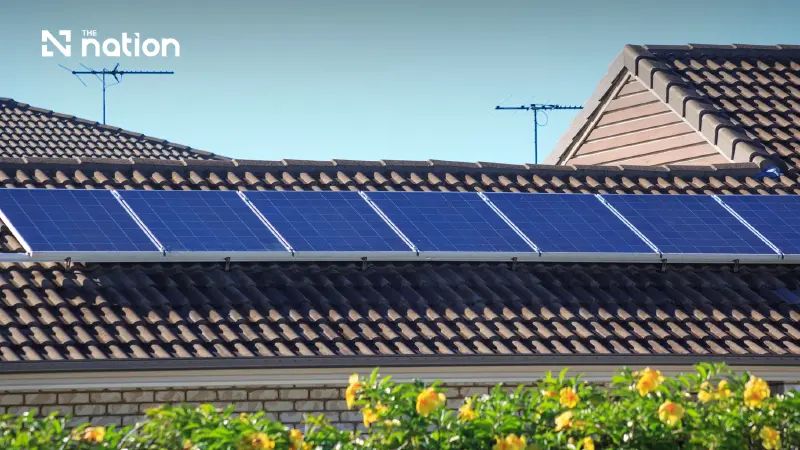


Thailand plans 50,000-baht solar subsidies for one million households, with Cabinet review on October 27 and registration subject to approval.
- Thailand's Cabinet is set to review a proposal to provide a 50,000-baht grant per household for solar power installations, targeting one million households.
- The grant would support various installation types, including rooftop, ground-mounted, and floating solar, to help lower energy bills and allow households to sell surplus electricity.
- In addition to the grant, the program includes free smart meter replacements and offers access to low-interest installation loans from state-owned banks.
- The initiative is part of Thailand's larger energy transition strategy to reduce the country's dependence on imported natural gas.
Thailand’s Interior Ministry will seek Cabinet approval on Tuesday (October 27) for a programme that would provide 50,000 baht per household towards solar installations, targeting one million households.
Deputy Prime Minister and Finance Minister Ekniti Nitithanprapas outlined the proposal on October 26, explaining that it had already cleared the Finance Ministry’s screening process and would be funded under the government’s borrowing framework.
Registration for the household solar programme would open immediately if the Cabinet approves it. The Metropolitan Electricity Authority (MEA) and Provincial Electricity Authority (PEA), both under the Interior Ministry, would provide one-stop services for applicants.
The programme aims to reduce household energy bills and enable participants to earn income by selling surplus electricity to the utilities’ grid.
Solar proposal extends beyond rooftops
The proposed support would cover rooftop, ground-mounted and floating solar installations, including panels installed on ponds and other bodies of water.

Ekniti explained that the programme initially focused on rooftop solar, but the screening committee widened its scope because some homes have roof structures unsuitable for installing panels.
The broader coverage would allow households to use other available space to generate electricity, creating opportunities for ordinary consumers to become power producers.
Ekniti linked the programme to Thailand’s wider energy transition, noting the country’s heavy dependence on oil and natural gas. Expanding domestic solar generation would help reduce reliance on imported natural gas, he added.
Separate funding would cover smart-meter replacements
The screening committee has also approved a separate allocation from government borrowing for the MEA and PEA to replace participating households’ electricity meters with smart meters.

The meters would measure electricity flows and support the supply of surplus solar power to the grid. Participants would not have to pay for the meter replacements themselves.
Ekniti described the ability to sell electricity as a significant change for households that previously only purchased power, allowing them to generate income from their rooftops or land.
State bank loans and tax deductions support solar investment
Households with sufficient investment funds would receive the proposed 50,000-baht government contribution towards their installations.

For those without upfront capital, the government has coordinated with three state-owned specialised financial institutions to provide low-interest installation loans:
- Government Savings Bank
- Government Housing Bank
- Bank for Agriculture and Agricultural Cooperatives, for farmers
The financing arrangements are intended to enable households to install solar systems without having to provide a large initial sum. Income from selling surplus electricity could subsequently be used towards loan repayments.
Ekniti also pointed to a Revenue Department measure allowing eligible solar installation expenses of up to 200,000 baht to be claimed as a tax deduction.
He described this as support for people who have already installed solar systems or wish to finance their installations without government loans or subsidies.
National grid upgrade remains under consideration
The government is separately considering a proposal from the Electricity Generating Authority of Thailand (EGAT) to upgrade the nationwide electricity transmission network.
Ekniti described grid modernisation as a long-term infrastructure investment amid volatile and rising global energy prices.
The proposed improvements would strengthen the network’s readiness and stability, enabling it to accommodate Thailand’s transition towards cleaner energy more efficiently and sustainably.
