
Thailand names UNCLOS team for Cambodia maritime boundary talks
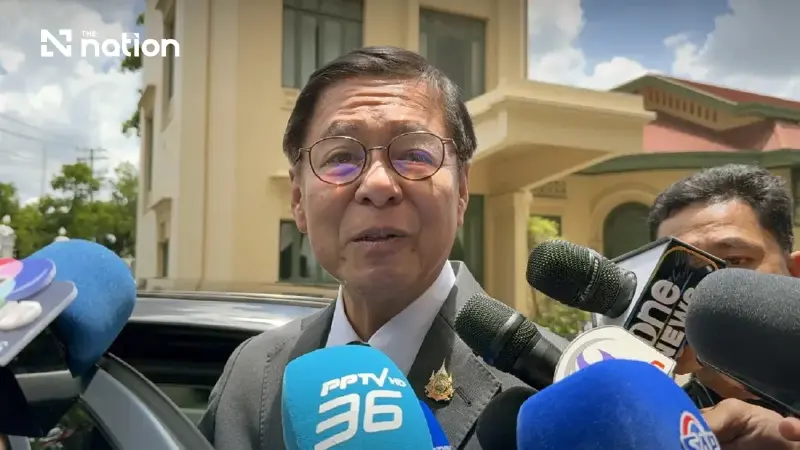


Thailand’s Cabinet has appointed Sihasak Phuangketkeow and Songchai Chaipatiyut to lead the country’s UNCLOS conciliation team on the Thailand-Cambodia maritime overlap, with two former ITLOS presidents named as Thailand’s conciliators.
- Thailand has appointed Deputy Prime Minister and Foreign Minister Sihasak Phuangketkeow to lead its team in the UNCLOS compulsory conciliation process with Cambodia over a maritime dispute.
- The Thai team also includes two appointed conciliators, Judge Albert Hoffmann and Judge Rüdiger Wolfrum, who are both former presidents of the International Tribunal for the Law of the Sea (ITLOS).
- Thailand's primary goal in the talks is to first clearly define the maritime boundary and continental shelf between the two countries.
- The Thai government has stated that discussions on a joint development area should only occur after the maritime boundary has been officially settled.
Thailand’s Cabinet has approved the appointment of Deputy Prime Minister and Foreign Minister Sihasak Phuangketkeow and Ambassador Songchai Chaipatiyut to lead Thailand’s team in the compulsory conciliation process under the United Nations Convention on the Law of the Sea (UNCLOS) over its maritime dispute with Cambodia.
The decision, endorsed at Tuesday’s Cabinet meeting (June 16), also brings two former presidents of the International Tribunal for the Law of the Sea (ITLOS) into Thailand’s side of the process as conciliators.
Sihasak will serve as head of Thailand’s negotiating team, while Songchai, Thailand’s ambassador to Kuwait, has been appointed deputy head. The team will take part in the compulsory conciliation process under UNCLOS.
Sihasak announced that the Cabinet had also approved the appointment of two Thailand-appointed conciliators: Judge Albert Hoffmann of South Africa and Judge Rüdiger Wolfrum of Germany.
He described both as carefully selected candidates with strong expertise, extensive experience and international recognition, noting that both had previously served as presidents of ITLOS.
Once Thailand and Cambodia have each appointed two conciliators, the two sides must jointly select a fifth member to chair the commission. That process must be completed within one month before formal discussions can begin.
Sihasak stressed that the conciliation commission was not a court. Its role, he explained, would be to support possible ways to resolve the issues, after which Thailand would still need to continue discussions with Cambodia.
Thailand’s initial view is that the scope of conciliation should focus first on clearly defining the maritime boundary and continental shelf between the two countries.
Regarding Cambodia’s wish to discuss a joint development area, Sihasak indicated that Thailand did not consider that the right starting point. He underlined that the priority should be to clarify the maritime boundary first.
Asked who would decide the matter if the two countries held different positions, Sihasak noted that this would be for the conciliation commission to consider. However, he reiterated that Thailand wanted the process to focus as fully as possible on maritime boundary delimitation before considering how any joint development area beneath the sea might be addressed.
