
Anutin takes charge of eight economic boards to rebuild confidence and attract investment
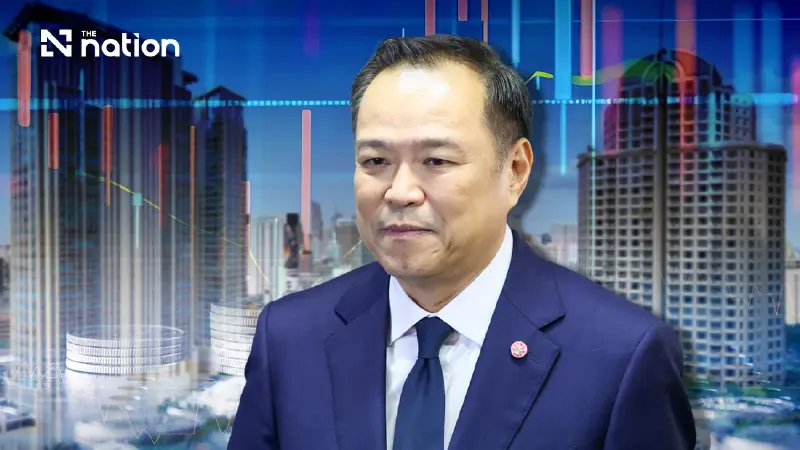


Prime Minister Anutin Charnvirakul is chairing eight key economic boards as the government seeks to restore confidence and attract investment
- Prime Minister Anutin Charnvirakul is now chairing eight key national boards to tighten his control over Thailand's economic agenda.
- The primary goal of this move is to restore business confidence and attract future-focused investment in sectors like semiconductors and the digital economy.
- The eight boards give Anutin a central role in steering policy across investment, infrastructure, energy, and long-term development, including the National Strategy Committee and the Eastern Economic Corridor (EEC) Policy Committee.
- As part of this shift, Anutin has taken back direct supervision of the Eastern Economic Corridor (EEC) project to personally promote it to overseas investors.
Prime Minister Anutin Charnvirakul is tightening his grip on Thailand’s economic agenda, taking the chair of eight key national boards as his government seeks to restore business confidence and attract future-focused investment.
The move comes three months after the Anutin administration delivered its policy statement to Parliament on April 9 and 10. After an early period dominated by immediate challenges, including energy price pressure linked to fighting in the Middle East, the government is now shifting from short-term crisis management to implementation of its stated policy goals.
In economic policy, Anutin has increasingly stepped into a direct leadership role. He now chairs eight national-level economic committees, giving him a central role in steering policy across investment, infrastructure, industry, energy and long-term development.
Over the past two weeks, Anutin has signed four prime ministerial orders that underline this shift.
The first was an order appointing the National Semiconductor and Advanced Electronics Industry Policy Committee, known as the semiconductor board. The committee brings together representatives from the public and private sectors, with an ambitious target of attracting upstream chip investment to Thailand and supporting the future production of advanced “made in Thailand” chips.
A second order appointed the Joint Public and Private Sector Committee for Economic Problem Solving (JPPCC). The committee is scheduled to hold its first meeting on June 22. It was formed after Anutin opened Government House on May 15 for talks with private-sector representatives and major business figures.
Two further prime ministerial orders changed the division of responsibilities under Deputy Prime Minister and Transport Minister Phiphat Ratchakitprakarn. The changes removed his oversight of the Eastern Economic Corridor Office and his chairmanship of the Eastern Economic Corridor Policy Committee. The Cabinet has already acknowledged both orders.
Anutin later explained that the decision to bring the EEC back under his direct supervision was not linked to conflict within the party, nor to the issue of amending the high-speed rail contract linking three airports.
He said the aim was to allow him to promote the EEC directly to overseas investors during roadshows. Anutin said he had discussed the matter with Phiphat before taking back oversight of the project.
The government is also preparing to adjust the EEC’s industrial direction by focusing on target sectors that match the area’s real strengths, including food security and medical industries.
For data centres, an industry drawing strong investment interest, the government plans to set conditions covering electricity supply, water resources and power costs. It is preparing to announce a new electricity tariff category for these users, known as type 9, under which data-centre operators would pay higher power rates than ordinary households.
Beyond the EEC, semiconductor board and public-private economic committee, Anutin also chairs five other economic bodies: the National Strategy Committee, the National Energy Policy Council, the National Digital Economy and Society Committee, the Sustainable Development Committee and the National Urban Planning Policy Committee.
Each board comes with major policy issues and unresolved problems requiring coordination across parties and ministries.
Together, the eight boards place Anutin at the centre of Thailand’s economic decision-making at a time when competition for global investment is becoming faster and more intense.
The broader goal is to rebuild confidence among businesses, attract investment in industries that will shape the future, encourage production bases to be established in Thailand and support technology transfer to Thai workers.
The eight economic boards chaired by Anutin are:
- Eastern Economic Corridor Policy Committee
- National Semiconductor and Advanced Electronics Industry Policy Committee
- Joint Public and Private Sector Committee for Economic Problem Solving (JPPCC)
- National Strategy Committee
- National Energy Policy Council
- National Digital Economy and Society Committee
- Sustainable Development Committee
- National Urban Planning Policy Committee
