
PM Anutin sues iLaw director over Senate poll collusion allegations
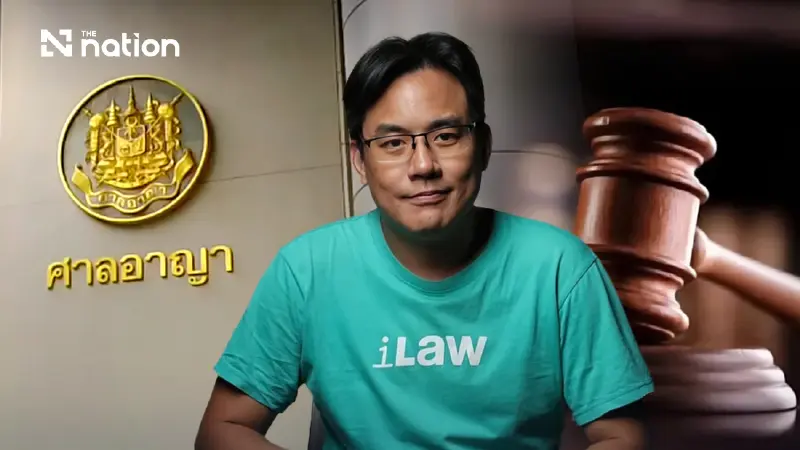


The Criminal Court will hold a preliminary examination on December 14 after Anutin's legal team filed the case without seeking damages.
- Prime Minister Anutin Charnvirakul has filed a defamation by publication lawsuit against Yingcheep Atchanont, the director of the legal watchdog group iLaw.
- The lawsuit stems from remarks Yingcheep made in an interview, alleging the Prime Minister's involvement in collusion related to the Senate election.
- According to Anutin's legal team, the action seeks a court ruling on the truth of the statements, which they claim are false, but is not seeking financial damages.
- The lawsuit was filed in Anutin's personal capacity, not on behalf of the Bhumjaithai Party.
Bhumjaithai Party-list MP Supachai Jaisamut, chair of the party’s legal affairs division, assigned lawyer Sittichok Singhaseni to file a lawsuit alleging defamation by publication against Yingcheep Atchanont, also known as “Pao iLaw”, at the Criminal Court on Ratchadaphisek Road on Tuesday (September 15, 2026).
Supachai was acting under authority granted by Prime Minister Anutin Charnvirakul in his capacity as Bhumjaithai leader.
The disputed remarks linked Anutin to a case involving alleged collusion in the Senate election.
According to Sittichok, Anutin, who also serves as Interior Minister, authorised him as a member of the legal team to bring the case against Yingcheep, director of iLaw.
The lawsuit stems from an interview Yingcheep gave at Parliament on Tuesday (July 21, 2026), when he referred to the Prime Minister as being involved in alleged Senate election collusion.
The lawsuit was filed in the Prime Minister’s name, not that of the Bhumjaithai Party, and alleges defamation by publication.
The court scheduled a preliminary examination for 9am on Monday (December 14, 2026).
Sittichok attributed the legal action to information Yingcheep had presented at Parliament alleging the Prime Minister’s involvement.
The Prime Minister’s legal team regarded the statements as untrue and was exercising its legal rights by asking the court to determine whether they were true or false and whether they had been made in good faith, the lawyer explained.
Sittichok denied any connection between the filing and a resolution adopted by the Election Commission (EC) on Monday (September 14).
The legal team had prepared the draft lawsuit earlier and was only waiting for the Prime Minister to decide when to proceed, he added.
Sittichok cautioned against linking events merely because they occurred close together without a factual basis for doing so.
No damages are being sought in the lawsuit, according to Sittichok, who also rejected the suggestion that the action was intended to silence Yingcheep.
Anyone accused of something untrue has the right to use the law to protect themselves, whether the person is the Prime Minister or an ordinary member of the public, he maintained.
Sittichok declined to comment on plans by Yingcheep’s side to present evidence concerning the Senate issue to the court, saying the matter was beyond his remit.
His instructions that day were limited to handling the defamation case.
The principal witnesses at the preliminary examination were initially expected to include the authorised representative and other people involved, according to Sittichok.
This would require Supachai, as the authorised representative and head of the legal team, to participate in the proceedings.
As Anutin had already granted power of attorney, there was no need to state whether the Prime Minister would attend in person, the lawyer added.
Regarding possible legal action against other individuals or opposition MPs, Sittichok noted that his instructions that day covered only the case against Yingcheep.
Any decision to pursue cases against others rested with each individual, and Sittichok could not speak on their behalf.
As for mediation, the lawyer said the parties’ positions would first have to be considered because the proceedings had only begun that day.
