
Thai government orders 24-hour health monitoring in flood-risk areas
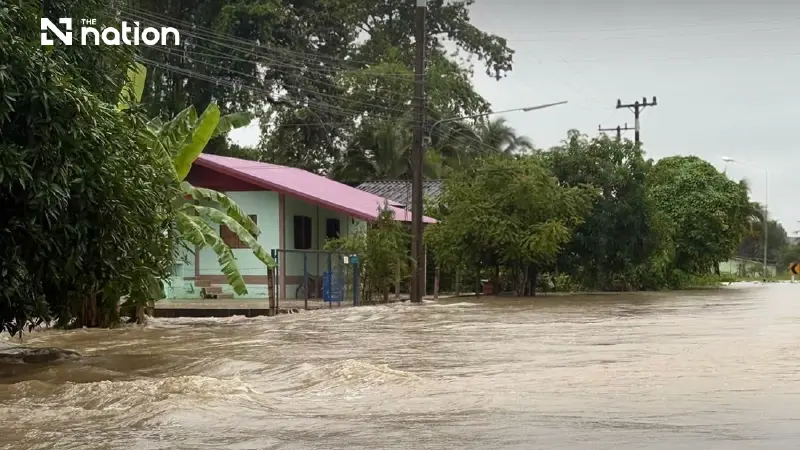


Health zones and hospitals in flood-risk areas must step up monitoring and prepare essential systems while prioritising vulnerable groups.
- The government has ordered 24-hour health monitoring in all provinces at risk of flooding, with some high-risk health zones instructed to open Emergency Operations Centres (EOCs).
- Hospitals in flood-risk areas must prepare essential systems, including backup power, water, and medical supplies, to operate for at least 72 hours and ensure emergency routes are safe.
- Authorities are instructed to accelerate assistance and plan for the evacuation of vulnerable groups, including the elderly, people with disabilities, and patients requiring ongoing medical treatment.
- Provinces must inspect and secure Emergency Medical Service (EMS) and patient referral routes, identifying alternatives for areas at risk of being cut off by floodwaters.
Ploythalay Laksameesaengjan, deputy government spokesperson, said continuous heavy to very heavy rainfall in several parts of Thailand had raised the risk of flash floods, forest run-off and rivers overflowing their banks.
The government, concerned about the public, has instructed all government agencies to coordinate their efforts and closely monitor the situation.


Authorities have also been instructed to issue evacuation warnings for people in risk areas and accelerate comprehensive and continuous assistance, particularly for vulnerable groups, including elderly people, people with disabilities, bedridden patients, dialysis patients, people requiring oxygen and those requiring regular medication, as follows:

- All health zones and provinces in risk areas must step up 24-hour monitoring until at least September 27, particularly in the Chao Phraya basin, the central-western region, the eastern region and areas where water levels are continuing to rise. Health Zones 3, 4 and 6 must also open regional public health Emergency Operations Centres (EOCs) to monitor the situation.
- Health Zones 3 and 4 in the Chao Phraya basin, particularly Phra Nakhon Si Ayutthaya, Pathum Thani, Rangsit and areas continuing to receive water, must closely monitor water levels, community risk areas, healthcare facilities, and emergency medical service (EMS) and referral routes.
- Health Zone 6 must monitor the situation in Chanthaburi and Sa Kaeo, covering communities, hospitals and the EMS system, as the situation continues and accumulated rainfall remains high in several areas.
- All hospitals in risk areas must prepare essential systems to operate for at least 72 hours, including electricity, backup generators, fuel, clean water, oxygen, medicines, medical supplies, blood, food, information technology and communications, personnel and alternative referral routes. Services should continue for as long as it is safe to do so. Hospitals must also reassess the safety of electrical systems, water around buildings, entrances and exits, and ambulance routes, and immediately report any situation likely to affect services.
- Authorities must urgently care for vulnerable groups and patients requiring ongoing treatment, including elderly people, people with disabilities, bedridden patients, dialysis patients, people requiring oxygen and those requiring regular medication, by reviewing patient lists and advance plans for reaching and moving them.
- Public health teams must immediately assess areas with shelters and evacuation sites, covering clean water, drinking water, food, communicable diseases, regular medication, mental health and vulnerable groups.
- All provinces must inspect and report EMS and referral routes that are inaccessible or at risk of being cut off, while identifying alternative routes, patient pick-up and drop-off points, supporting vehicles and boats, and destination hospitals before an emergency occurs.
- Major incidents must be reported immediately, including water entering hospital grounds; disruptions to electricity, water or oxygen systems; EMS routes being cut off; the need to evacuate or transfer patients; deaths or missing persons; or healthcare facilities suspending services. Authorities must not wait for the regular reporting cycle. Where there is no emergency, the situation should be summarised according to the prescribed reporting schedule.
The government has instructed all relevant agencies to remain prepared around the clock, including for water management, drainage and the deployment of machinery in risk areas.
“Officials are urged to go into the field to provide assistance and care for vulnerable groups. People in risk areas should closely follow official announcements, pay attention to hygiene and follow safety advice,” Ploythalay said.
