
Coalition and opposition whips back December 7–10 censure debate for 18 ministers
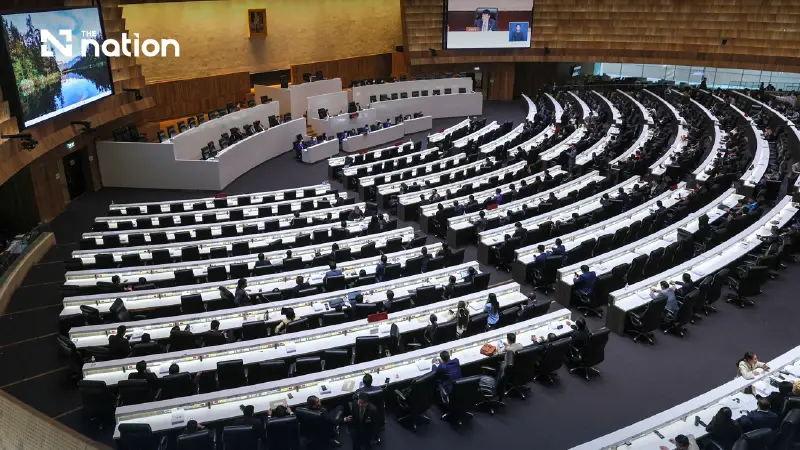


Anutin’s Cabinet has been asked to confirm the dates or agree an earlier start, with a no-confidence vote planned for December 11.
- Government and opposition whips have provisionally agreed to hold a censure debate from December 7-10, 2026, with a vote scheduled for December 11.
- The no-confidence motion targets a total of 18 government ministers, including Prime Minister Anutin Charnvirakul.
- The debate follows a motion signed by 145 MPs, which raises allegations of corruption, abuse of power, and favoritism.
- While the December dates have been proposed, the Cabinet has been asked to confirm the schedule and consider holding the debate at an earlier date.
Thailand’s government and opposition whips, together with a Cabinet representative, have agreed a provisional December 7–10, 2026 timetable for a no-confidence debate against Prime Minister Anutin Charnvirakul and 17 other ministers, with voting on December 11.
The agreed framework provides for debate sessions in the House of Representatives from 8am until 3am the following day. However, the Cabinet has been asked to confirm the dates and consider whether the proceedings could be brought forward.
First Deputy House Speaker Mallika Jirapunvanit chaired the scheduling meeting, with Paradorn Prissananantakul, a minister attached to the Prime Minister’s Office, representing the Cabinet.
Cabinet asked to consider an earlier debate
Opposition chief whip Parit Wacharasindhu, a People’s Party list member of Parliament (MP), said all participants agreed that holding the debate as soon as possible would be preferable.
Parit said December 7–11 was the latest window proposed by the Cabinet. Ministers had therefore been asked to review their availability and consider an earlier date so Parliament could carry out its scrutiny sooner.
Government chief whip Korrawee Prissanantakul, a Bhumjaithai Party MP for Ang Thong, said the agreement was acceptable to all participants, with final confirmation of the dates still required from the Cabinet.
Korrawee said the Cabinet should notify the House if ministers could make themselves available earlier.
The government chief whip also expected the additional time allocated to the opposition to allow MPs to scrutinise the administration, present their allegations and question ministers fully. The Cabinet’s allocation should likewise provide sufficient time to respond, he said.
Motion backed by 145 MPs targets 18 ministers
The opposition coalition submitted its no-confidence motion on October 8, 2026, seeking votes against individual ministers under Section 151 of the Constitution. The motion targets Anutin and 17 other Cabinet members.
A total of 145 MPs signed the motion. The ministers named are:
- Anutin Charnvirakul, prime minister and interior minister.
- Phiphat Ratchakitprakarn, deputy prime minister and transport minister.
- Songsak Thongsri, deputy prime minister.
- Ekniti Nitithanprapas, deputy prime minister and finance minister.
- Suphajee Suthumpun, deputy prime minister and commerce minister.
- Pakorn Nilprapunt, deputy prime minister.
- Lt Gen Adul Boonthumjaroen, defence minister.
- Surasak Phancharoenworakul, tourism and sports minister.
- Chaichanok Chidchob, digital economy and society minister.
- Suchart Chomklin, natural resources and environment minister.
- Pol Lt Gen Rutthaphon Naowarat, justice minister.
- Napintorn Srisunpang, minister attached to the Prime Minister’s Office.
- Supamas Isarabhakdi, minister attached to the Prime Minister’s Office.
- Paradorn Prissananantakul, minister attached to the Prime Minister’s Office.
- Suksomrauy Wantaneeyakul, minister attached to the Prime Minister’s Office.
- Siripong Angkasakulkiat, deputy transport minister.
- Jeseth Thaiseth, deputy interior minister.
- Worasit Liangprasit, deputy interior minister.
Opposition allegations cover corruption and use of power
The opposition’s motion raises allegations concerning government administration, the exercise of official authority, corruption and favouritism towards political associates.
The issues also cover the Senate selection process, civil-service recruitment examinations and appointments, and the government’s handling of problems affecting the public.
The claims are allegations put forward by the opposition, not findings of wrongdoing. Ministers’ explanations during the debate and the subsequent House votes will be the next key stages in the process.
