
Thailand and Russia explore tourism growth beyond beach holidays
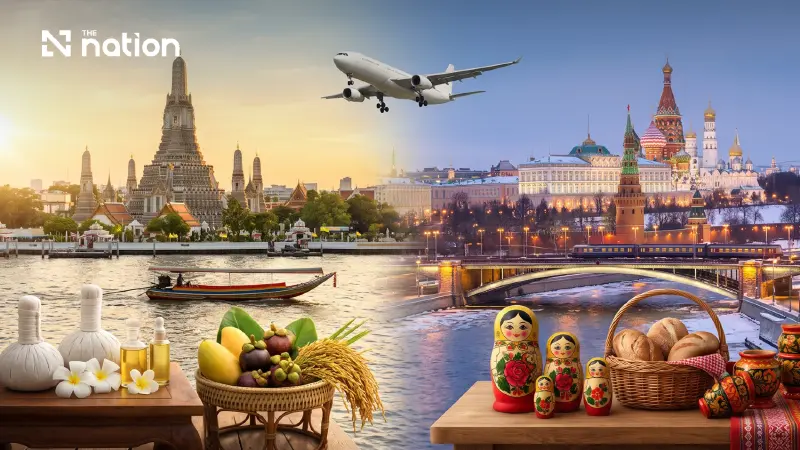


Speakers at the Russian-Thai Investment Forum 2026 examine flight access, cultural and language barriers, and digital services as ways to expand two-way tourism.
- Thailand and Russia are exploring ways to boost tourism by diversifying beyond traditional beach holidays into areas such as medical, educational, and business travel.
- Key strategies to encourage growth include improving air connectivity between the two countries and addressing cultural and language barriers for travellers.
- The integration of digital travel platforms and online booking services is seen as a crucial way to simplify travel planning and make destinations more accessible.
- A primary goal is to create a more balanced tourism relationship, encouraging more Thai visitors to explore Russia's cultural and historical sites.
Thailand and Russia could generate greater mutual benefits from tourism by improving air connectivity, easing cultural and language barriers, and developing new travel experiences beyond traditional beach holidays.
Stronger two-way tourism flows could create opportunities for airlines, hotels, travel operators and local businesses, particularly as the two countries explore ways to strengthen digital services and attract visitors to a wider range of destinations.
These opportunities formed the focus of the “Travel Economy: New Drivers of Growth” session at the Russian-Thai Investment Forum 2026, held at the Royal Orchid Sheraton Riverside Hotel Bangkok on Saturday (October 31).
The session brought together representatives of tourism authorities, airlines, travel platforms and private-sector organisations to examine how both countries could build on their longstanding tourism relationship while addressing obstacles to further growth.

Air connectivity remains central to tourism expansion
Tourism has long been an important component of relations between Thailand and Russia. The recovery of international travel following the pandemic, together with the emergence of new transport routes, has created opportunities to strengthen tourism exchanges.
In 2025, Thailand welcomed nearly 1.9 million Russian visitors, an increase of 8.8% from the previous year, making Russia the country's fourth-largest tourism source market and its largest in Europe.
Tourism flows in the opposite direction remain considerably smaller. According to Russian border-service statistics, Thai nationals made approximately 9,570 trips to Russia for tourism purposes in 2025, up 9.3% year on year.
Improving air connectivity remains an important consideration in expanding visitor numbers in both directions.
Convenient flight connections are particularly important when developing new tourism markets, where accessibility can influence travellers' choice of destination.
Closer cooperation between airlines, travel operators and tourism organisations could help both countries identify opportunities to improve access and develop travel products that appeal to different groups of visitors.
The session included Pattra Boosarawongse, chief executive officer of Thai AirAsia X, and Andrey Snetkov, general representative of TEZ TOUR in Southeast Asia, bringing aviation and tour operation perspectives to the discussion.
Beyond transport, cultural differences and language barriers also present challenges for travellers visiting unfamiliar destinations.
The two countries offer different attractions to prospective visitors. Thailand's warm climate and tropical destinations have made it particularly appealing to Russians seeking an escape from winter, while Russia's historical landmarks, architecture, natural scenery and cultural heritage offer opportunities to attract Thai travellers.
Russian visitors exploring different parts of Thailand and Thai tourists considering trips to Russia may require more accessible destination information, language support and services adapted to their travel preferences.
Addressing these challenges could make travel easier and encourage visitors to explore destinations outside established tourist areas.

Digital platforms could bridge tourism markets
Digital technology offers another opportunity to strengthen cooperation between the two countries.
Online booking platforms, travel aggregators and locally adapted services could simplify travel planning while making tourism products more accessible to Russian and Thai customers.
Connecting digital travel services across the two markets could also improve how travellers search for destinations, compare accommodation and organise their journeys.
Multilingual support would be particularly important for travellers who are unfamiliar with local destinations, booking systems and travel arrangements.
Greater cooperation between Russian and Thai technology providers could therefore benefit tourism businesses seeking customers across borders.
Among the Russian representatives participating in the session were Erik Aslanyan, strategy director of the Otello online hotel booking service, and Vitaly Voronov, executive director of Tourism.RF Corporation JSC.
The session agenda included discussion of how Russian and Thai digital travel platforms could be integrated to create a more seamless experience for tourists.
Government support and cooperation between public agencies and private companies were also highlighted in the agenda as potential drivers of sustainable tourism development.
New tourism products could expand mutual benefits
Beyond conventional leisure and beach holidays, medical, educational and business tourism offer opportunities to diversify tourism exchanges between Thailand and Russia.
Developing these segments could help tourism businesses reach different groups of travellers while giving visitors more reasons to explore each country.
For Thailand, the opportunities include broadening travel experiences available to Russian visitors beyond established beach destinations.
For Russia, developing tourism products suited to Thai travellers could help increase awareness of destinations and experiences that may be less familiar to the Thai market.
Cultural experiences could also play a role in attracting visitors, provided tourism services take account of differences in language, travel preferences and visitor expectations.
Digital promotion could support these efforts by allowing regions in both countries to reach international audiences and strengthen their visibility in global tourism markets.
The Thai tourism sector was represented by Patthanasiri Salyasiri Ewtoksan, director of the Tourism Professional Development Division at the Department of Tourism; Narin Tijayang, executive director of the Advertising and Public Relations Department at the Tourism Authority of Thailand; and Ratchaporn Poolsawadee, vice-president of the Tourism Council of Thailand.
Their participation brought together perspectives on tourism workforce development, destination promotion and private-sector opportunities.

Turning tourism potential into mutual economic gains
The central challenge for Thailand and Russia is how to translate existing tourism ties into broader opportunities that benefit businesses and destinations in both countries.
Improving transport links, reducing language barriers and connecting digital travel services could make it easier for tourists to move between the two markets.
Developing a wider range of tourism products, supported by stronger cooperation between public agencies and private businesses, could help both countries attract new groups of travellers and distribute the economic benefits of tourism across more destinations.
Ultimately, the opportunity lies in building a more balanced tourism relationship that allows Thailand and Russia to benefit from each other's growing travel markets.
