
Thailand’s tourism recovery falters as Asian rivals gain ground
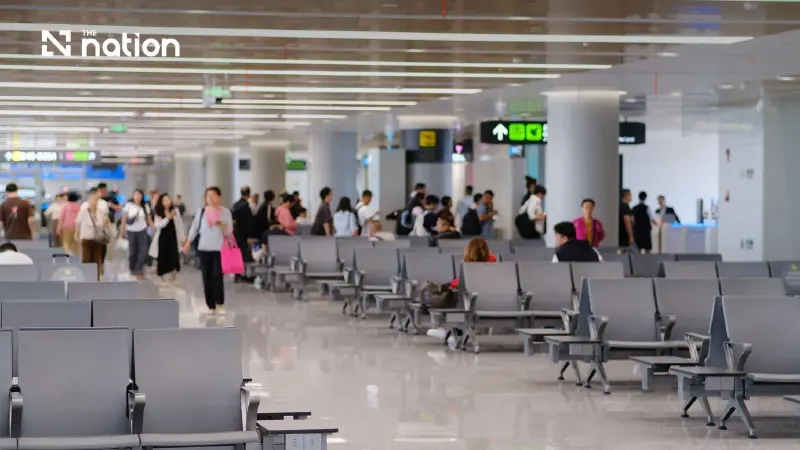


UTCC forecasts 31.5 million foreign visitors in 2026 as fewer flights, visa uncertainty and safety concerns compound competition from Asian rivals.
- Thailand's foreign tourist arrivals are projected to decline by 4.5% to 31.5 million in 2026, with arrivals in the first nine months of the year already down 3.8%.
- The decline is partly attributed to losing market share to Asian rivals, with a survey indicating that over 21% of the drop is due to tourists choosing competing destinations like Vietnam, China, and Japan.
- In addition to competition, the tourism slump is caused by domestic issues (fewer flights, visa uncertainty, safety concerns) and external pressures (global conflict, higher travel costs).
- Arrivals from four of Thailand's five leading source markets—Russia, India, Malaysia, and South Korea—contracted in the first nine months of 2026.
Thailand’s tourism industry is losing ground to Asian rivals as domestic obstacles add to global pressures, according to the University of the Thai Chamber of Commerce (UTCC), which forecasts a 4.5% decline in foreign arrivals to 31.5 million in 2026.
Thanavath Phonvichai, UTCC president and chairman of the advisory board of its Center for Economic and Business Forecasting, highlighted growing challenges to the industry’s competitiveness, particularly the loss of market share to other Asian destinations.
The university’s 2026 projection is below its earlier estimate of 32–34 million visitors and compares with nearly 33 million arrivals in 2025. Conflict in the Middle East, volatile oil prices and higher travel costs are among the pressures weighing on the outlook.
Survey highlights domestic and competitive pressures
A nationwide survey of 368 tourism operators found that 63% relied on international visitors for at least a quarter of their revenue.
Asked about the decline in foreign arrivals during the first nine months of 2026, operators identified external pressures beyond Thailand’s control as the largest category, accounting for 48.1% of responses. These included war, Middle East tensions and global economic conditions.
Domestic constraints accounted for 25.3%, covering fewer flights, uncertainty over visa policies, difficulties at border checkpoints and safety concerns. Tourists choosing competing destinations accounted for another 21.7%.
Together, domestic obstacles and competition represented 47% of survey responses, almost matching the share attributed to external pressures.

Thanavath argued that the findings showed Thailand’s tourism difficulties could not be explained by global developments alone. Weaknesses in competitiveness also required urgent attention.
Vietnam poses a particular challenge through its value for money and new attractions, while China and Japan have strengthened their competitiveness as tourist destinations.
Decline deepens as four major markets contract
Wichian Kaewsombat, director of UTCC’s Trade Strategy Institute, reported that Thailand received 23.20 million international tourists in the first nine months of 2026, down 3.8%, or approximately 916,019 visitors, from a year earlier.
The contraction widened through the year, from 2.4% in the first quarter to 4.4% in the second and 5% in the third. September recorded a year-on-year decline of 10.5%.
Among Thailand’s five leading source markets, China was the only one to expand during the nine-month period, with arrivals rising 15.2% to 3.94 million.
Russian arrivals slipped 0.1% and Indian arrivals fell 2.5%. The declines were considerably sharper for Malaysia, at 15.2%, and South Korea, at 25.4%.
Direct flights and border access top operators’ priorities
Increasing direct flights and resolving problems at border checkpoints were the government measures most urgently requested by operators, cited by 42% of respondents.

China remained the leading source market that businesses considered promising, accounting for 43% of responses.
Markets in the Association of Southeast Asian Nations, India and South Asia together accounted for 26%, followed by Europe at 16%.
Recovery projected for 2027, but risks remain
UTCC expects foreign arrivals to recover to 34 million in 2027, an increase of 7.9%, generating approximately THB1.63 trillion in revenue from international visitors.
However, intensifying competition leaves the outlook uncertain. The university’s worst-case scenario puts arrivals at 32.57 million, while its best-case estimate is 35.44 million.
Persistently high energy prices linked to Middle East tensions remain a significant risk for 2027.
Thanavath stressed that tourism would continue to be an important economic driver in both 2026 and 2027, despite its recovery falling short of earlier targets.
He estimated that Thailand’s economy could expand by 2.2–2.5% in 2026, with growth of 2.5% considered highly likely. Investment in electronics, artificial intelligence and data centres, alongside exports and government measures, would support that expansion.
