
European heatwave prompts emergency measures across continent
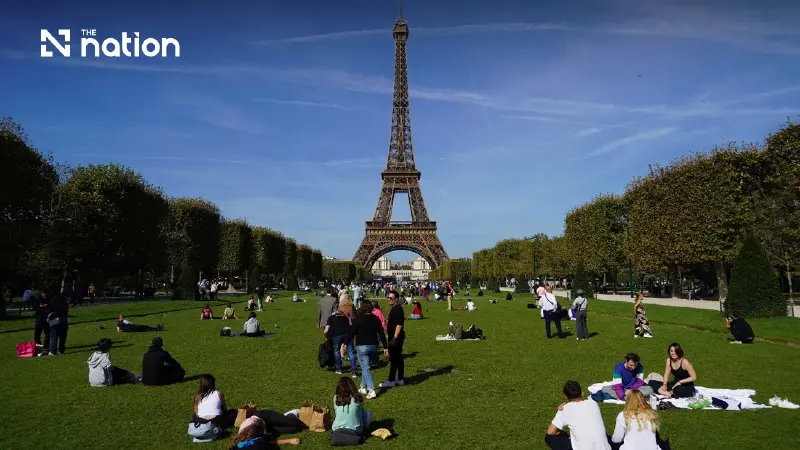


France, Germany, Italy and Spain are taking steps to protect residents and tourists as temperatures near record levels across Europe.
- France has placed numerous regions under its highest "red" alert, banning public alcohol consumption at some events and keeping Paris parks open 24/7 for cooling.
- Other countries are also taking action, with Germany issuing widespread heat warnings and Spain closing an outdoor football fan zone in Madrid due to the extreme temperatures.
- The severe heatwave, with temperatures reaching up to 41°C, is prompting measures to protect public health amid concerns over economic impacts and links to climate change.

Several European countries are facing a severe heatwave spreading across a wide area, sending temperatures close to record highs and prompting governments and local authorities to step up measures to protect public health amid concerns over economic impacts and the growing risk of extreme weather intensified by climate change.
France is among the worst-hit countries, with 35 of its 96 departments expected on Sunday to be placed under the highest-level, or “red”, heatwave alert.
Temperatures in many areas from the southwest, through Paris, to Burgundy are forecast to reach 39-40 degrees Celsius, with some places possibly reaching 41 degrees Celsius.
After an emergency government meeting, French Prime Minister Sébastien Lecornu announced a ban on alcohol consumption in public areas during the Fête de la Musique, the annual music festival, as well as other public events in the 35 areas under red alert, to prevent health risks from extreme heat.
Paris authorities, meanwhile, ordered public parks to remain open 24 hours a day so people could use them as places to rest and escape the heat.

Germany has issued heatwave warnings for most of the country, with temperatures expected to approach 38 degrees Celsius, while the German Weather Service (DWD) warned that the combination of heat and high humidity could cause severe thunderstorms in many areas.
In Italy, temperatures forecast at 36-37 degrees Celsius are clearly affecting daily life and tourism.
In Rome, many tourists have had to queue under scorching sunlight to visit the Colosseum, while some chose to escape the heat by going underground around the ruins of the Temple of Claudius, where temperatures are noticeably cooler than above ground.
In the northern city of Bologna, one of Italy’s hottest cities, residents and tourists have been cooling off by washing their faces and splashing in the water around the more than 400-year-old Fountain of Neptune, as well as sheltering under the shade of the city’s distinctive historic porticoes.
In Spain, the country’s football federation decided to close an outdoor football fan zone in Madrid’s Plaza de Colón, where a large screen had been installed to broadcast the World Cup match between Spain and Saudi Arabia, because temperatures were too high.

Fans, therefore, had to find other places to watch the match.
However, players from both teams still had the benefit of the stadium in Atlanta, in the United States, which is fitted with air conditioning and uses solar power as part of its energy supply.
Climate scientists say climate change is making heatwaves more frequent and more intense in Europe, increasing health risks, especially for older people, children and those with underlying illnesses, and potentially causing damage to the economy during the summer.
Emmanuel Moulin, governor of the Banque de France, said the short-term impact of the heatwave on economic growth remained uncertain because energy use was rising while labour productivity was falling.
However, in the medium and long term, he said, more frequent heatwaves would inevitably have a negative impact on economic activity and the country’s growth potential.
