
El Niño 2026 could arrive early, raising Thailand’s heatwave risk from March to May
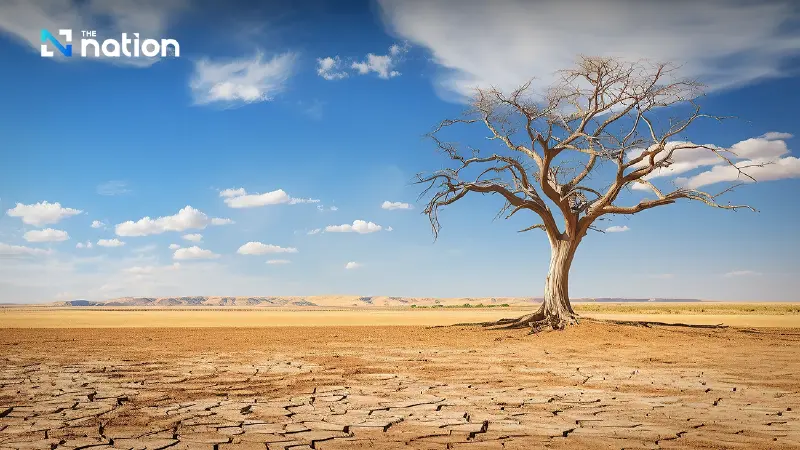


Kasetsart University economist Dr Witsanu Attavanich says Thailand has entered the “mid-phase” of El Niño, with full conditions likely by May 2026 and elevated heatwave risks—especially in the South and lower East.
Dr Witsanu Attavanich, an associate professor of economics at Kasetsart University and an expert in resource, environmental and climate-change economics, provided an update on Thailand’s flood-drought outlook as of February 16, 2026, saying the country has entered the “mid-phase” of the El Niño phenomenon and is likely to shift into a full El Niño by May 2026—earlier than previously expected. He said the event could persist until at least February 2027.
He warned the shift could raise Thailand’s exposure to heat hazards, dry spells, and more variable rainfall across multiple regions. During the hot season from March to May 2026, temperatures nationwide are expected to remain above average, with elevated heat continuing through August 2026. The South and the lower Eastern region face a higher heatwave risk than other areas.

What global models are indicating
Dr Witsanu said data from ECMWF (the European Centre for Medium-Range Weather Forecasts) indicates Thailand has entered the mid-phase and is likely to move into El Niño conditions in May 2026, potentially intensifying in November 2026 and remaining at a moderate-to-strong level into early 2027.
Meanwhile, NOAA models in the United States point in the same direction that El Niño is expected to occur, but estimate the probability of a strong El Niño at only 14% for September-November 2026, highlighting uncertainty over severity even as the overall trajectory aligns.
Forecast models from multiple institutions suggest:
- March-August 2026: temperatures nationwide higher than normal
- March-May 2026: high heatwave risk, with the South and East requiring closer monitoring
- May-July 2026: possible dry spells in the South, the upper North, and parts of the Northeast
- June-August 2026: the West and lower North may see higher-than-normal rainfall, including Tak, Kamphaeng Phet, Nakhon Sawan, Uthai Thani, Suphan Buri, and Kanchanaburi
Dr Witsanu added that IRI Columbia University data also suggests some areas may begin seeing signs of reduced rainfall from March to June 2026, becoming clearer in May to July, reflecting dry-spell risk in the early rainy season.

February outlook and key impacts
He noted that overall rainfall in February 2026 remains close to the long-term average, suggesting this year’s dry season may not be unusually severe, but said water management must still be planned carefully.
Dr Witsanu warned that higher temperatures could increase health risks, energy costs, and water demand, while dry spells could affect agricultural output, farm incomes, and long-term food security.
From a resource economics perspective, he said advance planning for water allocation is essential—covering water storage, irrigation management, and adjusting crop plans to fit increasingly variable conditions.
“Thailand should prepare for heat and drought from today, and keep monitoring forecasts closely. New models are becoming more accurate and can update their projections at any time,” he said, adding that planning to ensure sufficient water through next year is crucial and that all sectors should follow the situation closely in an era of climate disruption.
