
GISTDA reveals Thailand's flood variations driven by El Niño-La Niña
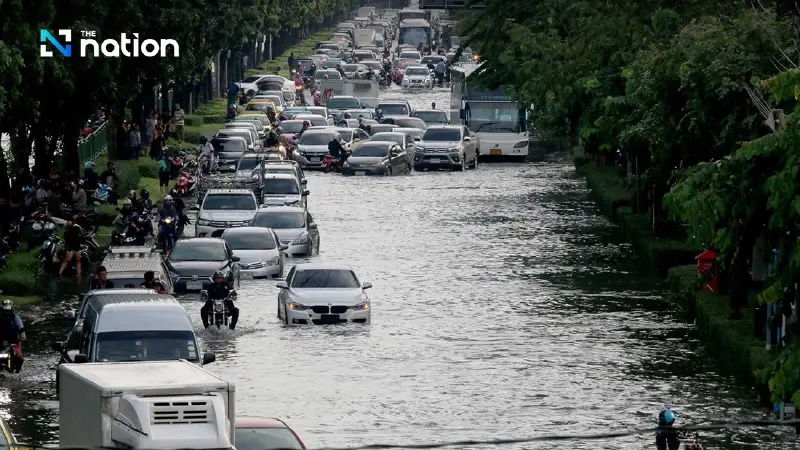


Satellite data from GISTDA highlights the extreme rainfall variability in Thailand, with flood-affected areas ranging from 600,000 to 5 million rai over the last four years.
- GISTDA satellite data reveals that the El Niño-La Niña cycle is the primary driver of extreme fluctuations in Thailand's annual flood levels over the past four years.
- Years influenced by La Niña, such as 2022 and 2025, experienced severe flooding affecting over 4.8 million rai, while the El Niño year of 2023 saw minimal flooding with just over 675,000 rai affected.
- Tropical storms are a key secondary factor that can significantly worsen flooding, especially when combined with the increased rainfall characteristic of a La Niña period.
The Geo-Informatics and Space Technology Development Agency (GISTDA) has unveiled new satellite data showing significant fluctuations in Thailand’s rainfall and flood patterns over the past four years.
The data highlights the variation in flooded areas, which ranged from just 600,000 rai to more than 5 million rai.
The main factors behind this volatility are the El Niño–La Niña phenomena and the movement of tropical storms. In some years, a single storm has been enough to cause devastating flooding over millions of rai of agricultural land and local communities.
This data not only documents past situations but also serves as a critical warning about the challenges of water management and the increasing need for adaptation to more extreme climate conditions.
The most recent satellite images from GISTDA, taken in September, compared flood-affected areas across the country over the last four years. They clearly show the differences between rainy seasons and the impact of various storms.
Flood-affected areas by year:
- 2025: 4,852,558 rai
- 2024: 3,053,486 rai
- 2023: 675,933 rai
- 2022: 5,331,737 rai
In 2022, Thailand experienced the highest level of flooding in four years, with over 5.3 million rai affected. In contrast, 2023 saw the least flooding, with just over 675,000 rai inundated.
However, 2025 has already seen significant flooding, with nearly 5 million rai submerged, driven by the combined effects of various climate events.
El Niño-La Niña and tropical storms
According to GISTDA's analysis, the main factors behind the dramatic fluctuations in Thailand's flood levels are global climate phenomena known as El Niño and La Niña (ENSO), which directly impact rainfall patterns in Southeast Asia.
- 2022 (Highest flooding: 5.33 million rai): The year was heavily influenced by the La Niña phenomenon, where cooler-than-usual sea surface temperatures in the Pacific led to increased rainfall and a higher influx of moist air into Thailand. Additionally, Typhoon Noru made landfall in the Northeast, triggering widespread flooding in several provinces.
- 2023 (Lowest flooding: 675,933 rai): The situation reversed dramatically under the influence of El Niño, causing drought conditions and significantly below-average rainfall.
- 2025 (Current year, high flooding: 4.85 million rai): The return of La Niña led to a sharp increase in flood levels, nearly matching the record set in 2022. While fewer storms directly impacted the country, the powerful monsoon trough and the influence of Typhoon Bualoi were sufficient to cause widespread flash flooding.
This data underscores the enormous impact that a single tropical storm, even one that doesn’t make direct landfall in Thailand, can have on the flood situation when combined with the La Niña phenomenon.
Some storms that pass through the South China Sea or neighbouring countries can also bring heavy rainfall to Thailand, further exacerbating the flood risks.
Other key factors
- ENSO phenomenon: The ENSO phenomenon occurs in the equatorial Pacific Ocean, involving changes in sea surface temperatures and atmospheric pressure patterns. This results in the occurrence of El Niño, La Niña, or neutral conditions. These phenomena play a critical role in triggering droughts, storms, and floods.
- Indirect impact of storms: Not all storms directly affect Thailand, but they can still cause heavy rainfall. Storms may influence Thailand through rain systems or low-pressure areas that move in from the South China Sea or the east.
- Flexible preparation: Water management systems, cities, dams, canals, and flood-prone areas must be adaptable to handle extreme rainfall in limited areas or intense short bursts of rain.
- Natural disasters don't wait: GISTDA uses satellite technology to closely monitor disaster situations.
Space-based data has become a crucial tool for forecasting, analysing, and assessing risks. This enables both policy-level and operational agencies to use the information to prepare, reduce loss of life and property, and mitigate economic impacts.
