
Alan Greenspan, former Fed chairman known as ‘the Maestro’, dies at 100
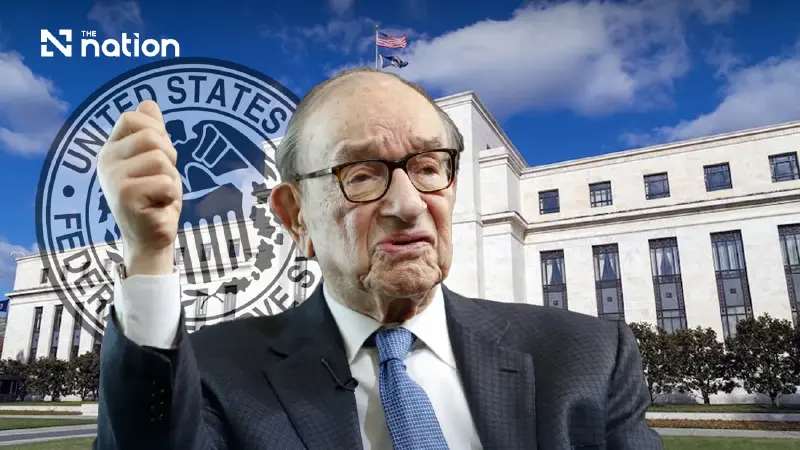


Alan Greenspan, the former US Federal Reserve chairman who led the central bank for 19 years under four presidents, has died at the age of 100.
Alan Greenspan, the former chairman of the US Federal Reserve who led the central bank for 19 years under four US presidents, died on Monday at the age of 100.
Reuters reported that Greenspan, who chaired the Fed from 1987 to 2006, was known for his carefully worded and often opaque communication style on monetary policy — a language widely described as “Fedspeak”.
Greenspan was nicknamed “the Maestro”, an Italian term meaning master or conductor, by media and market watchers who saw him as a skilled manager of the US economy, much like a conductor guiding an orchestra.
His wife, Andrea Mitchell, said Greenspan died on Monday from complications linked to Parkinson’s disease. Mitchell, his wife of 29 years, is chief Washington correspondent and chief foreign affairs correspondent for NBC News.
Greenspan was appointed Federal Reserve chairman in 1987 by President Ronald Reagan. He went on to serve through periods of both economic expansion and downturn before retiring in 2006.
His time at the helm of the Fed covered some of the most important episodes in modern US economic history, including the 1987 stock market crash, the 1990-91 recession, the dot-com bubble and the aftermath of the September 11 attacks.
His 19-year tenure was the second-longest in Federal Reserve history, behind only William McChesney Martin, who chaired the Fed from 1951 to 1970.
Although Greenspan was widely praised for helping steer the US economy through the long expansion of the 1990s, his legacy later became more controversial after the 2008 financial crisis, with critics arguing that low interest rates and light-touch regulation helped fuel the housing bubble.
Even so, Greenspan remained one of the most influential central bankers of the modern era, shaping US monetary policy across Republican and Democratic administrations and leaving a lasting imprint on global financial markets.
Source: Reuters
