
Wildfires force mass evacuations in France and Spain
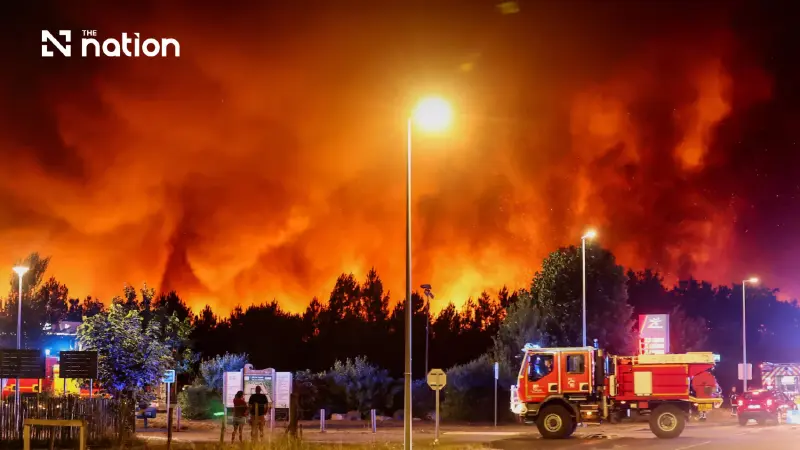


France orders 110,000 people to leave fire zones as Spain declares a national emergency after blazes merge west of Madrid
- Approximately 110,000 people were ordered to evacuate in south-western France, including a full evacuation of the Cap Ferret peninsula by both road and sea.
- In Spain, more than 19,000 people were evacuated near Madrid, prompting the country to declare its first national emergency for a wildfire.
- Both France and Spain have requested assistance from the European Union as emergency services are strained by high temperatures, strong winds, and dry conditions.
About 110,000 people in south-western France and more than 19,000 in Spain were ordered to evacuate as rapidly spreading wildfires threatened communities, forced the closure of roads and prompted Spain to declare its first national emergency over a wildfire.
French authorities ordered the complete evacuation of the Cap Ferret peninsula on the Atlantic coast, using both roads and boats as flames threatened to cut its only land route. Spain placed the Madrid region and neighbouring Ávila province under national emergency management as several major fires converged west of the capital.
Both countries requested assistance through the European Union as high temperatures, strong winds and dry conditions placed emergency services under severe pressure.

Cap Ferret evacuated by road and sea
The largest French blaze began near Saumos, north of Cap Ferret, and had burned more than 14,000 hectares of forest by July 24. Officials said more than 100 homes and a campsite had been destroyed.
Interior Minister Laurent Nuñez described it as a self-sustaining fire capable of changing direction. It was moving mainly eastwards towards the Bordeaux metropolitan area and threatened to sever the only road leading from the peninsula.
Authorities deployed boats to evacuate residents and tourists as the fire advanced towards homes, holiday accommodation and campsites. About 110,000 people were told to leave areas affected by the two main fires in south-western France.
A separate fire around Biscarrosse and Parentis-en-Born in the Landes department had burned more than 2,600 hectares and remained out of control on Friday evening.
The Landes prefecture said 31,000 people had been evacuated since the fire began, including residents of Parentis-en-Born, where nearly 8,000 people were ordered to leave as a precaution.
About 500 firefighters, more than 70 gendarmes and a mobile gendarmerie unit were involved in the response, supported by water-bombing aircraft.
French President Emmanuel Macron requested military support for firefighting operations, while France sought additional European assistance.

Spain places response under central control
Spanish Interior Minister Fernando Grande-Marlaska declared an emergency of national interest in the Madrid region and Ávila province following the spread of fires around Villa del Prado, San Martín de Valdeiglesias and Burgohondo.
The Interior Ministry cited particularly adverse weather, the scale of resources required, preventive evacuations and the threat to populated areas. Under Spain’s civil-protection law, the declaration transferred overall direction and coordination of the response to the interior minister.
Operational command was assigned to the head of the Military Emergency Unit, known as the UME.
Madrid authorities said the fires affecting Villa del Prado, San Martín de Valdeiglesias and Almorox had merged into a single Sierra Oeste wildfire on July 24.
Evacuations were ordered from Navas del Rey, Chapinería, Colmenar del Arroyo, Aldea del Fresno, Robledo de Chavela, Fresnedillas de la Oliva, Navalagamella and Zarzalejo, as well as a campsite at El Escorial.
More than 2,000 personnel and 10 aircraft had been deployed west of Madrid, where more than 19,000 people were ordered to evacuate. A separate fire in Ávila was close to joining the merged blaze, according to government officials.
Madrid regional president Isabel Díaz Ayuso described the incident as the worst wildfire in the region’s history, blaming a combination of extremely high temperatures and persistent winds.
At least 43 homes were destroyed in one housing development. Police arrested one person and were investigating another over allegations that machinery was used in a prohibited area and started the Ávila fire.

European resources mobilised
The European Union’s Civil Protection Mechanism allows countries facing emergencies that exceed national capacity to request aircraft, firefighters and other assistance from participating states.
For the 2026 wildfire season, the European Commission prepared 22 firefighting aircraft, five helicopters and 777 firefighters from 14 countries for deployment in high-risk areas or emergency operations.
France had activated the mechanism earlier in July, prompting the mobilisation of firefighting aircraft from Sweden and Cyprus and helicopters from the Czech Republic.
Greece was sending two aircraft to Spain, while Croatia provided an aircraft and personnel to France as the latest fires spread.
Heat and drought deepen fire risk
Spain had recorded more than 29 major wildfires in 2026, with the affected area five times greater than at the same stage of 2025, Environment Minister Sara Aagesen said.
Europe had already lost more land to wildfires in 2026 than its average annual total over the previous two decades, after enduring three intense and almost consecutive heatwaves.
Scientists say climate change caused by human activity is increasing the intensity of heatwaves, droughts and wildfires by creating hotter and drier conditions in which flames can spread more rapidly.
