
Cabinet approves five-year plan to rebuild Thai fisheries
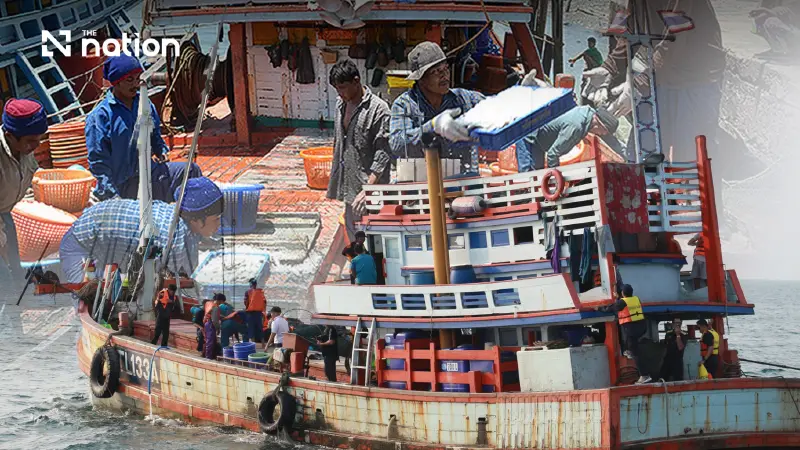


Thailand’s 12.76-billion-baht fisheries plan targets stock recovery, lawful fishing, safer exports and wider use of technology by 2027
- The Thai Cabinet has approved a five-year, 12.76-billion-baht fisheries management plan for 2023-2027.
- The plan aims to restore aquatic resources, tighten controls against illegal fishing, and boost the competitiveness of Thailand's seafood industry.
- It is structured around four strategies: resource conservation, sustainable fishing management, industry competitiveness, and research and technology.
- Key targets for 2027 include increasing aquatic resource output, eliminating illegal fishing activity, and ensuring 95% of products meet international standards.
The Cabinet has approved a 12.76-billion-baht fisheries management plan targeting the recovery of aquatic resources, tighter controls against illegal fishing and stronger competitiveness for Thailand’s seafood industry by 2027.
The Fisheries Management Policy and Plan for 2023-2027, proposed by the Agriculture and Cooperatives Ministry, will serve as a common framework for state agencies involved in managing and developing the country’s fisheries.
The plan contains four strategies and 18 measures covering resource conservation, fishing and aquaculture management, product standards, technology, research and value-added processing.
Capt Dr Patdarasm Thongsaluaykorn, a deputy government spokeswoman, said the policy was intended to align fisheries management with changing resource conditions, economic and environmental pressures, and international trade rules.
Thailand’s fisheries sector remains an important source of food and national income, particularly through exports of processed products such as canned seafood and fresh, chilled and frozen shrimp.
Processed fishery exports generate more than 200 billion baht a year, but supplies of aquatic raw materials from both aquaculture and wild capture have declined, forcing processors to import more inputs from overseas.
The sector also faces climate-related damage, international rules concerning illegal, unreported and unregulated fishing, fisheries subsidies and rising global food demand.
Aquaculture overtakes wild capture globally
Figures from the UN Food and Agriculture Organisation showed that global fisheries and aquaculture production reached 185.4 million tonnes in 2022.
Wild capture accounted for 91 million tonnes, or 49.08%, while aquaculture contributed 94.4 million tonnes, or 50.92%.
Over the preceding decade, production from wild capture showed a downward trend while aquaculture output increased, according to the Cabinet meeting summary.
Patdarasm said Thailand’s fisheries sector was central to food security and the economy but continued to face declining resources, climate change, illegal fishing and stricter international trade standards.
“The approval of the fisheries management policy and plan will be an important mechanism for balancing the use and conservation of aquatic resources, while improving fishers’ quality of life, increasing the value of the fisheries industry and building confidence in Thai fishery products in global markets,” she said.
Seven targets set for 2027
The plan sets seven principal targets:
- Aquatic resources are to become more abundant, with output increasing by at least 25,000 tonnes a year.
- Fishery-product growth is to reach at least 3%.
- Fishing is to be kept free from illegal activity, with traceability maintained throughout the supply chain.
- More Thai vessels are to operate outside national waters, with 100% compliance with applicable laws.
- Local fishing-community organisations are to receive training and support that raises net income by at least 5% per person each year.
- At least 95% of fishery products are to meet international quality and safety standards without being rejected by trading partners.
- At least 40 fisheries research and technology projects are to be promoted and put to practical use by 2027.
Four strategies cover resources, trade and technology
The first strategy allocates 4.69 billion baht to conserving and restoring aquatic resources and maintaining ecosystem balance.
It contains three measures covering the release of juvenile aquatic species, the development of community hatcheries, the construction of artificial reefs, the restoration of habitats and the protection of rare, threatened and native species.
At least 10 aquatic-resource habitats a year are to be managed under an ecosystem-based approach.
The second strategy allocates 5.38 billion baht to sustainable fisheries management and resource use.
Its five measures include allocating fishing days, reducing excess fishing capacity, improving laws and enforcement against IUU fishing, strengthening international cooperation, involving communities in monitoring resources and removing illegal fishing equipment.
The strategy also seeks a 3% increase in catch per unit of fishing effort and includes plans to regulate fishing activity in Songkhla Lake.
The third strategy focuses on the competitiveness of fishers, aquaculture farmers and fisheries businesses.
The five allocations listed under this strategy total 1.94 billion baht and cover labour-saving technology, alternative energy for fishing vessels, internationally recognised aquaculture standards, overseas market development, climate-resilient aquaculture and electronic traceability systems.
The targets include preventing the rejection of Thai fishery products on IUU-related grounds and developing at least five products a year that meet market demand.
The fourth strategy allocates 753.85 million baht to fisheries research, technology and innovation.
Research will cover freshwater fisheries, fishing within Thai waters, operations outside Thai waters, aquaculture and downstream industries.
Projects include deep-sea resource surveys, aquaculture genetics, aquatic animal feed and disease research, and the use of the Internet of Things and artificial intelligence for area-based monitoring and early warnings at aquaculture farms.
The strategy calls for at least three pieces of research or innovation aimed at developing the fisheries sector.
Earlier spending will not be allocated retrospectively
The plan’s total budget of 12.76 billion baht is drawn from the annual budgets of government agencies over the 2023-2027 fiscal years.
The allocations comprise 2.24 billion baht for 2023, 2.43 billion baht for 2024, 2.44 billion baht for 2025, 2.75 billion baht for 2026 and 2.90 billion baht for 2027.
The Cabinet summary stated that no additional or retrospective funding would be requested for the 2023-2026 fiscal years because agencies had already received annual appropriations and carried out related work.
Agencies have submitted their requests for the 2027 allocation, which remains under consideration.
The National Fisheries Policy Committee will oversee implementation at the national level, while provincial fisheries committees will coordinate work locally.
Operational responsibilities will be shared between central Fisheries Department units and provincial fisheries offices in all 77 provinces.
Progress will be assessed every two years so that obstacles can be identified and measures adjusted, followed by a final evaluation at the end of the plan.
