
ASEAN fishing crisis: fish stocks down up to 95% as overfishing and illegal catch outpace recovery
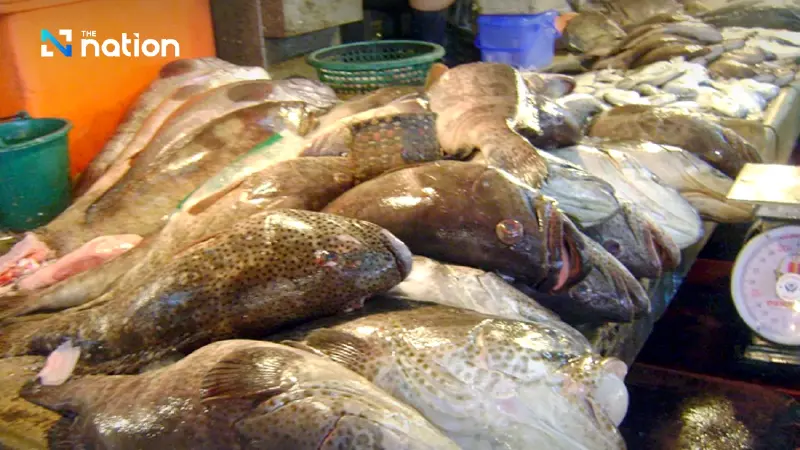


Southeast Asia supplies more than half the world’s seafood, but research warns fish stocks have fallen 70-95% since the 1950s, driven by industrial overfishing and IUU practices that threaten ecosystems and food security.
Southeast Asia produces more than half of the world’s seafood, but ASEAN waters are now facing a severe, and often overlooked, environmental crisis. Data cited from the Center for Strategic and International Studies (CSIS) suggests that since the 1950s, fish stocks in the region have dropped by 70-95%, pushing marine ecosystems towards a dangerous tipping point.
The main drivers are the uncontrolled expansion of industrial-scale fishing and illegal fishing, alongside relentless global demand, especially from China, the European Union and North America. In the United States alone, seafood imports from Asia account for about 50% of total imports, with combined trade from China, Vietnam, Indonesia and India valued at US$6.3 billion.
Overfishing is not fuelled by demand alone. It is also supported by government policies such as fuel subsidies and tax breaks for commercial fleets. Advances in marine technology have enabled vessels to locate fish with greater precision, and in some cases, operators reportedly switch off tracking systems to evade scrutiny. The result is that the sea has little time to recover between fishing cycles.
If illegal, unreported and unregulated (IUU) fishing continues, analysts warn the region could face mounting food insecurity and social instability. Seas that have long been a major source of protein for ASEAN populations are under growing pressure—making this not only an environmental issue, but a crisis with direct human consequences.

Destructive fishing methods
Some of the most severe damage is linked to destructive gear, including pair trawling and large purse-seine nets that sweep up marine life indiscriminately. In many areas, blast fishing and the use of cyanide remain major problems—killing target fish while also destroying coral reefs that serve as long-term nurseries for marine species. Coral damage can take decades to recover, and in some cases may be irreversible.
Rare and endangered marine species are also directly affected. At a fish market in Jungkung Luar, Indonesia, reports describe multiple shark species—both endangered and vulnerable—being sold for export of fins to markets in China and Hong Kong. Other shark parts, including bone, are reportedly used in cosmetics, reflecting resource extraction pushed to the limit.

‘Ghost nets’ and a collapsing food chain
“Ghost nets”—abandoned or lost fishing gear—have become silent traps that continue killing marine animals. Aranee Jongkolpat, a veterinarian at the Marine and Coastal Resources Research and Development Center in Rayong, told The Guardian she treated a hawksbill turtle so badly injured after being entangled in ghost nets that both front flippers had to be amputated. Such cases are often found amid floating marine debris, highlighting failures in waste management within the fishing industry.
Another accelerating factor is the catch of juvenile fish that have not yet matured, processed into fishmeal for livestock and pet food. Removing these small fish disrupts the food chain and reduces the number of adults able to reproduce—driving stocks even lower over time.

Changing fishing livelihoods
In Thailand, the overfishing crisis has hit small-scale coastal fishers hard—especially those who depend on nearshore resources. Mimit Hantele, a sea nomad from the Urak Lawoi’ community on Koh Lipe, told NPR that fish used to be abundant. But today the fishing season is shorter and the diversity of fish has declined, forcing him to take up tourism work as an extra source of income because he can no longer rely on fishing alone.
The traditional way of life of the sea nomads—using simple tools and small wooden boats—is being undermined by large commercial fishing vessels. Fishers on Koh Lipe say these larger boats slip into national park waters at night to fish illegally and avoid arrest. Gear such as trawl nets has damaged coral reefs that serve as fish habitat, pushing local people who once lived by traditional fishing towards poverty.
At the same time, Thailand has become more dependent on importing frozen fish from overseas, such as from Indonesia, because fish stocks in Thai waters have fallen sharply. Thailand is increasingly becoming a distribution hub for seafood caught in other waters, rather than from its own seas—meaning the country’s food security is becoming ever more tied to resources from abroad.
In 2025, Thai small-scale fishers rallied to protest against any rollback of regulations used to curb illegal, unreported and unregulated (IUU) fishing. Commercial fishing interests have sought to ease enforcement to raise profits, but small-scale fishers argue that doing so would push recovering resources back into crisis. Transparency and effective oversight have become key points of conflict between business interests and local communities.
In 2018, Thailand established PIPO (Port-in/Port-out) centres to address both resource protection and human rights issues. While documentation checks and inspections of Myanmar migrant workers became stricter, the system remains vulnerable to political pressure. If these measures are loosened, Thailand’s seas—and the lives of migrant workers—could face a dark future again.
Chinese fleets encroaching
Geopolitics is another factor making ASEAN fisheries more complex and dangerous. In the South China Sea, competition over fish stocks has become part of wider territorial claims. China has rapidly expanded its armed fishing fleet, using it as a tool to project influence and control trade routes.
Donald Carmen, a Filipino fisherman, said Chinese vessels have threatened and blocked him from fishing in waters he had used for years. He said Chinese ships tried to ram his small boat and took photos to intimidate him, leaving him afraid to go far offshore. As a result, his catch reportedly fell from 400–500 kilograms per night to only a few hundred kilograms over three days.
Pressure from Chinese fishing fleets is moving ever closer to the Philippine coastline. Bases have been built on reefs and submerged rocks, turning traditional fishing grounds into dangerous zones. Reports also describe the use of high-pressure water cannons, encirclement tactics, and even military-grade lasers aimed at local fishing boats.
These actions have cut the incomes of fishers in Palawan by more than half. Another Filipino fisherman, Vincent Gehisan, said he was once detained by the Chinese coast guard for nearly a full day, leaving him fearful of fishing in international waters. Falling income has pushed many into deeper debt and made it harder to support their families.
Using fishing fleets for political purposes not only heightens tensions between countries, but also undermines cooperation on sustainable marine resource management. When waters are effectively sealed off by conflict, fisheries research and enforcement of conservation rules become almost impossible—ultimately harming ecosystems and weakening long-term food security across the region.
Forced labour and human trafficking
The fisheries crisis in ASEAN is not only about dwindling fish stocks—it is also tied to severe human rights abuses. Many fishing workers are deceived into a “modern slavery” system through human trafficking and debt bondage. They often come from poor areas and are lured by attractive job offers, only to be forced to work on vessels at sea for years without returning to shore.
Akbar Fitrien, a former Indonesian fishing worker, described his bitter experience on a Chinese vessel. He said he had to work relentlessly to repay a debt created when he borrowed money to start the job. At times, his wages were barely enough to buy cigarettes, and he often ended up with negative earnings. He also faced filthy, unhygienic conditions and violence from the ship’s captain.
Violence on fishing boats can sometimes lead to deaths that go unreported. Akbar said he once saw a co-worker pushed overboard by the captain and left to drift without help. For families back home, the loss is often accompanied by concealment. Anis Kuprotin said her husband died in an accident on a fishing vessel, but the recruitment company told her he had died of a heart condition to avoid paying compensation.
Thailand’s Labour Rights Promotion Network (LPN) and the Freedom Fund have said fishing workers can be forced to work 16-22 hours a day, moving seafood at sea. This effectively turns some boats into “floating prisons”, because they can remain offshore for long periods without returning to port for supplies—making inspections and rescues even harder.
An NPR report said the fishing industries in Thailand and Indonesia are major sources of forced labour used to produce fishmeal and export seafood. While physical violence may have declined in some cases, it has been replaced by more complex coercion through debt. A worker with limited education, such as Indra in Jakarta, has had to take day jobs and even dress as a clown to survive after escaping work at sea.
A path towards sustainability
Addressing overfishing requires far greater transparency than currently exists. One proposal is to require every fishing vessel to install an Automatic Identification System (AIS) so authorities can track locations and behaviour at all times. Open access to data would help governments and international organisations verify whether fish are being caught legally.
Global consumers also play a crucial role. Choosing seafood with credible sustainability certification and traceable origins can create pressure throughout the supply chain. Retailers and major pet food brands must be accountable for ensuring their supply chains are not tainted by forced labour or destructive fishing.
Regional ASEAN cooperation is essential, especially in overlapping waters. Governments should end subsidies that push commercial fleets to maximise volume, and instead support small-scale fishing and community-based resource management. Increasing funding and resources for coast guards and port inspectors would help close gaps exploited by maritime crime.
At the international level, organisations such as the ILO and the IMO should work together to blacklist vessels with records of human rights abuses and fisheries violations. Blocking such ships from ports or new licences would be an effective penalty. At the same time, support funds should be created for affected workers and families so they can access justice.
The future of Southeast Asia’s seas is not determined by fate, but by choices made today. If the region can balance food demand with biodiversity protection, it can remain a secure protein source. Returning management power to local communities and enforcing laws fairly are the lights that could guide ASEAN out of this crisis.
