
Wildfires force more than 300,000 from homes in France and Spain
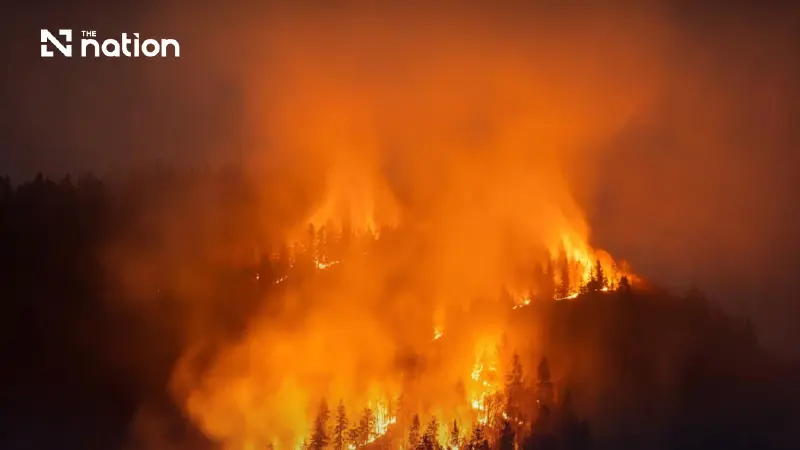


More than 300,000 people have been evacuated in France and Spain as fires threaten Bordeaux, kill one man near Valencia and draw military support.
More than 300,000 residents and tourists had been evacuated from parts of France and Spain by Sunday (July 26) as uncontrolled wildfires advanced towards Bordeaux and a new blaze forced thousands from their homes in eastern Spain.
The latest available figures show that about 220,000 people had left southwestern France, while around 70,000 were evacuated from areas west of Madrid and in neighbouring Ávila. A further 15,000 people were ordered to leave communities around La Vall d’Uixó in the eastern province of Castellón. Tens of thousands more remained under instructions to stay indoors.
One man was found dead inside a car in Manises, near Valencia, in the first confirmed fatality linked to the latest wave of fires. Spain had already suffered deaths in separate wildfires earlier in the month.
Gusting winds drive French fire towards Bordeaux
Authorities ordered another 55,000 people to leave their homes overnight in southwestern France, bringing the regional evacuation total to about 220,000.
Five additional localities were cleared, including areas on the approaches to Bordeaux, after gusting winds accelerated a fire that had been burning out of control since the middle of the week.
The flames have swept through the Gironde and Landes departments, including Cap Ferret, a popular Atlantic holiday destination crowded with summer visitors. Smoke has reached Bordeaux, an important regional transport hub and the centre of one of France’s best-known wine-producing areas.

French Prime Minister Sébastien Lecornu described the scale of the fires as unprecedented, while Interior Minister Laurent Nuñez warned that firefighters faced a long and difficult battle.
France deployed about 1,500 military personnel to assist with evacuations, medical support, transport and logistics. The armed forces also supplied bulldozers, helicopters, drones and an A400M military transport aircraft adapted to drop fire retardant.
The emergency also forced organisers of the Tour de France to shorten Sunday’s final stage from 133 kilometres to 89 kilometres, allowing security personnel assigned to the race to be redeployed to wildfire-hit areas.
Spain battles merged fires and new eastern blaze
Spain maintained its first national emergency declared specifically in response to wildfires, placing the Interior Ministry in charge of coordinating resources from regional authorities, security agencies and the Military Emergency Unit.
Two fires west of Madrid merged into a single large front, while another burned in Ávila. About 70,000 people had been evacuated from central Spain, with more than 28,000 others told to remain inside because of the flames and heavy smoke.
A separate fire around La Vall d’Uixó in Castellón prompted the evacuation of about 15,000 people from 14 municipalities, neighbourhoods and residential areas. Firefighters described that blaze as beyond their immediate capacity to extinguish, with hundreds of emergency personnel deployed.
Prime Minister Pedro Sánchez described the situation around Madrid as “complex”, saying lower temperatures had offered some relief but that the direction and strength of the wind remained uncertain.
Spain’s Health Ministry also advised Madrid residents to avoid outdoor exercise after smoke pushed fine-particle pollution above recommended levels.
European aircraft reinforce national fire crews
France activated the European Union Civil Protection Mechanism and was promised two Canadair aircraft from Croatia, two Air Tractor planes from Portugal and heavy helicopters from Czechia and Slovakia.
Spain expected additional water-dropping aircraft from Italy and Greece, joining planes already sent by the Netherlands and Portugal.
The European Commission entered the 2026 fire season with its largest coordinated response capacity to date. It arranged for 777 firefighters from 14 countries to be positioned in high-risk areas, supported by 22 firefighting aircraft and five helicopters available for deployment.
Fires stretch emergency services across Europe
The crisis extended beyond France and Spain. Hundreds of fires were reported in Sicily, prompting evacuations and a large regional emergency response.
In Scotland, a wildfire in Cairngorms National Park continued burning for an 11th day. Homes near Nethy Bridge were evacuated, while Scotland’s first minister requested military assistance from the UK government.
Data from the European Forest Fire Information System showed that France had already surpassed its previous annual record for land burned in the dataset, which began in 2006. More than 130,000 hectares had burned in Spain this year.
Repeated heatwaves, dry vegetation and strong, shifting winds have complicated efforts to contain the fires. Scientists say climate change is increasing the severity of the heat and drought conditions that allow wildfires to spread rapidly.
The immediate focus remained on preventing the French fire from advancing farther towards Bordeaux and stopping the Spanish fire fronts from reaching additional communities as wind conditions continued to change.
