
Iran sets US conditions for reopening Strait of Hormuz


Tehran says an Oman shipping deal is near, but wants compensation, sanctions relief and an end to US military pressure before Hormuz reopens.
- Iran's primary conditions for the U.S. include lifting sanctions, removing the naval blockade, releasing frozen Iranian assets, and providing compensation for damages from previous attacks.
- Tehran also demands an end to U.S. military threats and a halt to American actions against its regional allies in Lebanon, the Palestinian territories, Yemen, and Iraq.
- While Iran is finalizing a separate agreement with Oman to define new shipping routes, it clarifies that the strait will only reopen for commercial passage after Washington meets its demands.
- The U.S. and Iran are not negotiating directly, with messages passed through intermediaries, and a key obstacle is the sequencing of actions required by both sides to restore shipping.
Iran has tied the reopening of the Strait of Hormuz to a series of concessions from the United States, even as Tehran says a separate agreement with Oman defining new shipping routes through the strategic waterway is nearing completion.
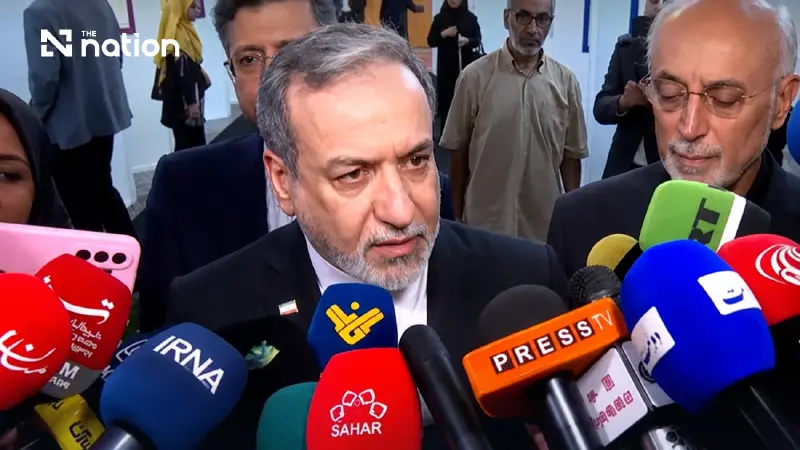
Iranian Foreign Minister Abbas Araqchi said on Sunday that negotiations with Oman were in their final stages, but stressed that commercial passage would resume only after Washington met conditions set by Tehran. The proposed Iran-Oman arrangement would establish shipping lanes to be used once those conditions were fulfilled.
Oman has been working with Iran and other parties on restoring navigation through the strait. Its Foreign Ministry has previously described the talks as an effort to establish a practical and lasting framework consistent with international law.
Tehran demands compensation and sanctions relief
Araqchi said Washington would have to compensate Iran for damage caused during US attacks before the strait could reopen.
Mohammad Baqer Zolqadr, secretary of Iran's top national security body, set out further demands. They include an end to further US military threats and attacks, removal of the US naval blockade in the Gulf, the lifting of sanctions and the release of frozen Iranian assets. Tehran is also demanding an end to US action against Iran's allies in Lebanon, the Palestinian territories, Yemen and Iraq.
The Strait of Hormuz was blocked by Iran after US and Israeli attacks on the country began in late February. The waterway had previously been a major route for international oil and gas shipments.

Washington and Tehran reached an interim ceasefire in June, but the United States restored a blockade on Iranian shipping in the Gulf the following month. Iran regarded that action as a breach of the agreement.
A US official told Reuters that Washington would remove the blockade of Iranian ports once an agreement restoring unhindered commercial shipping was announced. US measures would also depend on Iran carrying out its own commitments.
No direct US-Iran negotiations
Iran and the United States are not negotiating directly. Araqchi said Tehran would not enter direct talks while Washington was violating the June agreement, although messages were continuing through intermediaries.
US President Donald Trump described contacts with Iran as limited and indicated that Washington was watching developments while some negotiations continued.
The sequencing of any agreement remains a central issue. People familiar with the negotiations have indicated that a proposed arrangement could give Iran authority over vessel movements entering the Gulf through the strait, an approach that shipping companies have questioned on practical grounds.
Oman has maintained that freedom of navigation should be restored in accordance with international law and has continued talks with Iran at both political and technical levels.
Regional shipping tensions persist
The negotiations are taking place against continuing disruption around key Middle Eastern shipping routes.
The United Arab Emirates said on Saturday that Iran had attacked a vessel linked to its state oil company. Reuters reported no immediate response from Tehran to the allegation.
Tensions have also extended to the Red Sea. Yemen's Houthi movement said it attacked Saudi Aramco's Jazan refinery on Sunday after declaring a naval blockade against Saudi Arabia the previous month.
Saudi Arabia's energy ministry reported a fire at the refinery that was extinguished without injuries but did not state what caused it. The incident followed Saudi Arabia's signing of a defence agreement with Turkey and Pakistan. Turkish Foreign Minister Hakan Fidan said the arrangement was intended to support security rather than target Iran or another country.
For the Strait of Hormuz, however, the immediate question remains whether Washington and Tehran can agree on the conditions and sequence required to restore commercial shipping. Iran says completing its shipping arrangement with Oman will not by itself be enough to reopen the route.
