
US sanctions nearly 60 Iran-linked targets worldwide
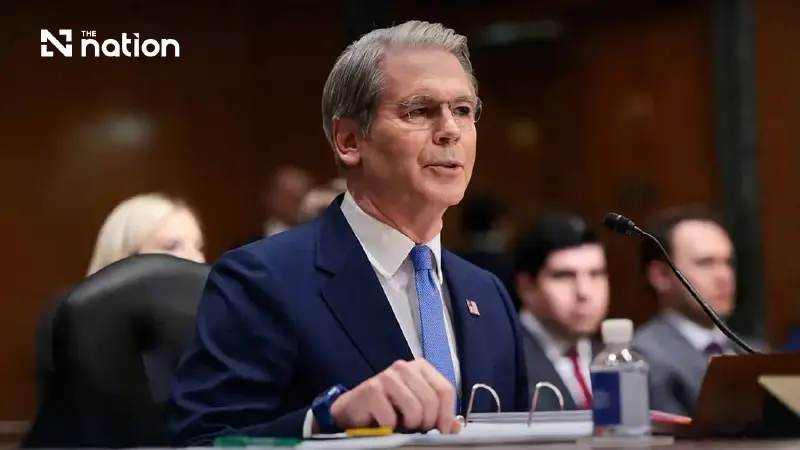


Washington blacklisted nearly 60 Iran-linked targets worldwide and widened sanctions risks across digital assets, technology, gold, aviation and shipping.
The United States has imposed sanctions on nearly 60 Iran-linked individuals, companies and vessels across Asia, Europe and the Middle East, while widening the threat of secondary penalties to five sectors as Washington seeks to isolate Tehran from the global economy.
The US Treasury announced the measures on Monday (August 24, 2026) as part of a campaign called Operation Economic Outcast. It said the latest targets belonged to networks accused of generating oil revenue for Iran, procuring sensitive nuclear and missile technology and conducting cyberoperations.
The sanctions reach companies and individuals in Iran, mainland China, Hong Kong, Singapore, Malaysia, the United Arab Emirates, Switzerland, the United Kingdom, France, Greece and the Marshall Islands.
Washington also issued new determinations covering the digital-assets, technology, gold, aviation and shipping sectors of the Iranian economy. The measures give the Treasury’s Office of Foreign Assets Control (OFAC) broader authority to sanction foreign people and businesses operating in, or providing services to, those sectors.
Iran rejected the latest pressure campaign. Economy Minister Ali Madanizadeh said US sanctions were not new and that Tehran had programmes in place to counter them.
“Washington cannot achieve its goals by severing the arteries of our economy,” he said.
Five sectors face wider secondary-sanctions risk
The Treasury said Iran had increasingly relied on cryptocurrencies to evade restrictions, sought advanced technology for domestically produced weapons and used gold to support the rial.
It also accused Iranian-controlled airlines of transporting personnel, weapons, sensitive technology, gold and cash, while saying the country’s shipping and tanker services carried weapons components and exported oil for the government and military.
The new sectoral determinations do not automatically place every foreign company doing business in those fields under sanctions. They expand the categories of activity that could expose a person or company to future US penalties.
US officials said governments and companies would be given defined periods in which to shut down Iran-related activity identified by Washington. Those that failed to comply could be excluded from the US financial system or face other secondary sanctions.
Under the designations announced on Monday, property and financial interests belonging to sanctioned parties that are in the United States or controlled by US persons must be frozen and reported to OFAC.
US persons are generally barred from transactions involving those parties, while foreign financial institutions could also face restrictions if they knowingly facilitate significant transactions on their behalf.
Procurement and cyber networks span Asia
One of the largest groups targeted was a procurement network of more than 20 individuals and companies across East Asia and the Middle East.
The Treasury accused the network of helping Iranian institutions obtain dual-use equipment for nuclear research and ballistic-missile development, including technology destined for Malek Ashtar University of Technology and other entities subordinate to Iran’s Ministry of Defence and Armed Forces Logistics.
Hong Kong-based Sweet Ocean Industrial Limited was accused of acting as an intermediary for sensitive equipment, including laser-optics products, intended for Malek Ashtar.
The designations also covered RPT Technology Limited in Hong Kong and Shenzhen Sweet Ocean Technology Limited in mainland China. Tian Jianbai, a director and shareholder of Shenzhen Sweet Ocean, was sanctioned over his alleged role in arranging purchases for Iranian customers.
Tiany Technology Limited and MT Trading and Logistics HK Limited were designated over allegations that they helped Shenzhen Sweet Ocean procure sensitive products and US-origin laboratory equipment.
Four other Hong Kong companies — Feili Co Limited, Minvur Limited, Feisu Limited and Guska Co Limited — were accused of transferring money through procurement and financial networks serving Iranian end-users.
The Treasury said Feili, Minvur and Feisu also facilitated payments through what it described as Iran’s clandestine shadow-banking system, including transactions involving previously sanctioned Iranian exchange houses.
Those exchange houses included Sadaf Exchange, formally known as Seyyed Mohammad Mosanna’i Najibi and Partners Company. Sadaf Exchange was already under US sanctions and was not a new designation in Monday’s package.
Malaysia-based Vast Mart Sdn Bhd was sanctioned after allegedly transferring funds to Sweet Ocean on several occasions.
Hong Kong-based HK Jiatai Technology Limited and DEC Photonics Limited were also designated over alleged transfers to Sweet Ocean and Shenzhen Sweet Ocean.
The measures extended to Iran-based Noavaran Axis Private Joint Stock Company, also known as BRE Line.
The Treasury accused BRE Line of facilitating shipments to Iran’s Organization of Defensive Research and Innovation, or SPND, which is subordinate to the Defence Ministry and has previously been sanctioned by the United States over alleged nuclear-weapons research.
Mohammad Hossein Aslani Moghaddam, BRE Line’s managing director, was sanctioned over his role at the company.
China-based Shenzhen Huamei Lianyun International Logistics Co Ltd was designated as BRE Line’s service provider in China, while BRE International Logistics Corporation HK Limited was described as the Iranian company’s Hong Kong branch.
Shenzhen Bositong Logistics Co Ltd and Bositong Supply Chain Shenzhen Co Ltd were also included because of their alleged links to the BRE network.
Separate sanctions targeted an Iranian cyber group that Washington said operated at the direction or for the benefit of the Ministry of Intelligence and Security.
The newly designated cyber actors included Keyvan Fayyaz Ghareh Blagh, Saber Shahbazi Balujeh, Mojtaba Ghal’eh-Kuhi, Mohammad Reza Kadkhoda’i and Arman Kahzadian. US authorities accused members of the group of compromising American companies and government offices and, in Kahzadian’s case, stealing digital assets.
Oil and shipping targets reach Europe
A second major part of the sanctions package targeted shipping companies, vessel brokers, bunkering providers and financial intermediaries accused of helping Iran sell and transport crude oil and petroleum products.
Singapore-based Azure Shipping Pte Ltd was designated over its alleged work with the National Iranian Tanker Company, including ship-to-ship services involving sanctioned vessels.
Its former owner, Mansoor Tayabbhai Gandhi, was also sanctioned, along with Singapore-based Arc Chartering Pte Ltd and Hong Kong-based Sky Oil and Gas Asia Limited. Trans Arctic Global Marine Services, another company owned by Gandhi, had already been designated before Monday’s announcement.
Hong Kong-based Shipoil Limited was accused of working with its Dubai-based sister companies, Shipoil FZCO and Ship Fuels and Trade DMCC, to arrange fuel and other services for vessels carrying Iranian crude and petroleum products.
The Treasury said the network had coordinated with previously sanctioned Iranian parties, including Persian Gulf Petrochemical Industries Commercial Company, Triliance Petrochemical Co Ltd, the National Iranian Tanker Company and companies linked to Iranian oil-shipping magnate Mohammad Hossein Shamkhani.
Greek nationals Almpertos “Alberto” Tsoris and Georgios “George” Tsoris were sanctioned over allegations that they operated within the Shipoil network and arranged bunkering services for vessels linked to sanctioned Iranian organisations.
UAE-based companies Good Luck Shipping LLC, Unique Oasis Shipping Services LLC and Target Horizon Shipping LLC were also designated over alleged support for the Islamic Republic of Iran Shipping Lines.
Singapore-based commodities trader Wellbred Capital Pte Ltd and its subsidiaries, Wellbred Trading FZCO in the UAE and Wellbred Trading SA in Switzerland, were sanctioned over their alleged connection to Shamkhani.
The Treasury said the businesses traded oil, naphtha, liquefied petroleum gas and other petrochemical products associated with his network.
France-based cooking-oil refinery La Nivernaise de Raffinage SAS was included because it is owned by Wellbred Trading SA.
Mohammad Ahmed Suhil Fattouh, a Syrian national based in the UAE, was designated after being accused of brokering shadow-fleet vessels for sanctioned Iranian parties, including the National Iranian Oil Company and the oil-sales arm of Iran’s Armed Forces General Staff.
His Dubai-based business, Amdeh Ship Management and Operation Co LLC, was also sanctioned.
Ivan Obukhov, a Ukrainian national based in the UAE, was sanctioned over allegations that he brokered vessels and facilitated oil shipments for the Iranian military and the Islamic Revolutionary Guard Corps-Quds Force.
Foscom FZE, the UAE company he owns and manages, was also designated.
OFAC separately identified five vessels and their owners as part of Iran’s alleged shadow fleet:
- SIFRA, a Botswana-flagged tanker owned by Marshall Islands-registered Sifra Shipping Company, was accused of carrying hundreds of thousands of barrels of Iranian liquefied petroleum gas and ethylene.
- G SILVER, a Cameroon-flagged tanker owned by Hong Kong-registered Vienna Shipping Co Limited, allegedly transported Iranian petroleum products to Southeast Asia.
- QUANTUM HOPE, a Vanuatu-flagged crude tanker owned by Hong Kong-registered Riqueza Group Ltd, allegedly carried millions of barrels of Iranian oil to China.
- VOYAGE ELITE, a Gambia-flagged tanker owned and operated by China-based Lilimoon Navigation Inc, was accused of transporting millions of barrels of Iranian oil to China.
- TELA, another Gambia-flagged crude tanker, is owned, operated and managed by UK-based Estanica Trading Ltd and allegedly carried hundreds of thousands of barrels of Iranian crude.
The five vessels were identified as blocked property, while their owning companies were designated for operating in the petroleum sector of Iran’s economy.
Major Chinese banks left off latest list
Despite the global reach of the measures, major Chinese financial institutions suspected by Washington of facilitating Iranian oil transactions were not included in the latest sanctions package.
China has been Iran’s largest oil buyer for several years, making the treatment of its banks and trading companies a central test of Washington’s enforcement campaign.
Treasury Secretary Scott Bessent declined to identify which countries might face further secondary sanctions or when those penalties would take effect.
He said Washington wanted to give governments and companies a period in which to end Iran-related transactions before more punitive action was taken.
“We believe that it is important to level set and give people a cure period,” Bessent said, adding that the process would move quickly.
Bessent said no country was beyond the reach of US sanctions and warned that institutions facilitating transactions that converted Iranian oil into revenue would ultimately be targeted.
Sanctioning a major Chinese bank could further strain US-China relations, particularly because Washington and Beijing remain economically dependent on each other in areas including critical minerals and trade.
The latest measures were announced as diplomatic efforts to end the conflict with Iran remained stalled. Bessent did not disclose the compliance deadlines being given to individual countries or companies, leaving the timing and scope of the next phase of sanctions unresolved.
