
Nine South Koreans missing and 10 stranded in Nepal-Tibet floods
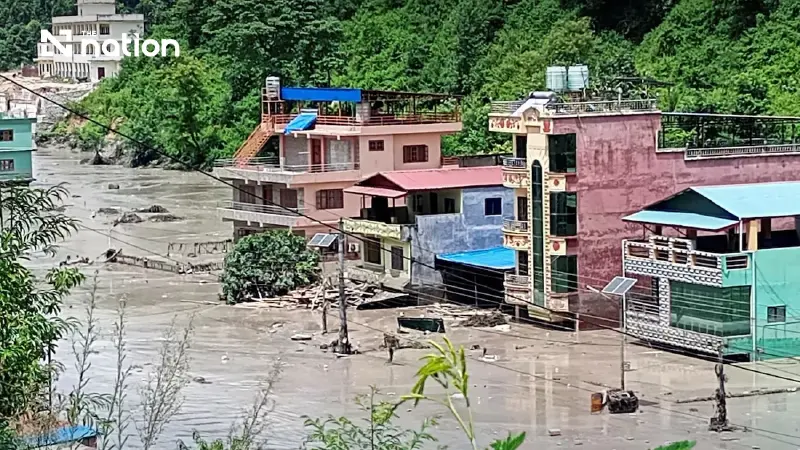


Nine South Koreans are missing and 10 stranded after the Nepal-Tibet floods, prompting Seoul to send a rapid-response team to Kathmandu
- Nine South Korean hydropower workers are missing and another 10 are stranded following catastrophic floods on the Nepal-Tibet border.
- The floods, which have killed at least 160 people, were triggered by the collapse of a Himalayan glacier that caused an avalanche of ice and rock.
- South Korea's government has convened an emergency meeting and is dispatching a rapid-response team to Nepal to assist in the search and rescue operations.
Nine South Korean hydropower workers are missing and 10 others remain stranded after catastrophic floods along the Nepal-Tibet border killed at least 160 people and left hundreds unaccounted for.
The workers were employed by Korea Energy and Doosan Enerbility Co, South Korea’s Foreign Ministry announced late on Wednesday (August 26, 2026). Nepal has deployed a rescue team to search the area where they had been working.
Another 10 South Korean workers affiliated with Doosan Enerbility were stranded and awaiting evacuation by a helicopter arranged by Nepalese authorities.

South Korean Foreign Minister Cho Hyun convened an emergency meeting with government officials. A rapid-response team comprising police, emergency-service personnel and Foreign Ministry officials was preparing to fly to Kathmandu on Thursday.
Cho also planned to speak with his Nepalese counterpart on Thursday to coordinate rescue and relief operations.

Glacier collapse considered likely trigger
The lower section of a Himalayan glacier collapsed on Wednesday morning and crashed onto the valley floor, possibly after an earthquake.

The collapse sent an avalanche of ice and rock down the Lhende Khola River along the mountainous Nepal-Tibet border, generating fast-moving floods and mudslides.
The mudslide struck Gyirong port in Tibet before sweeping into Nepal, washing away roads and power projects and inundating villages.
Experts had not conclusively established what caused the glacier to collapse, leaving the earthquake as a possible rather than confirmed trigger.
Hundreds remain missing
Nepalese authorities had recovered 157 bodies, while China reported three deaths in Tibet. Officials warned that the death toll could rise sharply because the overall number of missing people remained unclear.

More than 400 visitors were reported missing. They included 133 Indians travelling on a pilgrimage, 47 Americans, 34 Australians, 33 British nationals and 24 Canadians.
Citizens of Malaysia and South Africa were also reported missing, along with the nine South Korean hydropower workers.
About 5,000 people were evacuated from the Indian state of Bihar after flood alerts were issued.
High water obstructs rescue operations
Police and military personnel were searching the affected areas, but officials said helicopters could not land in some locations until the floodwaters receded.
Electricity remained unavailable across much of the disaster zone, while thick deposits of flood sediment were obstructing rescue operations.
Residents in low-lying areas were moved to safer locations, and communities along the rivers were advised to remain alert.
The United Nations was mobilising supplies and personnel to support affected communities, while India was coordinating with Nepal on rescue and relief work.
South Korea’s rapid-response team was scheduled to travel to Kathmandu on Thursday as Nepalese rescuers continued searching for the nine missing workers and prepared to evacuate the 10 who remained stranded.
