
From Nepal to Indonesia: when young people challenge the political elite
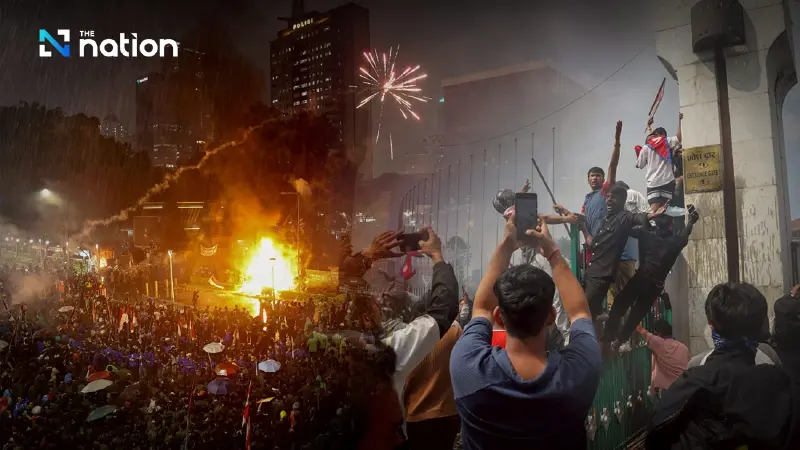


Gen Z movements in Nepal and Indonesia are reshaping Asian politics, challenging inequality, elite privilege and government failures.
- In Nepal and Indonesia, specific grievances—a social media ban and excessive parliamentary allowances, respectively—ignited widespread youth-led protests against deeper issues of elite privilege and corruption.
- Generation Z is at the forefront of these movements, using digital platforms and social media as powerful tools for mobilization, shaping public discourse, and exposing injustice.
- The protests highlight a profound crisis of legitimacy for the political elites, who are perceived as disconnected from the economic hardships and aspirations of ordinary citizens.
- Government responses have combined force with minor concessions, but have largely failed to address the root causes of discontent, suggesting future movements are likely.
Gen Z is shaking up Asian politics
In recent years, Asia has witnessed a wave of political activism among young people that is both powerful and unprecedented. Generation Z, raised in the digital age with constant access to the internet and social media, are no longer passive consumers of information. They have emerged as “narrative creators” and “political agenda setters” in several countries.
Two of the clearest examples of this phenomenon are Nepal and Indonesia. Both nations are facing mounting pressure from young people and the broader public, who are disillusioned with government performance, widening economic inequality, and entrenched elite privilege. What often begins with seemingly minor grievances has grown into large protest movements, shaking political stability at its core.

Nepal: from social media ban to toppling a leader
In early September 2025, Nepal’s government sent shockwaves through society by announcing a ban on access to more than 20 major social media platforms, including Facebook, X (formerly Twitter) and YouTube. The measure was justified on the grounds that these platforms had failed to comply with a new registration law and were accused of spreading “fake news” and “hate speech” that could threaten public order.
For the younger generation raised in the digital world, however, online media is far more than a communication tool. It is a space for learning, work, income generation, and political expression. The ban was widely seen as a blatant attempt to curb freedom of expression and stifle criticism of the government.

Public reaction was swift, particularly among young people who already felt their future was being suffocated in a country with limited economic opportunities, where nearly one-third of GDP relies on remittances from overseas workers. What began as calls to lift the social media ban soon escalated into a broader protest movement targeting corruption and the entrenched system of political patronage and nepotism.
As demonstrations dragged on, clashes with security forces intensified, leaving more than 70 people dead. Yet pressure from the streets did not subside. Eventually, Prime Minister K. P. Sharma Oli was forced to resign. The president appointed a caretaker government to stabilise the situation and announced fresh general elections for 2026.

This episode not only reflects a deep crisis of confidence in Nepal’s political elite, but also marks the moment when the “young generation” emerged as central actors, writing a new chapter in the country’s political story.
Indonesia: from housing allowances to resisting the elite
Before Nepal was swept into mass protests, Indonesia had already faced a similar popular uprising. It began with an issue that seemed minor but struck a deep chord with ordinary people: revelations that members of parliament were receiving housing allowances worth ten times Jakarta’s minimum wage. The news broke at a time when the government was enforcing austerity measures, cutting budgets for education, healthcare and other public services. The contrast fuelled public anger, summed up in a common refrain: “The state asks us to tighten our belts, while the elite live in luxury.”

Protests began outside the parliament building in late August 2025, quickly spreading across the country from Bandung and Yogyakarta to Makassar and Palembang. Public outrage went far beyond MPs’ housing benefits, expanding into a wider backlash against inequality and elite privilege — particularly the entrenched role of the military and big business in dominating politics.
Tensions escalated further when a 21-year-old delivery worker was killed after being struck by an armoured paramilitary police vehicle. Images of the incident went viral on social media, becoming a rallying symbol of injustice. The tragedy galvanised more citizens to join the protests, leaving President Prabowo Subianto’s government under immense pressure.
Authorities responded with a dual strategy: deploying force and arresting thousands of demonstrators, while simultaneously reducing some parliamentary allowances in an attempt to defuse public anger. Yet trust in the political class remained badly shaken. The episode underscored a critical lesson: structural inequality cannot be solved by temporary or superficial cuts to elite privileges. Without deeper reform, discontent is bound to resurface when conditions ripen.

Shared patterns in the Nepal–Indonesia protests
Although Nepal and Indonesia have very different political, historical and economic contexts, a comparative view reveals striking similarities that highlight new dynamics in Asian politics.
The first is how uprisings often begin with seemingly small issues but expand because of deeper political and economic injustice. In Nepal, protests started with a social media ban; in Indonesia, with revelations about MPs’ housing allowances. Both show how minor triggers can ignite wider anger rooted in structural grievances.
Secondly, the central role of young people, particularly Gen Z, is clear. They use digital media as a powerful tool for mobilisation, shaping discourse and exposing injustice. Their strong expectations for a better future mean they are no longer willing to tolerate politics as usual. Both governments responded with a “carrot-and-stick” approach: using force and arrests, while offering partial concessions, such as unblocking some platforms in Nepal or cutting MPs’ entitlements in Indonesia.
Another crucial theme is the crisis of legitimacy among political elites. The protests went beyond specific policy grievances, questioning the very legitimacy of political systems seen as disconnected from ordinary people’s lives. Economic pressures added fuel to the fire: Nepal’s dependence on remittances has left it unable to create opportunities at home, while Indonesia struggles with high living costs as politicians continue to enjoy excessive privileges.
Together, these developments underscore the structural imbalances driving young people to rise and challenge entrenched elites with unprecedented determination.

The power of Gen Z in Asia
Through the lens of social movement theory and political opportunity structures, the protests in Nepal and Indonesia reveal clear common ground.
Discontent was not born solely from poverty, but from the perception of injustice when contrasted with the privileges of the elite. Mobilisation spread rapidly because social media lowered the cost of participation and allowed messages to circulate widely.
A simple framing of “the privileged versus ordinary people” further strengthened unity and broadened support. Yet despite heavy pressure forcing governments to make some concessions, they continued to rely primarily on coercion — preventing any real structural change from taking place.
The experiences of Nepal and Indonesia show that Gen Z has become a disruptive force in Asian politics. They reject the old order of privilege and inequality, and are ready to use both the streets and digital platforms to apply pressure.
The key question now is: how will states respond? If governments continue to rely solely on repression, youth movements may retreat temporarily, but they will inevitably resurface when opportunities arise. By contrast, if governments choose structural reforms — reducing elite entitlements, reforming electoral rules, opening digital freedoms, and investing in youth economic opportunities — they may be able to regain legitimacy and ease tensions.
For Asia, Nepal and Indonesia may be only the beginning of a new wave of social movements. But what is already clear is that “the politics of the future will not look the same.” Young people are no longer waiting passively for change; they are ready to rise and create it themselves.
