
Iran plans new Gulf exclusion zone amid missile warnings to US
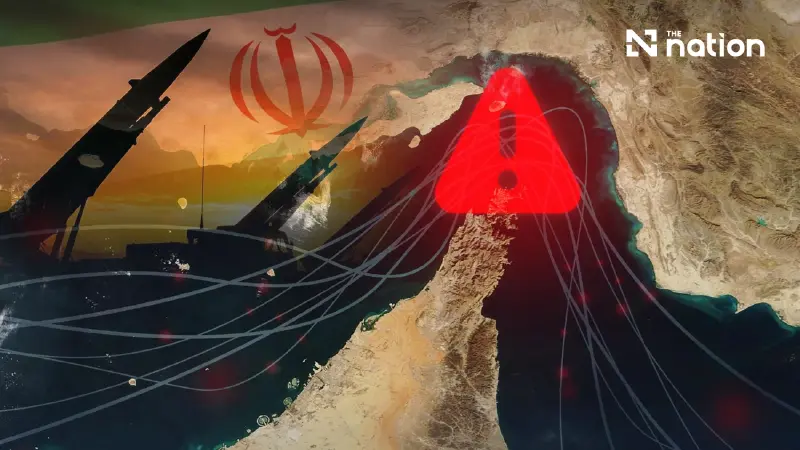


A Saudi-led coalition reports 73 wounded in Houthi attacks on Saudi Arabia, while Hormuz shipping slows and Tehran faces mounting pressure from new US sanctions.
- Iran plans to establish a new maritime exclusion zone in the Persian Gulf, stretching from the US blockade perimeter, as a response to what it calls "economic warfare."
- The announcement is accompanied by military warnings, including a claim that Iran fired a new, advanced ballistic missile at US warships and has "fundamentally recalibrated" its posture toward US forces.
- Any vessel entering the planned restricted zone will be added to an Iranian sanctions list, and Iran will also publish maps for a new shipping corridor through the Strait of Hormuz.
A planned Iranian maritime exclusion zone in the Persian Gulf has become the latest source of tension in the six-month war with the United States.
Tehran says it will announce the restricted area and publish maps for a new shipping corridor through the Strait of Hormuz in the coming days, although the timing remains unclear.
It also claims to have fired an advanced missile at US warships.
State television on Sunday carried details of the plan from Mohsen Rezaei, secretary of Iran’s Supreme National Security Council.
Rezaei said the zone would stretch from the point where the US blockade of Iran begins into Gulf waters, and that any vessel entering it would be added to an Iranian sanctions list.
Rezaei set out both the economic and military dimensions of the warning in a post on X on Tuesday (September 8).
“In recent days, Washington has received a clear warning from Iran’s new missiles. Economic warfare will be met by a maritime exclusion zone across the Persian Gulf to the blockade perimeter. The operational posture toward US warships and bases has been fundamentally recalibrated,” he wrote.
His reference to Iran’s “new missiles” appeared to concern Qassem Basir.

Iranian media said the ballistic missile had been fired at US warships near the Strait of Hormuz, while the US military said its warships had evaded any such attacks.
Tehran describes the upgraded weapon as more manoeuvrable, capable of evading missile defences and guided by a system designed to remain effective against electronic warfare.
Fars News Agency said it was first used in combat against Israel in June 2025.
Elsewhere, the conflict showed further signs of regional spillover.
A spokesperson for the Saudi-led coalition in Yemen said the Iran-backed Houthi militia attacked several cities in Saudi Arabia on Tuesday, wounding 73 people.
With diplomatic progress stalled, the attacks increased concern that the fighting could develop into a wider regional war.
The war has repeatedly returned to combat after periods of relative calm.
Only days before Rezaei’s latest warning, the United States said its most recent strikes on Iranian targets came on Saturday, when its forces hit three Iranian oil tankers.
Iranian state media reported on Sunday that Qassem Basir was fired during attacks on several US vessels.
Shipping has remained another pressure point.
Commodity vessel traffic through Hormuz slowed again this week as Iran continued to disrupt passage despite US efforts to open the strait.
Major US barrages have weakened Iran’s conventional forces and inflicted further damage on its already ailing economy, but Tehran retains missiles and drones capable of threatening oil tankers travelling without its permission and attacking Gulf neighbours that host US military bases.
Before the war, about one-fifth of global oil and liquefied natural gas shipments passed through the strait, making it an important source of leverage for Iran.
Tehran could threaten tankers used by neighbouring Gulf states to export oil and gas.
Some analysts now believe this leverage is weakening, while tough new US economic sanctions are becoming increasingly difficult for Iran to withstand.
Pressure on energy shipments has pushed prices higher at a time when US opinion polls show the war is unpopular.
The political risks have consequently increased for President Donald Trump’s Republican Party ahead of November’s congressional elections.
Trump nevertheless predicted on social media, “Oil prices will drop precipitously, like everything else is dropping (but more!), when we WIN the war with Iran. Three Dollars a gallon, but ultimately, below Two Dollars a gallon. It will all happen quickly, and Iran will never have a Nuclear Weapon.”
Trump has yet to meet the objectives he set when he launched “Operation Epic Fury” in February.
Those aims were to end Iran’s nuclear programme, remove its ability to attack neighbouring countries and create conditions for Iranians to topple their leadership.
Iran’s clerical rulers remain in power and are seeking to emerge from the war stronger than before.
Tehran continues to demand sanctions relief and hopes eventually to collect fees from ships using the Strait of Hormuz.
