
Japan's land prices record fifth consecutive annual increase


Residential land gained 1.0% and commercial values 2.9% nationwide, although price growth slowed in Nagoya and four major regional cities.
- Japan's nationwide land prices rose for the fifth consecutive year, with an average increase of 1.5% as of July 1.
- The growth was led by commercial land, which increased by 2.9%, while residential land saw a more modest 1.0% gain.
- The pace of growth varied regionally, strengthening in the Tokyo and Osaka metropolitan areas but weakening in Nagoya and four other major regional cities.
- Tokyo recorded the highest rates of increase in the country for both residential and commercial land categories.
Japan’s land market advanced nationwide for a fifth year, although figures released by the Ministry of Land, Infrastructure, Transport and Tourism on Tuesday (September 15) showed differing momentum across the country’s major cities.
The nationwide average across all land uses, measured on July 1, was 1.5% higher than a year earlier.
Residential land gained 1.0%, while commercial land increased 2.9%, against the backdrop of a mild recovery in the Japanese economy.
Residential and commercial growth strengthened in the Tokyo and Osaka metropolitan areas but weakened in Nagoya.
The four regional cities of Sapporo, Sendai, Hiroshima and Fukuoka also lost pace, apparently because rising land and construction costs were driving buyers away from expensive properties towards more affordable suburban homes.
Commercial land outside those four cities followed a different pattern, with growth accelerating.
Commercial values rose in 34 of Japan’s 47 prefectures, four more than a year earlier.
Residential increases were recorded in 20 prefectures, the same number as the previous year.
Nagasaki moved into growth after prices had been flat, while declines came to an end in Tochigi and Yamaguchi.
At prefectural level, Tokyo recorded the highest rates of increase in both categories.
The capital topped the residential land ranking for the first time in 12 years.
Tokyo’s longstanding price leaders also retained their positions.
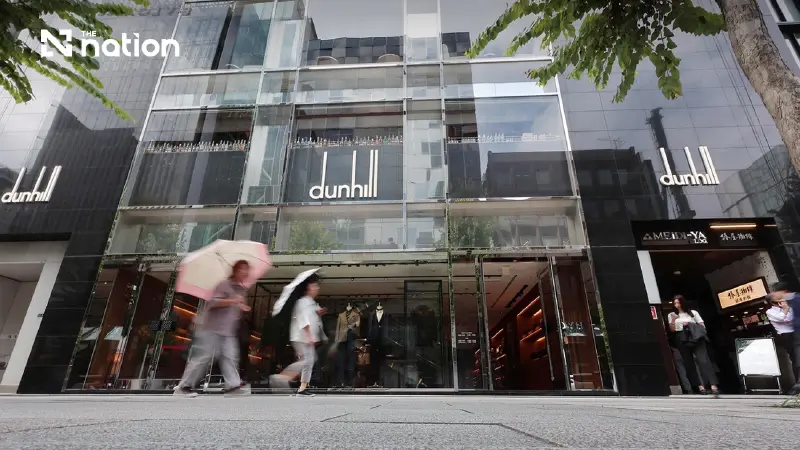
A commercial building site in the upscale Ginza district of Chuo Ward remained Japan’s most expensive for a 21st year, with its value rising from 46.9 million yen to 52.5 million yen per square metre.
The leading residential plot, in Akasaka in Minato Ward, held the top position for an eighth year after increasing from 6.43 million yen to 7.5 million yen per square metre.

[Copyright The Jiji Press, Ltd.]
