
Malaysia weighs rival airline options amid AirAsia financial strain
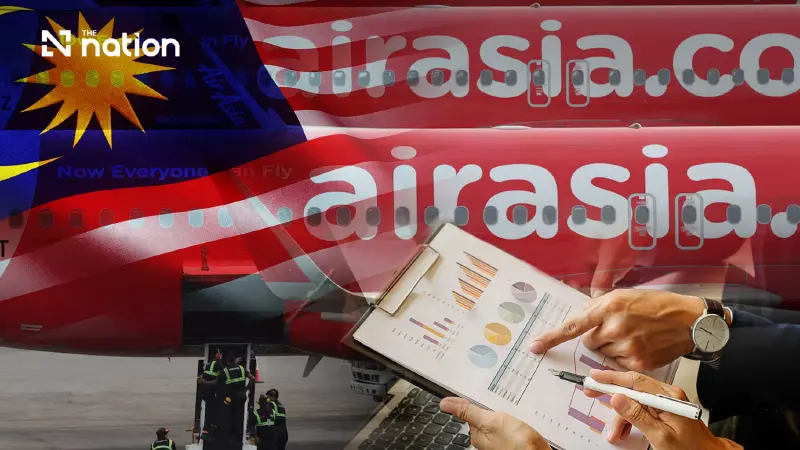


Malaysia Airlines and Batik Air favour organic expansion but say any large-scale transfer would also need to include AirAsia’s aircraft leases.
- The Malaysian government is exploring contingency plans due to significant financial strain at AirAsia, which holds a dominant 60% share of the domestic market.
- Officials have inquired with rival carriers Malaysia Airlines and Batik Air about their capacity to absorb AirAsia's domestic routes and market share.
- The rival airlines have indicated a preference for taking over routes and passengers organically rather than a full acquisition of the company.
- Authorities are also considering whether government assistance or endorsement could help the financially troubled AirAsia attract new capital from investors.
AirAsia’s scale in Malaysia has made the airline’s financial pressures a significant government concern, according to people interviewed by Reuters.
Southeast Asia’s largest low-cost carrier says it accounts for about 60 per cent of domestic flying and roughly 40 per cent of Malaysia’s aviation market overall.
Against that background, two people with knowledge of the matter said the government had asked Malaysia Airlines and Batik Air whether they could absorb AirAsia’s domestic market share.
The enquiries formed part of contingency planning as authorities monitored the airline’s financial health.
Both airlines have indicated that they would prefer to increase capacity organically and accommodate AirAsia’s routes and passengers instead of acquiring the entire company, the people said.
One source said a large-scale takeover of operations would be considered only if AirAsia’s aircraft leases were included, because the traffic would be much harder to manage without the aircraft.
The contacts have become more frequent in recent weeks and involve Malaysia’s Finance Ministry and state-linked airport operator Malaysia Airports Holdings Berhad (MAHB).
The people said officials had also discussed whether some form of government endorsement could help AirAsia attract new capital from external investors, although the form of any assistance remained uncertain.
Reuters could not independently establish the full details of the airline’s financial position.
As of June 30, AirAsia had current liabilities of 18.4 billion ringgit, equivalent to US$4.51 billion at an exchange rate of US$1 to 4.0825 ringgit, and cash and bank balances of 954 million ringgit.
The airline posted a second-quarter net loss of 831 million ringgit after absorbing 331 million ringgit in foreign-exchange losses and higher fuel expenses.
Jet fuel costs averaged US$183 a barrel during the quarter, 66 per cent more than in the previous three months, amid the US-Israeli war on Iran.
The two people and two other sources said AirAsia owed MAHB at least 500 million ringgit for landing, parking and other services.
Two of them said the airport operator had already extended the repayment deadlines.
All four requested anonymity because the discussions were private.
AirAsia is meanwhile pursuing up to US$1 billion in borrowing from international debt markets and another 700 million ringgit through local credit facilities, mainly to restructure debt.
Two people with knowledge of the matter put the airline’s fresh-capital requirement at no less than US$3 billion.
AirAsia responded that the financing targets it had announced were sufficient for its needs.
Cost reductions have included withdrawing underperforming routes, handing 25 older aircraft back to lessors and seeking revised terms from vendors.
AirAsia Group deputy group chief executive officer Farouk Kamal said the company would not address operational or financial speculation or corporate arrangements that had not been announced.
“All material updates regarding our business and fleet strategy are disclosed transparently through official exchange filings and corporate announcements at the appropriate time,” he said.
“We also wish to reiterate that AirAsia remains focused on maintaining business continuity and stable operations across all its markets, and we continue to see strong underlying demand across our network.
We are also working closely with our stakeholders to manage our financial and operational requirements.”
MAHB characterised its discussions with airlines as part of its usual work on routes and network development, including “potential capacity and route opportunities where there are gaps in the market or unmet demand”.
The airport operator would not comment on AirAsia’s financial outlook or provide details of commercial arrangements with airline partners.
AirAsia did not answer whether money was owed to MAHB.
It instead said it maintained a strong and constructive relationship with important partners, including MAHB Chief Airports Officer Bryan Thompson and his team.
The Finance Ministry, Malaysia Airlines and Batik Air declined to comment.
Reuters reported earlier this month that the ministry had hired Alton Aviation Consultancy to assess AirAsia’s funding requirements while considering whether to support a company that is both a major employer and a provider of affordable air connections across the region.
Alton did not respond to a request for comment.
Source: Reuters
