
Japanese food makers expand US production as consumer demand grows
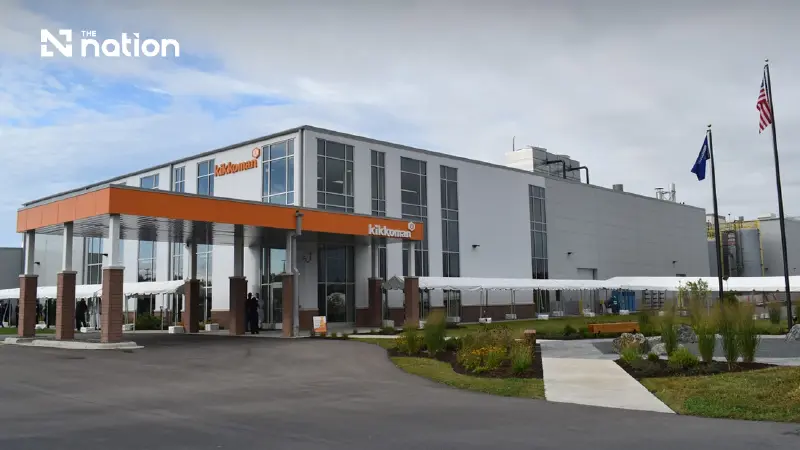


US visitors’ continued demand for foods discovered in Japan is helping spur factory expansion as companies pursue growth beyond a home market expected to shrink.
- Japanese food companies are expanding their US manufacturing with new plants and production lines, driven by a shrinking domestic market in Japan and growing consumer demand in the United States.
- Major brands like Kikkoman (soy sauce), Hokuto (mushrooms), Morinaga (HI-CHEW candy), and Meiji (Hello Panda biscuits) are all increasing their American production capacity.
- The rise in US demand is attributed to the popularity of Japanese cuisine, a boom in healthy foods, and American tourists seeking out products they enjoyed while visiting Japan.
Japanese food companies are enlarging their manufacturing footprint in the United States through new plants and added capacity as demand for Japanese cuisine grows.
Japanese direct investment in the US food manufacturing sector stood at US$8.195 billion at the end of 2025, about 2.5 times its level a decade earlier, according to US Commerce Department statistics.
With Japan’s food market expected to shrink as the country’s population declines, producers are looking overseas for growth.
Kikkoman Corp., Japan’s leading soy sauce maker, is preparing another increase in US output.
Products from its third US plant in Jefferson, Wisconsin, are due to begin shipping in October, while its production capacity in the country is expected to expand 1.4-fold by around 2036.
Kikkoman began shipping US-made products in 1973 and went on to take the lead in the US household soy sauce market.
It cultivated demand through steady efforts that included selling teriyaki sauce, a variation of soy sauce.
Speaking to reporters in the United States on September 17, Kikkoman Honorary CEO and Chairman Yuzaburo Mogi explained the approach behind that growth.
“We had found that American food paired well with soy sauce and developed recipes to bring them together,” he said.
“The most important part is creating demand.”
In the fiscal year ended in March 2026, Kikkoman recorded consolidated sales of 745.5 billion yen, with overseas operations accounting for 78 per cent of sales and 90 per cent of business profit.
Hokuto Corp., a major Japanese mushroom producer, is also targeting further expansion.
It aims to begin operations at its second US plant in fiscal 2028, seeing low competition and growth potential as mushroom consumption rises in the country amid a boom in Japanese cuisine and healthy foods.
“As the quality of our products is highly regarded, a single pack of mushrooms sells for as much as 4 to 6 dollars,” a Hokuto public relations official said.
Japanese confectionery brands are gaining a wider US presence as well. Morinaga & Co. will start operations at its second US plant in October.
Built at a cost of about 20 billion yen, the facility is intended to strengthen the supply of HI-CHEW soft candy products.
Meiji Co., meanwhile, plans to add a new production line for its Hello Panda biscuit snack in York, Pennsylvania.
The company aims to double its US sales by around fiscal 2030 from the fiscal 2024 level.
Demand is also being reinforced by US visitors who encounter Japanese food while travelling in Japan and continue to seek it after returning home.
The number of visitors from the United States to Japan climbed 22.9 per cent from a year earlier to about 3.11 million in 2025.
“A virtuous cycle has been established whereby visitors continue to seek out the Japanese food they enjoyed during their stay even after returning home,” an official at the Japan External Trade Organization’s division responsible for US affairs said.
The official added that Japanese companies are likely to continue expanding investment in the United States, where the population continues to grow.
