
Record ocean heat drives rising seas and damage to polar ecosystems
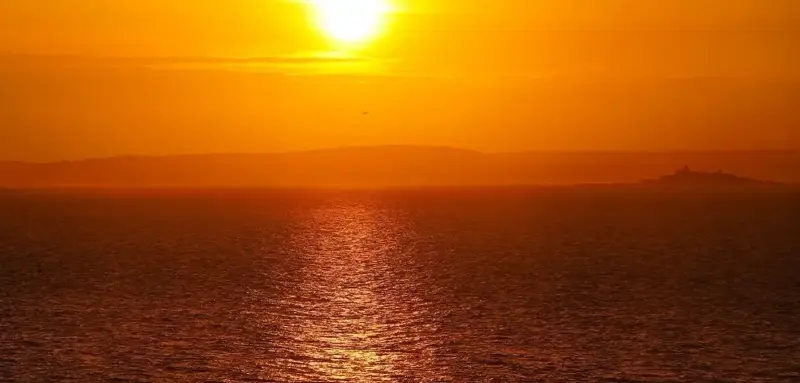


The Copernicus Ocean State Report details faster sea-level rise, growing acidity and threats to coral reefs, coastal communities and polar wildlife.
- Oceans absorbed a record amount of excess heat in 2025, marking the ninth consecutive year of record-breaking heat accumulation, with the overall rate of warming doubling in the last 20 years.
- The excess heat is accelerating global sea-level rise through melting ice sheets and thermal expansion of water, with the rate increasing to 4.2 millimeters per year between 2012 and 2025.
- In the Arctic, temperatures are rising several times faster than the global average, causing sea ice to shrink by an area the size of Spain every decade and increasing coastal erosion.
- Severe Antarctic sea-ice loss has caused a sharp decline in emperor penguin populations due to chicks drowning, leading to the species being reclassified as "Endangered".
The 10th Copernicus Ocean State Report by Mercator Ocean International, a non-profit research institute of the European Union’s Copernicus Marine Service, found that oceans worldwide are in crisis, absorbing record amounts of heat, causing sea levels to rise, accelerating ocean acidification, and severely damaging polar ecosystems.
According to the report, the oceans absorbed an additional 23 zettajoules of excess heat in 2025, setting a record for the ninth consecutive year.
That energy was equivalent to 12 Hiroshima atomic bomb explosions every second for a year, or about 40 times the world’s total energy consumption in 2025.
“The ocean is changing before our eyes. Warmer waters, rising sea levels and deteriorating ecosystems are all signs of a major, lasting transformation. The ocean is now changing too quickly for humanity to remain complacent,” said Pierre Bahurel, director-general of Mercator Ocean International.
Excessive heat accumulation
Oceans normally protect the planet by absorbing about 33% of human-generated carbon dioxide emissions and 90% of the excess heat trapped in the Earth’s system by greenhouse gas pollution.
However, their rate of warming has doubled over the past 20 years, pushing sea surface temperatures to record highs in consecutive years since 2023.
The situation is being compounded by El Niño, a natural climate pattern in the Pacific Ocean that is intensifying and appears likely to become the strongest ever recorded.
The vast amount of heat accumulating in the oceans is having widespread effects, accelerating global sea-level rise through melting ice sheets and the thermal expansion of water.
The data show that global mean sea levels have risen by about 3.8 millimetres a year since 1999, with the rate increasing to 4.2 millimetres a year between 2012 and 2025, affecting hundreds of millions of people living along coastlines worldwide.
Meanwhile, ocean acidity has increased by 17% since 1985 as the seas absorb vast quantities of carbon pollution.
Often described as “climate change’s equally evil twin”, acidification hampers the ability of marine animals such as oysters, lobsters and corals to form and maintain their hard outer structures.
The crisis is causing severe damage to marine ecosystems worldwide.
Between January 2023 and September 2025, 84% of the world’s coral reefs experienced heat stress sufficient to cause bleaching.
Over the past 30 years, phytoplankton growth patterns have also changed permanently across nearly 5% of the world’s ocean area.
These microscopic organisms underpin marine food chains and help regulate the carbon cycle.
European seas are experiencing severe anomalies, particularly the Mediterranean Sea and the Black Sea, which faced record-breaking marine heatwaves in 2024.
Some lasted more than 30 days, with seawater temperatures reaching 4.6°C above average.
The Mediterranean as a whole is warming at a rate of 0.32°C per decade, generating marine heatwaves that extend deep beneath the surface.
“These sudden episodes of heat are not occurring in isolation. They are taking place against a backdrop of sustained ocean warming that is changing the conditions marine ecosystems face,” said Blanca Fernández-Álvarez, a researcher at the Mediterranean Institute for Advanced Studies.
Extreme ocean weather is also causing direct harm to people and infrastructure.
Storm Louis in 2024 generated waves about eight metres high that struck Spain’s coastline, causing loss of life, widespread power cuts and damage to structures.
During another storm in the Gulf of Bothnia, between Sweden and Finland, powerful winds pushed water out of the gulf, causing sea levels to plunge by 1.5 metres and suspending ferry services for 18 hours.
Melting polar sea ice
The polar oceans, which cover about 20% of the world’s ocean surface, are also experiencing worrying changes.
In the Arctic, sea surface and ice surface temperatures rose by 4.2°C between 1982 and 2024, or about 1°C per decade, several times faster than the global ocean average of 0.12°C per decade.
Meanwhile, temperatures in the Kara Sea, north of Siberia, have risen by 6.7°C, or 1.68°C per decade.
Rising temperatures have caused Arctic sea ice to shrink by nearly 500,000 square kilometres per decade since 1979, equivalent to losing an area the size of Spain every 10 years.
The loss of ice exposes Arctic coastlines to waves, increasing coastal erosion and threatening coastal communities.
Karina von Schuckmann, director of the Copernicus Ocean State Report, told a press briefing that the continuing decline in Arctic sea ice since the early 1980s had left 60% of the region’s coastal infrastructure at risk from erosion and rising sea levels.
On the other side of the world, severe Antarctic sea-ice loss in 2022 led to a sharp decline in emperor penguins, as chicks drowned before their waterproof feathers had developed.
This prompted the International Union for Conservation of Nature (IUCN) to raise the species’ threat classification to “Endangered”, while warning that more than 90% of their population could be at risk of being virtually wiped out by 2100 if sea ice continues to decline.
People in small island developing states face the greatest risks from ocean changes, including rising seas, more intense cyclones, waves striking their shores and dying coral reefs.
“For island countries, ocean change is not a distant environmental problem. It is an economic, development and security challenge today, and a warning of what people living along other countries’ coastlines will face in the future,” von Schuckmann said.
The report calls for continuous ocean observation and monitoring so that governments and communities worldwide have sufficient information to prepare for future developments.
Bahurel concluded: “It is our duty and responsibility to respond to and anticipate these changes.”
This echoes concerns raised by Florian Pappenberger, director-general of the European Centre for Medium-Range Weather Forecasts (ECMWF), who warned that the climate crisis, air quality and public health are inextricably linked and must be addressed urgently through global cooperation.
Source: Bangkokbiznews
