
Hong Kong ranks first in 2026 global economic freedom report
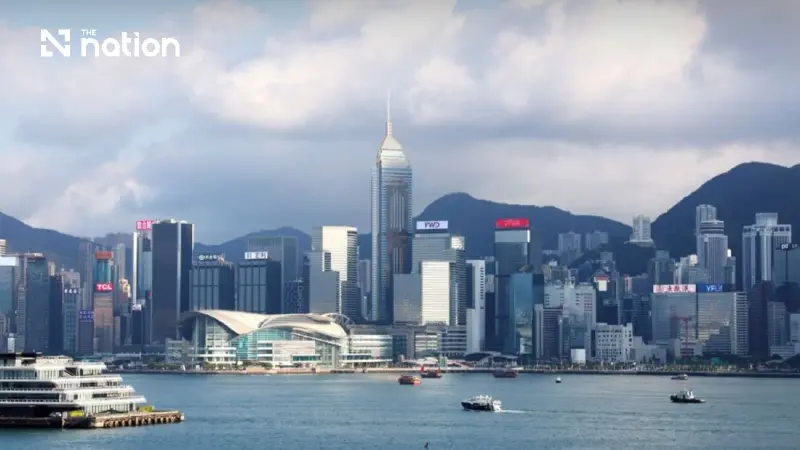


Hong Kong’s tax stability and open markets win academic and business support, with 520 firms helped to establish or expand operations in the first eight months of 2026.
- Hong Kong has been named the world's freest economy in the Fraser Institute's 2026 "Economic Freedom of the World" annual report, surpassing 164 other jurisdictions.
- The city earned top scores for its "Freedom to trade internationally" and "Regulation," with its stable business rules, free flow of capital, and low-tax regime cited as key factors.
- Its role as a "superconnector" and intermediary between mainland China and international markets, supported by the "one country, two systems" framework, was highlighted as a major strength.
- The ranking was welcomed by the HKSAR government and business groups as an endorsement of the city's secure, fair, and predictable environment for investment.
Hong Kong remains the world’s freest economy in the Fraser Institute’s latest ranking, with academics highlighting the stability of its business rules and its role in connecting international markets, while business representatives welcomed the result.
Switzerland and Singapore took second and third places behind Hong Kong among the 165 jurisdictions covered by the Economic Freedom of the World 2026 Annual Report.
Published on Tuesday by the Canadian public policy think tank, the report assessed five areas, placing Hong Kong first for “Freedom to trade internationally” and second for “Regulation”.
Assistance from Invest Hong Kong, the government’s investment promotion agency, enabled 520 mainland Chinese and overseas enterprises to establish or expand operations in the city during the first eight months of 2026.
Arrivals through Hong Kong’s various talent admission schemes, introduced at the end of 2022, had exceeded 310,000 by August.
The ability to move capital, information and expertise freely gives Hong Kong scope to connect stakeholders facing different policy constraints in global markets, according to Edward Chen Kwan-yiu, an honorary professor at the University of Hong Kong’s Business School.
He considered the ranking thoroughly deserved and described the city as “a very good intermediary”.
“Hong Kong could be a broker in compromising different restrictions. It’s free in terms of trade and investment, foreign exchange, with no capital control. And also it (allows) free flow of information, free flow of capital, and free flow of talents coming to Hong Kong,” Chen said.
The Hong Kong Special Administrative Region (HKSAR) government attributed the city’s combination of strong support from China and close international connections to the “one country, two systems” framework.
It regarded the report as an endorsement of Hong Kong’s free-market strengths and an open, efficient and fair environment for business.
An efficient government structure and a clean, professional civil service support financial, shipping, trading and professional services that match leading international standards, a government spokesman said.
He also pointed to convenient access to mainland Chinese and international markets, alongside a common law system operating in Chinese and English.
“These strengths enable Hong Kong to fully leverage its roles and functions as a superconnector and super value-adder, making it the best gateway for mainland enterprises to enter international markets and for overseas enterprises to enter the mainland,” the spokesman said.
Businesses have a stable environment in which to develop because Hong Kong’s regulatory and tax arrangements have remained consistent over time, according to Billy Mak Sui-choi, an associate professor in Hong Kong Baptist University’s Department of Accountancy, Economics and Finance.
Mak believed the city could maintain its lead.
“As a free port, the city conducts no customs tariffs and allows for free currency exchange … All of these characteristics make it ideal for trade,” he said.
“From this perspective, Hong Kong’s position should not be replaced by other places any time soon.”
“Amid increasing global economic uncertainties and rising trade protectionism, Hong Kong remains firmly committed to maintaining its free port status, zero-tariff policy, and simple and low tax regime, providing a secure, stable, fair, predictable and internationalized business and investment environment for investors and entrepreneurs from around the world,” the HKSAR government spokesman said.
The ranking offered encouragement to companies and investors both locally and overseas, the Chinese General Chamber of Commerce (CGCC) said.
Welcoming the recognition as particularly significant for Hong Kong’s business community, the chamber viewed it as confirmation of the city’s long-standing commitment to a free and open market.
Opportunities arising from initiatives such as the Northern Metropolis feature in the chamber’s plans to broaden development prospects for companies and residents.
The CGCC said it would seize those opportunities and continue to align Hong Kong’s first Five-Year Plan with China’s national strategies.
By Li Xiaoyun
Source: Asia News Network
