
India grants three oil firms direct dollar access to support rupee
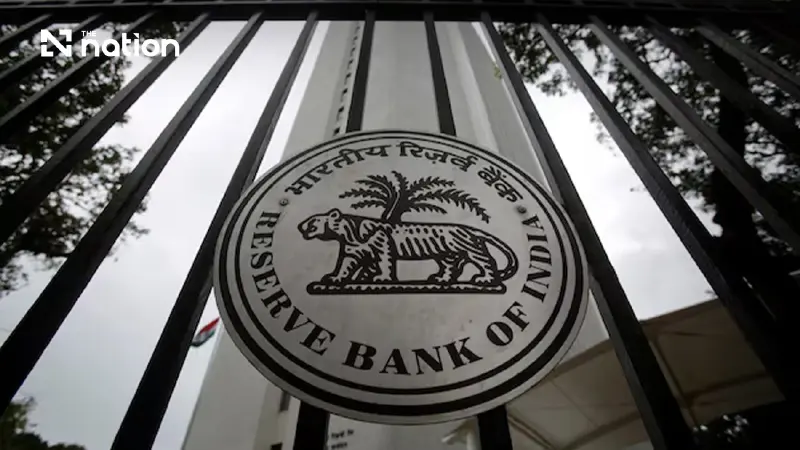


India’s central bank announced a package with a 20% reserve rule for qualifying hedges, after which the rupee gained about 0.6% in thin non-deliverable forward trading.
- India's central bank will provide direct US dollar access to three state-run oil companies: Indian Oil Corporation, Hindustan Petroleum, and Bharat Petroleum.
- The measure is designed to support the rupee by removing the oil firms' large, daily demand for dollars from the open foreign exchange market.
- The Reserve Bank of India (RBI) will supply the dollars directly from its foreign exchange reserves, allowing the companies to bypass the spot market.
- This action comes as the rupee trades near record lows, with the goal of reducing currency volatility caused by importers' high demand for dollars.
Three state-run oil-marketing companies in India have been granted access to direct dollar supplies from the Reserve Bank of India (RBI), under measures announced on Saturday (October 10).
The package also tightens currency hedging rules to support the rupee.
The RBI said the window would be available from Monday to Indian Oil Corporation Limited, Hindustan Petroleum Corporation Limited and Bharat Petroleum Corporation Limited.
It is designed to cover their dollar requirements each day.
Oil companies’ dollar purchases are to bypass the spot market, with the RBI supplying the currency directly from its foreign exchange (FX) reserves.
The arrangement has been used during periods of currency stress.
The rupee is close to record lows after a decline of more than 7% this year.
Surging oil prices and rising global bond yields have kept the currency under pressure.
Overseas foreign currency deposits encouraged by one-off policy steps, together with offshore borrowing by state-run firms and banks, have brought India more than US$140 billion in capital inflows.
The rupee remains under strain despite those inflows, sustained RBI intervention and an interest rate increase earlier in the week.
Importers seeking protection against further rupee losses have wanted far more dollars than exporters have supplied.
That imbalance has weighed on the currency in recent months.
RBI requires a 20% reserve for qualifying currency hedges
The RBI’s new reserve rule concerns derivatives used to hedge current account transactions.
For contracts that buy foreign currency against the rupee, foreign exchange dealers must maintain a 20% “foreign exchange risk reserve” when the transaction’s notional value exceeds US$2 million.
A US$5 million ceiling now applies to derivative transactions entered into without proof of an underlying exposure, replacing the former US$100 million limit.
The RBI’s lower cap covers all derivative products, including exchange-traded futures.
Making currency protection more costly is part of the RBI’s effort to curb speculative corporate activity.
Two bankers, who spoke on condition of anonymity, expected the reserve requirement to discourage excessive hedging by increasing the cost of protection against further rupee weakness.
The RBI was “trying to moderate potentially destabilising derivative demand, improve the integrity of underlying exposure verification and discourage circumvention through multiple transactions or repeated rebooking”, according to a person familiar with the central bank’s thinking.
The person spoke on condition of anonymity because they were not authorised to speak to the media.
Efforts by Chinese authorities to discourage one-way bets against the yuan have previously included similar tools.
Indian rupee gains in thin non-deliverable forward trading
Thin trading in the non-deliverable forward market accompanied a rise of about 0.6% in the rupee against the dollar after the measures were announced.
Dhiraj Nim of Australia and New Zealand Banking Group (ANZ), a foreign exchange strategist based in Mumbai, said: “Addressing oil companies’ dollar requirements removes one of the largest sources of demand from the FX market, which should help reduce volatility, but it will show up in a depletion of reserves.”
Nim of ANZ expects the measures to bring some relief, with the rupee continuing to face pressure.
“The underlying drivers, including oil prices and capital flows, remain, and the real test will be how reserves and the rupee behave in the coming week,” he added.
Source: Reuters
