
AirAsia in reported funding support talks with Malaysian government
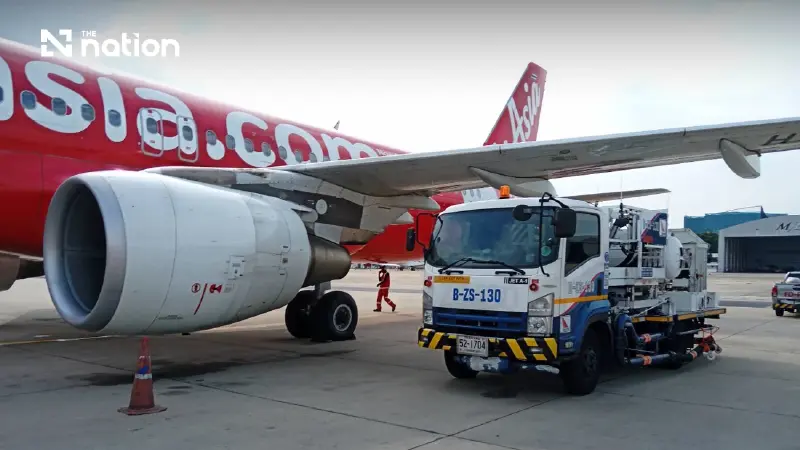


Tony Fernandes denies discussing financial aid with Malaysian officials as AirAsia pursues up to US$1 billion in debt funding amid soaring fuel costs.
- Three sources report that AirAsia is in talks with the Malaysian government for financial support amid growing concern over the airline's finances, which have been impacted by high jet fuel prices.
- AirAsia co-founder Tony Fernandes confirms meeting with government officials but denies the talks were about financial assistance, stating they focused on aviation costs like fuel and airport charges.
- The government is reportedly concerned about the carrier's financial weakness and its potential impact on tourism and air connectivity, prompting it to assess AirAsia's funding needs.
- Despite denying bailout talks, Fernandes acknowledged seeking government help to secure loans from local banks and stated the airline would not refuse assistance if it were offered.
Three sources have described talks over possible Malaysian government support for AirAsia (AIRG.KL) amid growing government concern about the carrier’s finances after a surge in jet fuel prices. Co-founder and adviser Tony Fernandes disputes their account, insisting his discussions with officials concerned aviation costs.
The three people told Reuters that Fernandes met finance ministry officials two weeks ago. Two of them outlined a proposal for the government to back AirAsia’s fundraising if the carrier accepted conditions still under discussion. Reuters could not immediately establish the terms being proposed.
Fernandes confirmed the meeting in an exclusive Reuters interview on Friday. He had requested talks with officials from both the finance and transport ministries during the week beginning September 28.
Airport charges and fuel were among the expenses Fernandes identified as the subjects of those talks. “There have been no discussions on financial assistance with the government,” he told Reuters.
Describing the pressures facing the industry, Fernandes explained: “Obviously, like every airline in the world, we are telling government that this is a tough period.” He added: “I meet with government officials all the time...just because I meet them doesn’t mean we’re talking about financial assistance.”

He also denied approaching the government for help and maintained that officials had not raised concerns with him about AirAsia’s funding or offered support. Fernandes put his confidence in getting through the difficulties without state assistance at “100%”, pointing to the airline’s experience during the pandemic.
Alton Aviation Consultancy was also represented at the meeting, according to two sources. Reuters had earlier reported that the finance ministry commissioned Alton to assess how much funding the loss-making carrier needed. Asked for comment, the finance ministry declined, while neither the transport ministry nor Alton responded.
AirAsia is Southeast Asia’s largest low-cost airline and Malaysia’s largest domestic carrier. Its workforce numbers 26,000 and it accounts for about 60% of Malaysia’s domestic aviation market, according to Fernandes.
Two sources described increasing government concern that AirAsia’s financial weakness could affect tourism, air connectivity and related businesses, including state-linked airport operator Malaysia Airports Holdings Berhad.
AirAsia’s current liabilities totalled 18.4 billion ringgit as of June 30. Cash and bank balances were 954 million ringgit (US$233.65 million).
Foreign-exchange losses of 331 million ringgit compounded the fuel-cost pressure in the quarter ending on that date. AirAsia reported a net loss of 831 million ringgit (US$204 million) for the period.

The fuel-price increase followed the US-Israeli war on Iran. Compared with the preceding quarter, jet fuel became 66% more expensive in the second quarter, averaging US$183 a barrel.
Malaysia Airlines and Batik Air were asked whether they could accommodate AirAsia’s domestic market share, Reuters reported last month. The government made the enquiries as part of scenario planning while monitoring AirAsia’s financial health.
AirAsia shares have lost more than 70% of their value this year. On the day after that earlier Reuters report, the stock fell as much as 21% to levels close to four-year lows.
Refinancing existing debt is the main objective of the funding AirAsia is targeting: up to US$1 billion through international debt markets, alongside 700 million ringgit in local credit facilities.
Working capital and payment of “extended liabilities” would account for half of the US$1 billion, Fernandes told Reuters on Friday. The other half would refinance expensive loans. He expects the fundraising to be completed between December and February.
Loans denominated in local currency, with better interest rates and terms than overseas borrowing, remain Fernandes’s preference. He acknowledged previously asking the government to help AirAsia obtain loans from Malaysian banks and continues to seek that support.
Assistance offered by any government in a country where AirAsia operates would be welcome, Fernandes explained, citing Malaysia, Thailand and Indonesia. “We will never say no to it. We would be foolish to do so,” he told Reuters.
His earlier public position, set out at a September 18 press conference, was that there had been no discussions with the government and that AirAsia had “strong liquidity”. Fernandes declared then: “we do not need rescue, bailout, whatever.”
Staff received a message of confidence at a September 28 town hall at AirAsia’s headquarters, before the meeting with government officials. Two sources reported that Fernandes assured employees the carrier would overcome its difficulties. He told Reuters that his message to staff was that all airlines were going through a tough period.
Fernandes contrasted the situation with the pandemic: “The big difference between this and COVID is we can actually fly.” Recalling his reassurance to employees, he also told Reuters: “We’ve been through many tough times before. We will come out of it stronger.”
More than 80% of AirAsia’s seats were filled even as jet fuel prices reached US$200 a barrel, according to Fernandes, who had yet to see demand weaken.
AirAsia’s budget planning allows for 12 months of high oil prices, Fernandes explained. “Above $200, it hasn’t been tested yet,” he cautioned. “At some point, it will create demand destruction. I’m not sure where that point is.”
Source: Reuters
