
France imposes partial curfews in cities on Monday
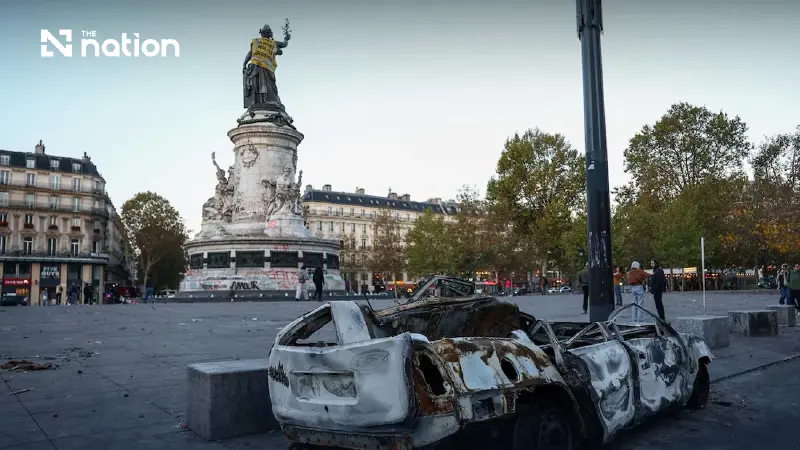


France enacted localized curfews in Paris and other cities on Monday after violent weekend riots led to 2,400 arrests and extensive property damage.
- Partial, localized curfews were imposed in parts of Paris, Lille, and Nice on Monday to restore order following a weekend of violent anti-government protests.
- The measures include an 11 p.m. curfew in central Paris and overnight curfews specifically for minors in Lille and Nice.
- The government's action follows significant unrest that resulted in approximately 2,400 arrests and nearly 1,000 injured police officers.
- France's Prime Minister ruled out a blanket nationwide curfew, confirming that only localized measures were being implemented.
French authorities implemented localized curfews across parts of Paris, Lille, and Nice on Monday following a weekend of violent riots and looting stemming from nationwide anti-government protests.
Localised Curfews and Government Response
Prime Minister Sébastien Lecornu ruled out a blanket curfew in Paris but stated that partial and localized curfews were necessary to restore order, declaring his determination absolute.
Paris police issued orders barring protests in certain areas from 8 p.m. and established a curfew around the Place de la Republique and Les Halles from 11 p.m. until 6 a.m.
In northern France, a curfew for minors was set for two days in Lille, Douai, Wattignies, and Denain, while Nice mayor Éric Ciotti instituted an overnight curfew for minors in central Nice. Meanwhile, Marseille banned all gatherings and demonstrations.

Scale of Unrest and Economic Impact
The weekend of violence involved clashes between protesters and police following weeks of student demonstrations driven by a weak economy and surging debt.
The Interior Ministry reported that roughly 2,400 people were arrested, nearly 1,000 officers were injured, and one protester died from cardiac arrest on Saturday.
The Federation of Trade and Retail noted that nearly 3,000 shops were affected, with business owners facing severe losses. Lecornu announced that government furlough measures would be made available to affected businesses starting Tuesday.

Political Friction and Security Shortcomings
Lecornu blamed far-left groups for inciting profound unrest ahead of the upcoming presidential election, a claim disputed by hard-left presidential candidate Jean-Luc Mélenchon, who demanded evidence or an apology.
President Emmanuel Macron turned down Interior Minister Laurent Nuñez's offer to resign, directing him instead to tackle barricades and investigate intelligence and foresight failings.
Amid ongoing student blockades at locations such as the Louvre gallery and Sciences Po, French trade unions called for a new round of nationwide strikes and rallies on November 5.


